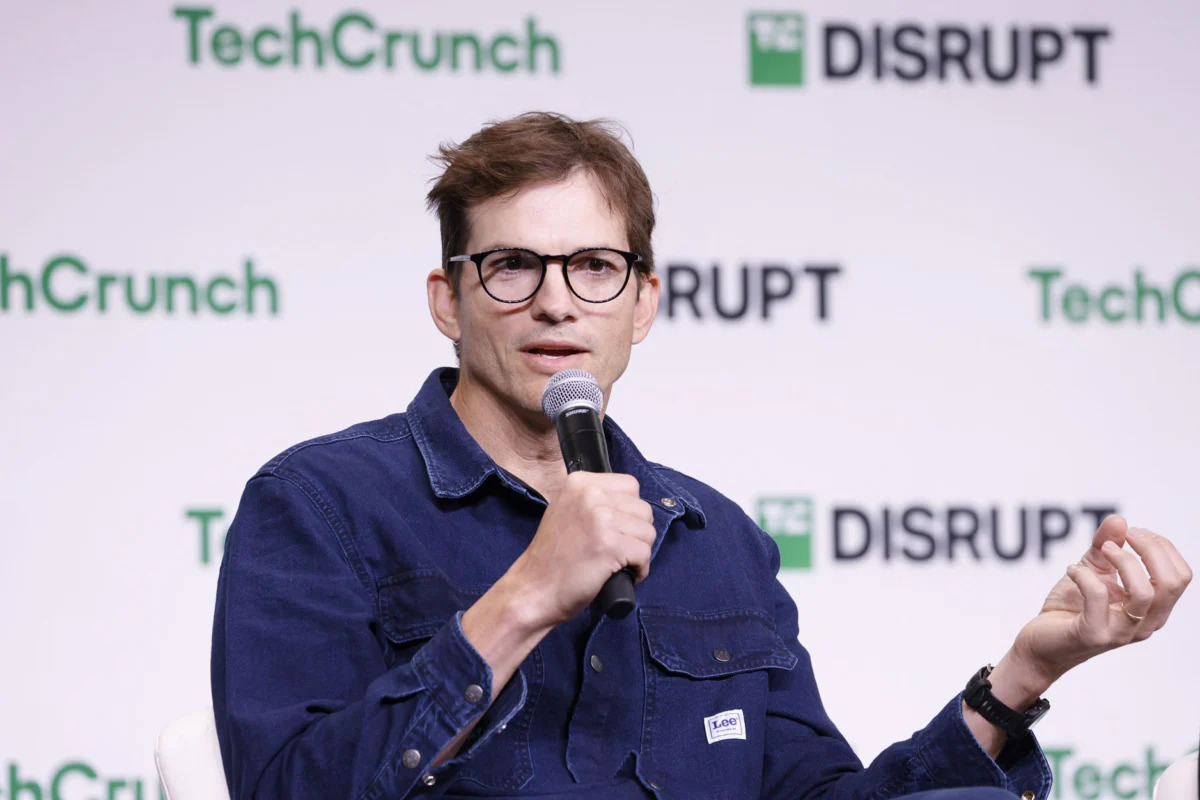
In a significant realignment within the venture capital landscape, Ashton Kutcher has announced his departure from Sound Ventures, the firm he co-founded 11 years ago alongside veteran talent manager Guy Oseary. While the move marks the end of a long-standing partnership that saw the duo become prominent figures in Silicon Valley, it also signals a calculated shift in focus toward the burgeoning, high-stakes world of artificial intelligence infrastructure and energy.
Kutcher is launching a new, as-yet-unnamed venture firm alongside Morgan Beller, a seasoned investor and executive with deep roots in the crypto and software sectors. The move, first reported by the Wall Street Journal and corroborated by industry insiders, represents more than just a change in leadership; it highlights a growing divergence in investment philosophy regarding the future of the AI revolution.
The Evolution of a Partnership: A Chronology of Success
To understand the weight of this departure, one must look at the trajectory of Sound Ventures. Founded in 2013, the firm quickly moved past the stigma often associated with "celebrity investors." Under the guidance of Kutcher and Oseary, Sound Ventures evolved into a sophisticated, high-conviction investment vehicle that successfully navigated the complex waters of early-stage tech.
- 2013: Ashton Kutcher and Guy Oseary launch Sound Ventures, building on their previous investment success and networks in the entertainment and tech spheres.
- 2014–2020: The firm builds a formidable portfolio, backing companies like Brex and Gusto, demonstrating an ability to identify category-defining businesses before they reach mainstream unicorn status.
- 2020–2023: Sound Ventures aggressively leans into the AI explosion. The firm secured early, high-conviction positions in major industry players, including OpenAI, Anthropic, and World Labs, led by renowned computer scientist Fei-Fei Li.
- Late 2024: Internal discussions regarding investment thesis alignment lead to the decision for Kutcher to step away.
- Present: Kutcher and Beller announce the formation of a new firm focused on the "picks and shovels" of the AI revolution: infrastructure and energy.
The Philosophical Divide: Why the Split Occurred
Industry observers often attribute partner departures to underperformance or internal friction. However, in the case of Sound Ventures, the split appears to be a strategic divergence rather than a reaction to failure.
According to reports, the core of the disagreement lies in the "stage" and "sector" of the investment lifecycle. Sound Ventures has increasingly favored backing more established companies—enterprises that have already demonstrated product-market fit and are scaling rapidly. Conversely, Kutcher has expressed a desire to move further "upstream" into the foundational layers of the AI ecosystem.
While Sound Ventures has historically focused on the application layer—the software and platforms that sit on top of AI models—Kutcher and Beller are turning their attention toward the physical and structural requirements of AI. This includes the massive energy demands of data centers, the hardware infrastructure required to run large language models, and the "hard science" breakthroughs that will define the next decade of computing.
Meet the New Team: The Kutcher-Beller Dynamic
The partnership with Morgan Beller adds significant technical and operational pedigree to the new venture. Beller is a heavyweight in her own right. Most notably, she co-led the development of the Libra project (later Diem) at Meta, an ambitious attempt to create a global digital currency.
Beller’s experience spans several critical domains:
- Andreessen Horowitz (a16z): She spent nearly three years as a partner at the firm, one of the most prestigious in Silicon Valley, gaining exposure to world-class deal flow and operational scaling.
- NFX: As a general partner at the seed-focused firm, she honed her skills in identifying early-stage founders with the potential to disrupt entire industries.
- Operational Background: Her tenure at Meta provides a rare perspective on how to navigate regulatory hurdles and build at the massive scale required for deep tech.
By pairing Kutcher’s long-standing industry relationships and foresight—specifically his early connection to Sam Altman dating back to the Loopt days—with Beller’s operational experience in crypto and infrastructure, the new fund aims to position itself as a specialized player in a crowded VC market.
The AI Infrastructure Thesis: Why Energy Matters
The most compelling aspect of this transition is what it signals about the next phase of the AI gold rush. For the last 24 months, investors have been hyper-focused on which AI models will dominate. Will it be OpenAI? Anthropic? Google’s Gemini?
Kutcher and Beller appear to be taking a different approach. By shifting focus toward infrastructure and energy, they are betting that the "winner" of the model wars matters less than the physical reality of the power grid.
The energy consumption of large-scale AI training is becoming a bottleneck for progress. Data centers require consistent, massive, and increasingly sustainable energy sources. By investing in the layer that powers the software, the new fund is insulating itself from the volatility of individual model performance. They are betting on the fundamental truth that regardless of which AI becomes the industry standard, the infrastructure required to run those models will be the most valuable asset in the ecosystem.
Supporting Data and Expert Sentiment
The performance of Sound Ventures has not gone unnoticed by the academic community. Stanford professor Ilya Strebulaev, a leading voice in venture capital research, has frequently cited Sound Ventures as a top-performing firm.
"He and his fund consistently make it onto my rankings of top unicorn investors. An interesting case!" Strebulaev wrote on X (formerly Twitter) following the news.
This validation is crucial. It confirms that Kutcher is leaving from a position of strength. The firm is currently in a healthy state, and his departure is not a distressed sale or a forced exit. Instead, it is the move of an investor who believes the current market environment demands a specialized focus rather than a generalist approach.
Implications for the Future of Venture Capital
The departure carries several broader implications for the venture capital ecosystem:
- Specialization over Generalization: We are seeing a shift away from "do-it-all" funds toward highly specialized boutiques. As AI becomes more complex, the need for technical expertise in energy, cooling, silicon, and specialized infrastructure is growing.
- The "Celebrity Investor" Maturity: The success of Kutcher and Sound Ventures has helped legitimize the role of non-traditional VCs. By remaining as an advisor to Sound Ventures—and by maintaining reciprocal advisory ties with Oseary—Kutcher is modeling a more collaborative, flexible approach to firm transitions that avoids the messy breakups of the past.
- Deep Tech Resurgence: The pivot toward "hard science and engineering breakthroughs" marks a return to the roots of Silicon Valley, moving away from pure software-as-a-service (SaaS) plays and toward companies that require massive capital expenditure and long time horizons to build.
Official Responses and Next Steps
Both parties have been clear that the transition is amicable. Kutcher will maintain a connection to Sound Ventures in an advisory capacity, ensuring a level of continuity for existing portfolio companies. Similarly, Guy Oseary and Sound Ventures general partner Effie Epstein will provide guidance to the new, unnamed fund.
For the startups looking for funding, the message is clear: the market is bifurcating. Those looking for capital to scale existing applications will continue to find a home at firms like Sound Ventures. Those working in the "hard" sectors—the energy grids, the specialized chip manufacturers, and the infrastructure engineers—now have a new, highly motivated source of capital in the form of Kutcher and Beller’s forthcoming firm.
As the industry waits for the official naming and launch of the new fund, one thing is certain: Ashton Kutcher has effectively transitioned from being a recognizable face in venture capital to a serious, thesis-driven investor. His move confirms that the next phase of the AI revolution will be played out not just in the software code, but in the power plants and server farms that form the backbone of the modern digital economy.