The traditional agency model—once defined by hourly billing, creative silos, and linear project management—is undergoing its most significant transformation since the dawn of the internet. As artificial intelligence moves from a speculative novelty to an operational necessity, a profound chasm is widening in the marketing industry. On one side are the legacy firms struggling to retrofit AI into outdated workflows; on the other are "AI-native" agencies that are fundamentally rewriting the playbook on how strategy, technology, and human creativity intersect.
This isn’t just about using a chatbot to write a blog post. It is about the emergence of a new breed of agency that acts as a systems architect, a digital transformation consultant, and a technology partner all at once.
The New Reality: From Service Providers to Strategic Architects
For decades, the value proposition of a marketing agency was simple: we provide the labor, and you provide the budget. Today, that model is collapsing. The most forward-thinking agencies are moving away from being mere executors of tasks and toward becoming architects of AI-powered ecosystems.
This evolution is driven by the realization that AI, when applied correctly, doesn’t just make a task faster; it changes the nature of the task itself. Agencies that have successfully transitioned are no longer selling "deliverables"; they are selling "transformation." They are helping clients build custom AI agents, refine data pipelines, and navigate the complex governance required to operationalize machine learning at scale.
A New Guard: Agencies Leading the AI Frontier
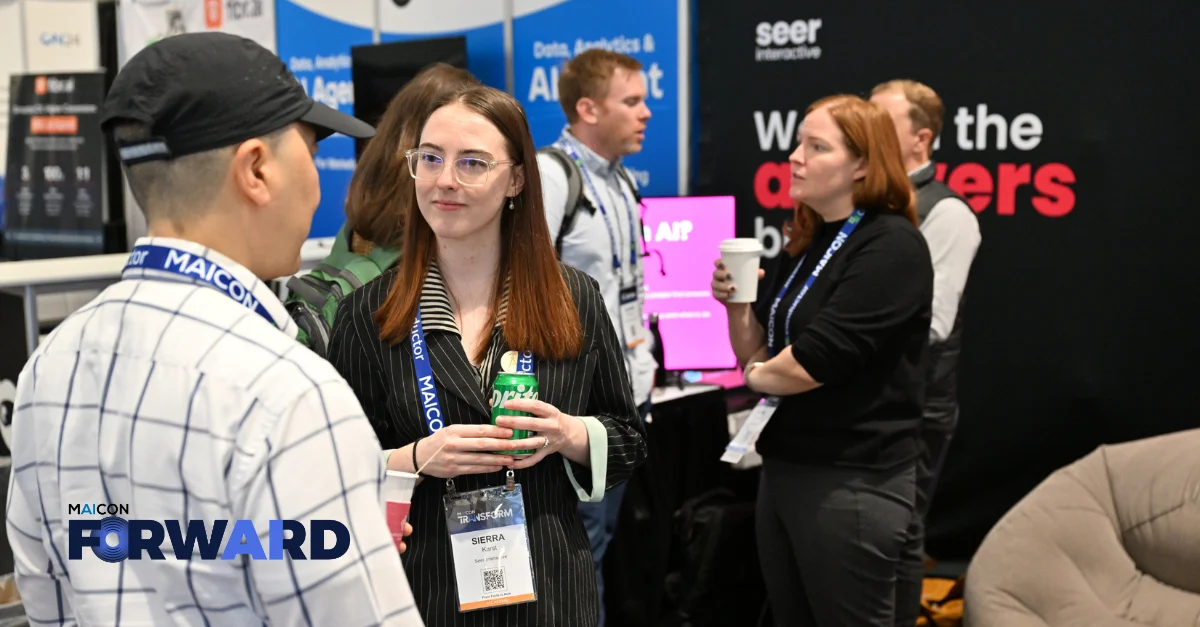
The shift toward AI-native service delivery is best exemplified by a select group of pioneers currently defining the next generation of marketing. These firms, many of which are slated to appear at the upcoming Marketing AI Conference (MAICON), offer a glimpse into the future of the industry.
Algomarketing: The People-Process Hybrid
Algomarketing is moving beyond simple tool implementation by focusing on what they call "People Transformation" and "Process Transformation." Their approach is surgical: they embed senior practitioners directly into client teams to conduct a deep audit of existing workflows. From this diagnostic foundation, they co-build AI-native agents designed to automate the friction points that currently bog down marketing departments. Crucially, they recognize that technology is useless without cultural buy-in, which is why they pair technical implementation with deep-dive coaching to ensure teams are equipped to wield their new tools effectively.
Demand Spring: Operationalizing the B2B Revenue Engine
B2B marketing is notorious for its complex buying journeys and fragmented data. Demand Spring has pivoted to meet this challenge by positioning itself as a revenue marketing consultancy. They don’t just "do marketing"; they integrate strategy, technology, and execution. By offering specific AI advisory services—covering everything from Account-Based Marketing (ABM) to SEO and AEO (Answer Engine Optimization)—they help clients move past the "experimentation phase." They provide the governance framework required to ensure that AI adoption doesn’t lead to brand risk, but rather to scalable, measurable growth.
EMMIE Collective: The Fractional Revolution
The rise of the "on-demand" economy has found its home in operations. EMMIE Collective has discarded the traditional "agency of record" model in favor of a fractional approach. By embedding experienced Marketing Operations (MOps) and Revenue Operations (RevOps) experts into client teams, they provide a flexible layer of expertise. Whether a client needs help navigating the intricacies of Salesforce, HubSpot, or complex data operations, EMMIE provides the technical muscle that allows internal teams to focus on strategy rather than platform maintenance.
Fjorge: The Tech-First Partner
Sometimes, the most valuable marketing agency is the one that doesn’t look like a marketing agency at all. Fjorge operates as a specialized digital development partner. In an era where "marketing" is increasingly synonymous with "digital experience," Fjorge provides the heavy-duty technical support needed to build custom web applications, mobile platforms, and e-commerce infrastructure. They function as a hidden engine room, embedding with creative agencies to ensure that high-level marketing concepts are supported by robust, scalable code.
Intercept: The AI-Native Delivery Model
Intercept has embraced a philosophy of "AI-native delivery." While they handle the full suite of agency services—from content and creative to digital media and sales enablement—their process is entirely built around proprietary AI workflows. By using machine learning to accelerate research, production, and personalization, they allow their human strategists to spend less time on manual labor and more time on high-level creative direction. Their "Intercept Labs" arm serves as a sandbox for clients, allowing brands to test AI-driven approaches before committing to enterprise-wide rollouts.
Level Agency: AI Orchestration
For brands with complex, high-consideration buying journeys, simple lead generation is no longer enough. Level Agency focuses on "AI orchestration"—building repeatable, data-driven systems that connect the entire customer journey. By integrating SEO, media planning, and CRM automation into a single, AI-powered loop, they ensure that strategy and execution are never siloed.
Seer Interactive: Two Decades of Data-Driven Evolution
A veteran in the space, Seer Interactive has managed to evolve from a traditional SEO agency into an AI powerhouse. Their longevity in the market has given them a unique perspective on the shift toward machine learning. Through their "AI Lab," they conduct continuous internal experimentation, which informs their client-facing "SeerAdvance" consulting practice. Their approach proves that legacy agencies can pivot successfully if they are willing to treat AI as a core research discipline rather than an add-on service.
Soarion Digital: Conquering the AI Search Era
The rise of Large Language Models (LLMs) and generative search (like ChatGPT and Perplexity) has created a new SEO battlefield. Soarion Digital is leaning into this shift, blending traditional search expertise with AI-specific optimization. They help brands become the "go-to answer" in AI search tools by focusing on citation-driven content and third-party validation, effectively teaching AI models to trust the client’s brand.
The Implications: Why This Matters for the Future of Business
The transition toward these new models carries significant implications for the business world at large.
- The Death of the Billable Hour: As agencies move toward AI-driven automation, the traditional model of charging for time becomes increasingly obsolete. We are moving toward a value-based pricing model, where agencies are rewarded for efficiency and results, not for how many hours a staffer spent on a project.
- The Shift to Consultative Partnerships: Agencies are becoming less like vendors and more like partners. The complexity of AI integration requires a deep understanding of a client’s business, data, and culture. Agencies that cannot provide high-level consulting will likely find themselves commoditized.
- Human-Centric Creativity: As AI takes over the "grunt work" of research, formatting, and data analysis, the value of human-led strategy and creative thinking will skyrocket. The best agencies will use AI to eliminate the mundane, freeing up talent to focus on high-stakes, high-creativity brand work.
- Governance as a Service: With the rise of AI comes the risk of data leakage, brand hallucinations, and compliance issues. The agencies of the future will be responsible for building the guardrails that protect their clients, turning "Governance" into a key service offering.
Moving from Experimentation to Impact
The central challenge for marketing leaders today is no longer "should we use AI?" but rather "how do we operationalize it to achieve real-world impact?"
The agencies listed above represent a shift in the industry toward precision, scalability, and deep technological integration. For businesses looking to survive the next decade of digital disruption, the goal should be to find a partner that views AI not as a shortcut, but as a fundamental shift in the way value is created.
As we look toward the future, the divide between those who embrace this change and those who ignore it will only continue to grow. Marketing AI Conference (MAICON) 2026, held from October 13–15 in Cleveland, Ohio, will serve as a gathering point for those leaders determined to bridge that gap. For companies ready to stop experimenting and start delivering, the path forward is clear: it’s time to rethink the agency relationship entirely.