
Selecting the right financial infrastructure is one of the most critical foundational decisions an entrepreneur will make. As global commerce continues its rapid digital transformation, the mechanisms by which businesses collect revenue have evolved far beyond traditional cash registers and rudimentary card swipes. Today’s merchant ecosystem demands speed, ironclad security, seamless user experiences, and multi-currency capabilities.
For founders launching ventures or established business owners looking to overhaul legacy systems, the modern market offers an abundance of choice. However, navigating this landscape can quickly become overwhelming. To simplify this critical decision-making process, we have rigorously tested and analyzed the market’s leading options, narrowing them down to the top six payment systems for small businesses in 2025.
What Is a Modern Payment System?
Before evaluating individual platforms, it is vital to establish what constitutes a modern payment system. In the context of contemporary commerce, a payment system refers to any platform, network, or technological framework that facilitates the secure transfer of funds between a buyer and a seller in exchange for goods or services.
These networks encompass a wide array of financial tools, including:
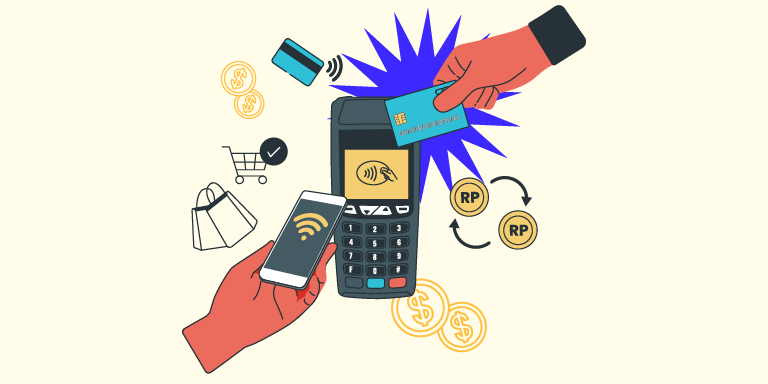
- Online Payment Gateways: Software that authorizes credit card or direct payments for e-commerce websites.
- Credit Card Processors: Hardware and software networks that handle the physical or digital exchange of data from a cardholder’s bank to the merchant’s account.
- Mobile Wallets and Digital Apps: Systems that store payment information securely on smart devices for quick, contactless transactions.
- Bank Transfer Networks: Infrastructure supporting direct Automated Clearing House (ACH) or wire transfers.
Conversely, payment systems are distinct from standalone accounting software, invoicing tools that lack processing capabilities, or proprietary bank accounts that do not directly interface with point-of-sale (POS) equipment.
Key Factors to Consider When Selecting a Payment Method
In narrowing down the top payment providers for 2025, our evaluation was guided by five core pillars essential to the health and survival of small businesses and startups:
1. Payout Times
Cash flow is the lifeblood of any small business. When a customer initiates a transaction, funds do not instantly appear in a business bank account; they must clear through acquiring and issuing banks. Payout speeds vary drastically between providers—ranging from instant access (often for a fee) to standard business windows of two to five days. For lean operations working with tight budgets, rapid access to capital is non-negotiable.
2. User Experience and Checkout Friction
A fast payment gateway is meaningless if the checkout process frustrates the consumer. High cart abandonment rates are frequently the result of clunky, multi-page checkouts or forced redirection to external sites. Modern solutions must prioritize a frictionless, intuitive checkout experience to maximize conversion rates and protect profit margins.

3. Geographical Accessibility
Businesses must evaluate whether their target market is strictly local or globally distributed. While some payment gateways effortlessly process international transactions across dozens of currencies, others restrict usage to specific geographic jurisdictions or incur heavy cross-border fees.
4. Transparent and Scalable Pricing Structures
The payment processing industry is notoriously complex, utilizing variable rates, interchange-plus models, and tiered pricing that can obscure true costs. Business owners must align a provider’s pricing structure with their specific sales volume and average ticket size to avoid eating into already thin profit margins.
5. Security and Compliance
With cyber threats evolving continuously, security cannot be an afterthought. Every legitimate payment system must comply with the Payment Card Industry Data Security Standard (PCI-DSS) to safeguard sensitive consumer data, protect against fraudulent chargebacks, and maintain brand reputation.
The Evolution of Merchant Services: A Historical Chronology
To understand why the market looks the way it does in 2025, it helps to examine how digital payments evolved:
- The Pre-Digital Era (Pre-1990s): Transactions relied entirely on cash, checks, and physical credit card imprinters (" knuckle-busters") that manually copied raised card numbers onto carbon paper.
- The Rise of Electronic Gateways (Late 1990s – 2000s): The birth of e-commerce necessitated digital infrastructure. Companies like PayPal emerged to facilitate online auctions and digital storefronts, introducing the concept of digital wallets.
- The Mobile and API Revolution (2010s): Stripe disrupted the market by introducing developer-first APIs, allowing seamless, embedded checkouts without redirecting users. Simultaneously, Square democratized in-person card acceptance for micro-merchants using smartphone dongles.
- The Omnichannel Era (2020–Present): Today’s merchants expect unified commerce—seamlessly blending online, mobile, and in-person sales data into a single financial dashboard, fortified by advanced machine learning fraud detection.
The Top 6 Payment Systems for Small Businesses in 2025
1. Stripe
Stripe has cemented its position as an industry favorite for online businesses, largely due to its developer-friendly nature and streamlined user interface.
- Pros:
- Incredibly easy to install, maintain, and scale.
- Keeps customers on your website during checkout via custom UI components, drastically reducing cart abandonment.
- Robust support for recurring billing, subscriptions, and global multi-currency transactions.
- Potential Drawback: Advanced configurations, custom workflows, or complex enterprise setups often require hiring a technical developer to implement effectively.
- Pricing: Standard online processing generally sits around 2.9% + 30¢ per successful card charge, though custom volume pricing is available for high-volume sellers.
2. PayPal
As one of the most recognizable names in digital finance, PayPal remains a staple for merchants seeking instant consumer trust.
- Pros:
- High brand recognition significantly boosts buyer confidence, particularly for new or lesser-known online stores.
- Global reach supporting multiple currencies and localized payment preferences.
- Simple, out-of-the-box integration with nearly all major e-commerce builders.
- Potential Drawback: Standard checkout flows often redirect users away from the merchant’s website to PayPal’s landing page, which can introduce friction and drop-offs.
- Pricing: Standard domestic web transactions typically incur a fee of around 3.49% + 49¢, varying slightly based on the specific integration method used.
3. Authorize.net
A veteran in the payment gateway space, Authorize.net is a powerhouse designed for businesses seeking deep customization and robust security.
- Pros:
- Extremely developer-friendly API allowing for high versatility and tailored user experiences.
- Advanced Fraud Detection Suite (AFDS) comes built-in, offering customizable filters to block suspicious transactions.
- Reliable customer support and stable merchant accounts.
- Potential Drawback: Traditional merchant account setups can involve monthly gateway fees alongside per-transaction costs, making it less ideal for very small or seasonal startups.
- Pricing: Typically features a monthly gateway fee (around $25) plus a per-transaction rate of approximately 2.9% + 30¢ for card-not-present transactions.
4. Amazon Pay
Leveraging the massive ecosystem of one of the world’s largest retailers, Amazon Pay allows merchants to tap into existing customer trust and saved credentials.

- Pros:
- Allows customers to check out using the shipping and payment information stored safely in their Amazon accounts within seconds.
- Inherits Amazon’s world-class, rigorous fraud protection algorithms.
- Seamless integration options with major e-commerce platforms like Shopify, WooCommerce, and Magento.
- Potential Drawback: Transaction data remains within Amazon’s ecosystem to a degree, limiting the merchant’s ability to deeply personalize direct customer relationships post-sale.
- Pricing: Standard web and mobile processing rates typically start around 2.9% + 30¢ for domestic transactions.
5. Square
For small businesses operating physical brick-and-mortar storefronts, pop-up shops, or mobile service businesses, Square remains the gold standard.
- Pros:
- Unmatched hardware ecosystem, ranging from free magstripe readers to advanced POS terminals and registers.
- Intuitive Virtual Terminal enables keyed-in transactions from computers or mobile devices without physical hardware.
- Comprehensive all-in-one ecosystem combining inventory, payroll, and customer loyalty tools.
- Potential Drawback: While excellent for in-person sales, its out-of-the-box e-commerce features can feel less flexible compared to software built strictly for the web, like Stripe.
- Pricing: In-person transactions generally carry a fee of 2.6% + 10¢, while online or keyed-in transactions cost roughly 2.9% + 30¢.
6. SecurePay
An emerging alternative gaining traction among startups and growing eCommerce brands, SecurePay offers a versatile suite of tools designed to simplify payment operations.
- Pros:
- Easy setup process complemented by robust API integrations that work seamlessly outside of monolithic platforms like Shopify.
- Offers practical trial options allowing merchants to test functionality before committing.
- Comprehensive support for diverse payment channels.
- Potential Drawback: Brand recognition is lower than giants like PayPal or Amazon, which can occasionally cause hesitation among first-time visitors wary of unverified checkout portals.
- Pricing: Competitive tiered and interchange-plus structures tailored to the specific volume tier of the business.
Industry Implications and Future Outlook
The landscape of small business payments in 2025 is shaped by tightening regulatory frameworks, consumer demand for instantaneous checkout experiences, and the omnipresent threat of digital fraud.
As payment service providers (PSPs) continue to integrate artificial intelligence into their fraud detection matrices, small businesses benefit from enterprise-grade security protocols that were once reserved exclusively for multinational corporations. However, merchants must remain vigilant. Payment processors frequently update their terms of service, adjust interchange fees, or alter volume thresholds on a quarterly basis.
Entrepreneurs are strongly advised to audit their payment stacks annually, cross-referencing official provider documentation to ensure that their chosen gateway continues to align with their profit margins, technological needs, and customer expectations.
Frequently Asked Questions (FAQ)
What is the best payment processing software for small businesses?
The best software depends entirely on your business model. For flexible online businesses, Stripe is widely considered the top choice due to its developer tools and seamless checkout experience. For physical retail, Square leads the market with its robust POS hardware and virtual terminal capabilities.
How do mobile and contactless payments work?
Mobile wallets (such as Apple Pay and Google Pay) and contactless cards utilize Near Field Communication (NFC) technology. When a customer taps their smartphone, wearable device, or card near a compatible POS terminal, encrypted payment data is transmitted instantly to authorize the transaction.
What are Payment Service Providers (PSPs)?
Payment Service Providers (such as Stripe, Square, and PayPal) are third-party platforms that aggregate merchants under a master merchant account. They simplify the process of accepting credit cards online and in-person by bundling merchant services, gateway technology, and fraud protection into a single platform without requiring a traditional standalone merchant account from a commercial bank.
Do small business payment systems charge monthly subscription fees?
It varies by provider. Many modern PSPs (like Stripe and Square) operate on a pay-as-you-go model, charging only per transaction with no monthly subscription fees. However, providers offering advanced gateway features, dedicated support, or specialized hardware (such as Authorize.net) may charge a fixed monthly gateway or service fee alongside transaction percentages.