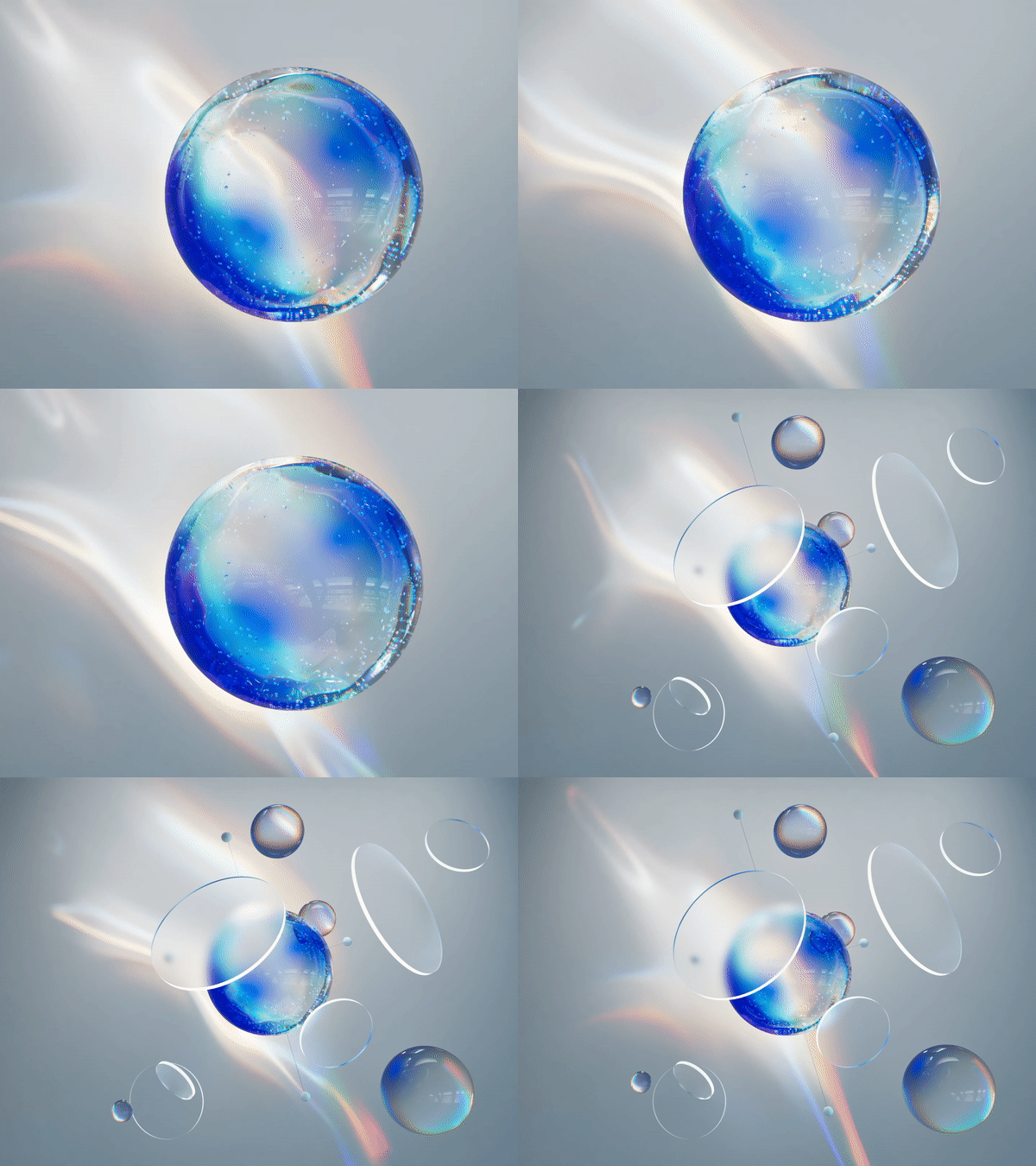
The digital landscape is undergoing a seismic shift. From the minimalist interfaces of mobile applications to the hyper-realistic renders of the metaverse, the tools of the creative trade are being rapidly overhauled by artificial intelligence. As text-to-image generators like DALL-E, Midjourney, and Stable Diffusion move from experimental curiosities to professional-grade utilities, the design community faces a profound existential question: Will AI replace the designer, or is this the dawn of a new era of human-machine symbiosis?
Designers Nick Babich and Gleb Kuznetsov suggest that while the fear of obsolescence is natural, it is also misplaced. Instead of a replacement, we are witnessing the arrival of a "bicycle for the mind"—a transformative power that promises to shift the designer’s role from manual laborer to visionary director.
The Chronology of a Creative Revolution
To understand the current state of design, one must look at the rapid acceleration of generative AI.
- The Pre-AI Era: For decades, the design process was defined by technical proficiency. Mastery required thousands of hours of practice in software like Photoshop, Illustrator, or Blender. The ratio of "craft" to "art" was heavily skewed, with approximately 95% of a project dedicated to the technical execution of an idea.
- The Proliferation Phase (2021–2022): The public release of DALL-E 2 and Midjourney turned the design world on its head. Suddenly, the barrier to entry for high-fidelity visualization collapsed. An individual could translate a string of text into a complex visual output in seconds.
- The Integration Phase (2023–Present): We are currently in a period of experimentation. Professionals are beginning to incorporate AI into their daily workflows, not as a replacement for their intellect, but as a shortcut to bypass tedious technical tasks.
This transition mirrors the Industrial Revolution. Just as 19th-century textile workers feared the mechanization of their labor, contemporary designers fear that their technical skills will be rendered redundant. However, history suggests that automation does not destroy human value; it elevates it by removing the burden of repetitive, manual processes.
Supporting Data: The Efficiency Gap
The primary driver for the adoption of AI in the creative industry is efficiency. In traditional pipelines, a complex CGI render could require 87 hours of processing time across multiple high-end workstations. Today, AI models can produce comparable conceptual visualizations in minutes.
The Problem of Homogenization
A recurring criticism of AI-generated art is the risk of "homogenization." Because models are trained on vast, shared datasets, there is a tendency for the output to look stylistically similar. This is not entirely new; the "Dribbblisation of design"—whereby designers mimicked popular, trendy styles to gain approval—already created a cycle of derivative work. Paul Gauguin once famously remarked, "The first is copying nature; the second is copying the first; the third is copying the second."
AI amplifies this, but it also provides a solution. As models become more sophisticated, they will allow for personalized training. Designers will soon be able to feed their own portfolios into local models, ensuring that the AI learns from their unique "human fingerprint" rather than relying solely on generic internet trends.
Official Perspectives and Legal Uncertainties
The rapid rise of these tools has not occurred without friction. In early 2023, a landmark class-action lawsuit was filed against Stability AI and Midjourney, alleging that the companies scraped billions of images without consent or compensation.

The Legal Quagmire
The core of the issue lies in whether AI training constitutes "fair use." While the legal system grapples with these questions, the industry has already begun to adapt. Stock photo giants like Shutterstock have formed partnerships with OpenAI to create "contributor funds," ensuring that artists whose work informs the training data are compensated.
From a professional standpoint, the consensus is shifting: AI is an assistant, not an author. While you can take credit for AI-generated work, the lack of granular control in current models means the output often lacks the specific intent and nuance that a professional human designer brings to a project.
Implications: The New Chapter of Co-Creation
The future of design lies in "co-creation." We are moving toward a model where the designer acts as an editor and curator, rather than a pixels-pusher.
1. The Death of the Traditional Mood Board
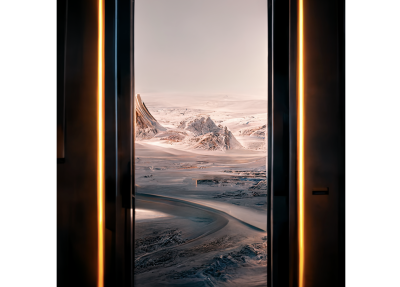
The manual labor of scouring Pinterest or Behance to curate a mood board is being replaced by instant visual exploration. Designers can now prompt an AI to generate hundreds of stylistic variations for a brand identity, allowing them to explore "creative dead ends" in minutes rather than days. This freedom allows for a more expansive creative process, where the focus remains on strategy and problem-solving.
2. Streamlined Product Design
In the realm of UI/UX, AI is poised to eliminate the "blank page" syndrome. By using prompts to define the context, audience, and platform constraints, designers can generate high-fidelity prototypes almost instantly. While these tools currently struggle with precise tasks—such as rendering human hands or functional navigation logic—they provide a "low-fidelity-plus" starting point that accelerates brainstorming sessions significantly.
3. The Metaverse and Virtual Architecture
As we move toward more immersive digital environments, the sheer scale of production required to build the metaverse is impossible for human teams alone. AI will act as the "architect’s assistant," generating textures, environmental assets, and even character behaviors. In this space, the designer becomes a director, overseeing a vast, algorithmically-generated world while injecting the necessary humanity and narrative structure to make the experience meaningful.

The Human Element: Why Design Still Needs People
If AI can generate images, draft user journeys, and propose color palettes, what remains for the human designer?
The answer is intent.
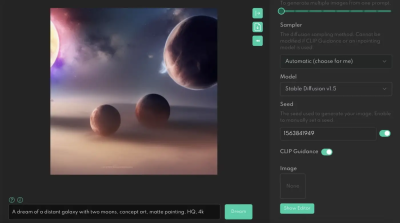
AI lacks the lived experience that informs good design. It cannot empathize with a user, understand the complex emotional stakes of a brand, or navigate the subtle, unspoken cultural nuances of a target demographic. It can process patterns, but it cannot exercise wisdom.
The designers of the future will be those who master the art of the "prompt"—not just as a technical command, but as a creative directive. They will be the ones who can take the raw, sometimes chaotic output of an AI and refine it into a cohesive, purposeful solution.
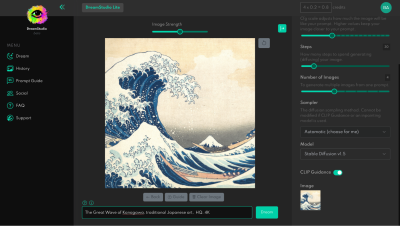
As we open this new chapter, we must embrace the idea that our value is not tied to the physical act of drawing or rendering, but to our ability to conceive, curate, and direct. The tools are changing, but the need for human vision is more critical than ever. The future of design is not a battle between the machine and the mind; it is a partnership that promises to make our world more interesting, more accessible, and profoundly more creative.
Key Takeaways for Practitioners:
- Embrace Iteration: Use AI for rapid exploration and discovery. Don’t fear the "garbage bin"—let the machine help you empty it faster.
- Focus on Strategy: As technical execution becomes automated, shift your focus to user psychology, business goals, and design systems.
- Maintain Your Voice: Personalize your AI models whenever possible to ensure your work remains distinct and avoids the "generic" trap.
- Stay Informed: Keep a close eye on legal developments regarding copyright and fair use, as these will define the professional standards of the next decade.
The canvas is larger than it has ever been. It is up to the modern designer to decide what to paint on it.