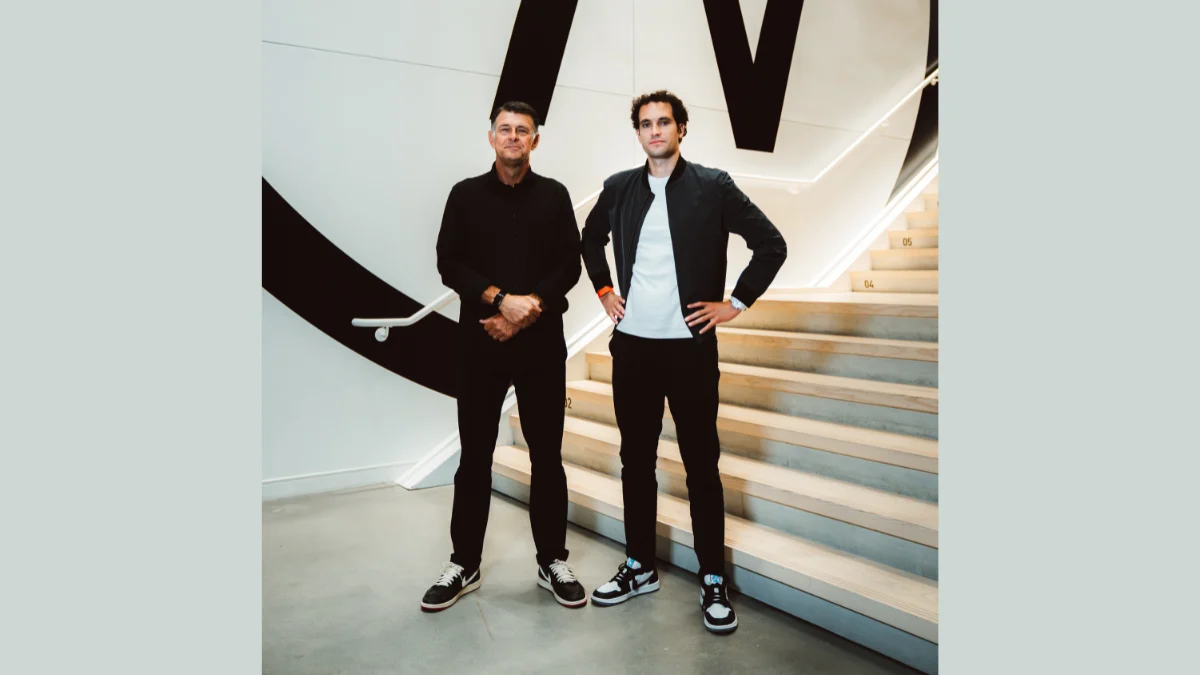
As the wearable technology sector matures from a niche hobbyist market into a foundational pillar of global health and wellness, Whoop—the human performance company known for its screenless biometric tracker—is making a decisive play for the big leagues. In a strategic move that signals an ambition to transition from a performance tool to a household name, Whoop has announced the appointment of Dirk-Jan van Hameren, the former Chief Marketing Officer of Nike, as its new Chief Marketing Officer.
The appointment, effective July 20, marks a significant turning point for the Boston-based startup. As Whoop crosses the milestone of 3 million global members, van Hameren’s arrival signals that the company is no longer content with being the "best-kept secret" among elite athletes; it is aiming for total cultural saturation.
The Main Facts: A High-Stakes Transition
Dirk-Jan van Hameren’s move to Whoop is perhaps one of the most high-profile executive migrations in the tech-wellness space this year. Reporting directly to founder and CEO Will Ahmed, van Hameren inherits a rapidly scaling organization. His mandate is comprehensive, spanning global brand partnerships, the cultivation of high-profile athlete relationships, and the development of sophisticated product storytelling—all aimed at accelerating the company’s subscription-based revenue model.
Van Hameren succeeds John Sullivan, who navigated the brand through its formative years. The new CMO will be responsible for a global marketing division of 65 professionals, with teams strategically positioned across the United States, France, Central Asia, and Australia. This geographically diverse team reflects Whoop’s aggressive international expansion strategy, positioning the brand to capture market share in regions where health-conscious demographics are rapidly adopting wearable health monitoring.
A Chronology of Growth: From Start-up to Global Contender
To understand the magnitude of this hire, one must look at the trajectory of both the individual and the organization.
The Nike Years
Dirk-Jan van Hameren’s tenure at Nike was characterized by a masterclass in brand storytelling. During his decades with the sportswear giant, he oversaw some of the most iconic marketing campaigns in history. He understood that Nike was not selling shoes; they were selling an ethos—a philosophy of human potential. His ability to marry performance data with emotive, human-centric messaging is exactly what Whoop is banking on as it seeks to scale its own membership base.
The Whoop Evolution
- 2012: Will Ahmed founds Whoop at Harvard University, focusing on the elite athlete market.
- 2016-2018: The brand gains traction among professional sports leagues, most notably the PGA Tour and the NFL, as players look for ways to optimize recovery.
- 2020-2021: The COVID-19 pandemic accelerates interest in personal health monitoring. Whoop hits significant user milestones as consumers become hyper-aware of respiratory rates, resting heart rates, and blood oxygen levels.
- 2023-2024: Whoop shifts its focus from "pro-athlete only" to the "everyday athlete," introducing new hardware iterations and software features like the "Whoop Coach" AI.
- 2025: Whoop crosses the 3 million member mark, necessitating a more robust, consumer-facing marketing strategy.
- July 2026: Dirk-Jan van Hameren is appointed CMO to lead the next phase of growth.
Supporting Data: The Wearables Boom
The wearable technology market is currently in a state of hyper-growth. According to recent industry reports, the global wearable technology market is projected to reach over $180 billion by 2028. However, the competitive landscape is fraught with tech giants—Apple, Samsung, and Garmin—all vying for the same real estate on the consumer’s wrist.
Whoop’s advantage lies in its data-driven, subscription-first approach. Unlike traditional smartwatches that focus on notification delivery and app integration, Whoop’s "no-screen" interface forces a focus on long-term physiological data. With 3 million active members, the company has accumulated one of the largest human performance datasets in the world.
Van Hameren’s challenge is to convert this data into a compelling consumer narrative. The market is shifting away from simple "step counting" toward "recovery and strain management," and Whoop’s proprietary algorithms—designed to measure Heart Rate Variability (HRV) and sleep quality—are perfectly positioned to capitalize on this shift.
Official Responses and Strategic Intent
In an exclusive statement provided to ADWEEK, van Hameren laid out his vision for the company’s future. His words echo the sentiment of someone who is not merely interested in marketing a product, but in building a cultural phenomenon.
"My scope here is to build an iconic global brand that is going to be aspirational, meaningful, and relevant in people’s lives," van Hameren stated.
This emphasis on "aspirational" and "meaningful" is key. By focusing on the why rather than the what, van Hameren is signaling a departure from dry technical specs. He is positioning Whoop as an essential partner in a consumer’s journey toward self-actualization. For Will Ahmed, the appointment is a validation of the company’s maturity. Bringing in a veteran of van Hameren’s stature suggests that Whoop is prepared to play a long game, focusing on brand equity and community building rather than short-term hardware cycles.
Implications: The Road Ahead
What does this hire mean for the future of the wearable market?
1. The "Lifestyle" Pivot
Expect to see Whoop move away from purely athletic, sweat-drenched imagery toward a broader lifestyle brand. Van Hameren is an expert at finding the intersection between performance and high fashion, culture, and daily habit. We may see Whoop integration into corporate wellness programs, luxury fashion collaborations, and expanded storytelling that emphasizes sleep and mental health over just high-intensity training.
2. Global Brand Dominance
With team members already operating in France and Central Asia, the appointment suggests that Whoop is ready to challenge regional incumbents in Europe and Asia. Van Hameren’s experience in navigating complex, multi-territory brand strategies will be instrumental in ensuring that the Whoop message—translated into dozens of languages—retains its potency.
3. Subscription Retention
In a saturated market, the challenge is not just acquiring users, but retaining them. By focusing on "product storytelling," van Hameren aims to deepen the emotional investment of current members. If he can make the Whoop app feel like an indispensable personal companion rather than a clinical health tool, the churn rate will drop, and the company’s valuation will likely soar.
4. Competitive Pressure on Tech Titans
Apple and other manufacturers often bundle health features into their existing devices. Whoop’s response to this, under van Hameren, will likely be a doubling down on the "purity" of the experience. By positioning the wearable as a specialized tool for experts and high-performers, Whoop can maintain its premium pricing and brand prestige even as commodity wearables become cheaper.
Conclusion
The appointment of Dirk-Jan van Hameren is a bold declaration of intent. By hiring the architect of some of Nike’s most resonant campaigns, Whoop is effectively stating that it wants to be to human performance what Nike is to athletic apparel: a standard-bearer for excellence.
As the company enters this next chapter, the eyes of the tech and marketing industries will be fixed on the brand. With 3 million members as a foundation, and a veteran marketing visionary at the helm, Whoop is no longer just a startup with a clever gadget. It is a company on the precipice of defining the next era of personal health—one where data is not just collected, but used to change lives.
Whether van Hameren can replicate his Nike success in the specialized, data-heavy world of wearables remains to be seen. But one thing is clear: the race for the future of wellness has just gained a significant new contender, and the stakes have never been higher.