The digital landscape is a crowded, noisy marketplace. Every second, thousands of articles, listicles, and opinion pieces are published, all competing for the same finite resource: the reader’s attention. In this high-stakes environment, the difference between a viral success and a forgotten post often comes down to a matter of milliseconds.
While much has been written about the importance of search engine optimization (SEO) and the power of a compelling headline, there is a secondary, equally critical pillar of content strategy that is frequently overlooked: the opening line. If your headline is the "doorway" that invites a reader into your home, your opening line is the "foyer" that determines whether they stay for a conversation or turn around and leave immediately.
The Anatomy of Reader Engagement
The psychology of engagement is rooted in the "hook." When a reader clicks on your link, they are effectively offering you a moment of their time. The opening line serves as the promise of value. If that promise is weak, generic, or boring, the reader will instinctively bounce back to their social media feed or search results.
In the craft of professional blogging, the title is unequivocally the most important set of words you will write, as its sole purpose is to secure the click. However, the second most important set of words is your opening sentence. Its mandate is singular: to propel the reader into the second sentence, and from there, into the body of the work. Mastering this transition is the hallmark of a seasoned content creator.
11 Proven Strategies to Hook Your Readers
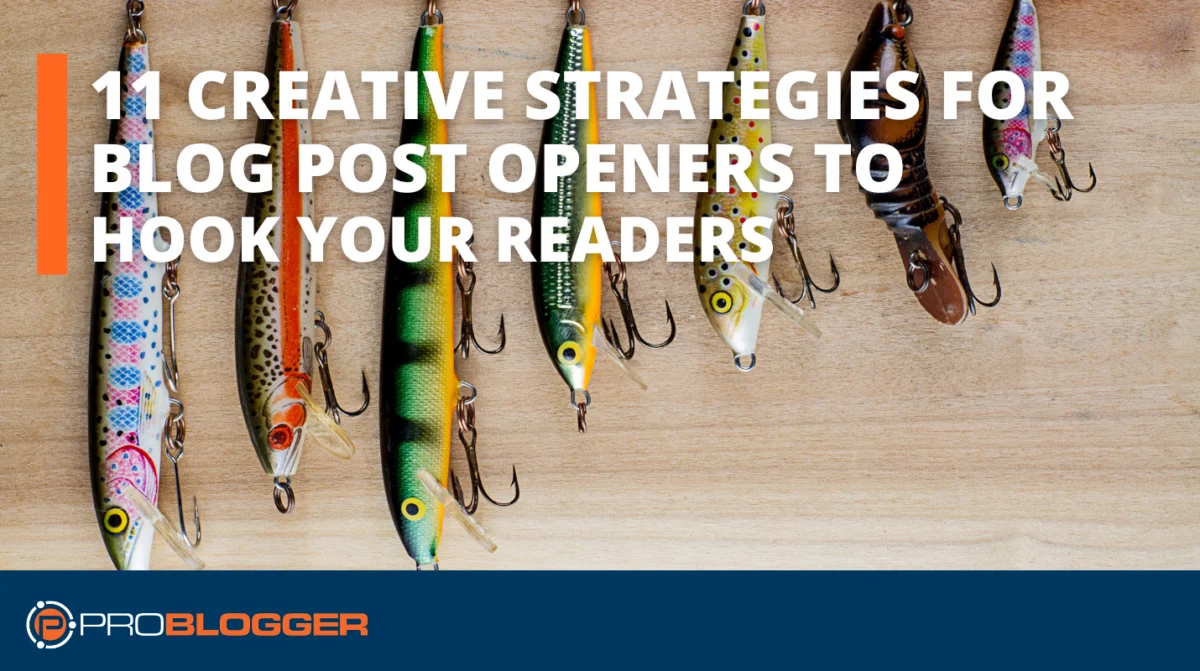
Drawing from decades of digital content evolution, we have distilled 11 actionable strategies designed to stop the scroll and command attention.
1. Identify and Validate a Specific Need
The most effective way to secure a reader’s loyalty is to demonstrate, within the first five words, that you understand their pain. By pinpointing a specific problem, you immediately establish relevance. You do not need to provide the solution in the opening; you simply need to confirm that you are the person who has the solution. By acknowledging their frustration or desire, you create a psychological "buy-in" that makes the reader feel seen.
2. The "Yes-Set" Technique: The One-Answer Question
Copywriters have utilized the "Yes-Set" for decades. By asking a question that forces the reader to mentally agree with you, you create a momentum of compliance. If a reader says "yes" to your opening question, they are subconsciously agreeing to continue the journey with you. This creates a bridge of trust that keeps them reading deeper into the text.
3. Posing Intriguing Questions
While the "Yes-Set" builds agreement, the "Intriguing Question" builds curiosity. This involves posing a query that lacks a simple yes-or-no answer, instead promising a revelation. For example, "What if everything you knew about search engine optimization was actually costing you traffic?" This forces the reader to engage their analytical mind, creating a "curiosity gap" that can only be filled by reading the rest of your post.
4. Leveraging the Power of Surprise
Humans are wired to notice anomalies. If your opening line breaks the pattern of standard, dry, or overly formal writing, you gain an immediate advantage. Sharing a personal, perhaps slightly off-topic anecdote—such as an embarrassing mistake or an unexpected coincidence—acts as a "pattern interrupt." It humanizes the author and signals to the reader that they are about to read something authentic rather than a recycled, AI-generated script.
5. Storytelling and Analogies
The human brain is hard-wired for narrative. We remember stories far more effectively than we remember data points. Opening a post with a brief, punchy story or an analogy allows you to explain complex topics through a relatable lens. Whether it is a personal struggle or a fable, a story shifts the reader’s state from "passive consumer" to "active listener," making them more receptive to your core arguments.
6. The Bold Claim
In an era of hesitation, authority is magnetic. A bold claim—a promise to solve a massive problem or a contrarian take on a popular industry standard—sets high expectations. It challenges the reader to verify your confidence. However, a caveat is required: you must be able to support this claim with substance later in the article, or you risk losing your audience’s trust permanently.
7. Stirring Strategic Controversy
Controversy, when used with precision, is a powerful engine for engagement. By challenging an established norm, a popular product, or an industry consensus, you invite the reader to take a side. This often leads to more comments, more social shares, and a higher level of emotional investment from your audience. It turns your blog post from a monologue into a conversation.
8. Painting a Vivid, Sensory Picture
Abstract concepts often fail to gain traction because they lack texture. By using sensory language—asking the reader to visualize a specific scenario—you make your content "tangible." Whether you are describing the stress of a deadline or the joy of a breakthrough, engaging the reader’s imagination creates an emotional anchor that makes your message significantly more memorable.
9. Utilizing Startling Statistics
Numbers provide an objective "hook" that is hard to ignore. A shocking statistic—such as "Only 1% of your audience will ever click that link"—immediately communicates the gravity of the topic. It establishes urgency and provides a rational basis for the reader to keep going.
10. The Authority of the Quote
A well-placed, resonant quote from an industry titan or a historical figure can lend immediate credibility to your post. It anchors your argument in a larger intellectual tradition and provides a "north star" for the discussion to follow. It signals to the reader that you have done your research and are operating from a position of informed expertise.
11. The Impactful Visual Lead
In the age of visual social media, the text doesn’t always start with words. An impactful image—a striking photograph, a complex infographic, or a powerful illustration—can serve as the ultimate opening line. Many readers scan the visual before they read a single sentence. If the image is compelling enough, it creates the emotional hook that drives the reader to the text.
Implications for Long-Term Content Strategy
The cumulative effect of these opening techniques is not just a momentary increase in page views; it is the foundation of brand authority. When a reader knows that a writer consistently delivers value and engages them from the very first sentence, they become a repeat visitor.
This consistency fosters "reader retention." In the long run, your blog is not just a collection of articles; it is a repository of trust. By treating the opening of every post as a deliberate, crafted experience rather than a throwaway introduction, you demonstrate a level of professionalism that sets your work apart from the vast sea of "filler" content.
Moving Forward: The Evolution of the Hook
As we look toward the future of digital publishing, the role of the opening line is becoming even more critical. With the rise of AI-generated content, generic and formulaic writing is becoming more abundant. The human element—the ability to tell a story, to be vulnerable, to be bold, and to connect on an emotional level—is becoming the ultimate differentiator.
To refine your craft, begin auditing your past posts. Look at your bounce rates and your time-on-page metrics. Experiment with these 11 strategies, rotating them to keep your loyal readers surprised and interested. Remember that your goal is not to trap the reader, but to invite them into a space where their needs are understood, their curiosity is piqued, and their time is respected.
The next time you sit down to write, don’t rush the introduction. Give your opening line the weight it deserves. Your readers—and your metrics—will thank you for it.