A legislative battle currently unfolding in Washington, D.C., has transcended the scope of local traffic ordinances, evolving into a definitive test case for the future of urban mobility. At the center of this clash is a proposed bill intended to modernize the District’s autonomous vehicle (AV) regulations—a move that has pitted two of the industry’s most powerful titans, Uber and Waymo, against one another in a fight that could redefine the economics of ride-hailing for decades to come.
While the two companies have previously found common ground in operational partnerships, the D.C. legislative framework has laid bare a fundamental strategic divergence. Uber, seeking to preserve its dominance as a multi-modal network, is aggressively lobbying for a “hybrid” regulatory model. In contrast, Alphabet-owned Waymo is pushing for a more open, independent deployment strategy that would allow its robotaxis to operate with greater autonomy from established ride-hailing gatekeepers.
The Legislative Landscape: A Policy Flashpoint
The proposed bill, introduced in May by Councilmember Charles Allen, seeks to overhaul the Autonomous Vehicle Act of 2012. Currently, the District permits AV testing, but only under the strict supervision of a human safety operator. The new legislation would grant the District Department of Transportation (DDOT) the power to issue full driverless deployment permits, provided operators meet rigorous safety and financial benchmarks.
Under the current draft, companies would be required to maintain $5 million in liability insurance and adhere to strict crash reporting protocols. Perhaps most contentiously, the bill includes a $0.15 per-mile tax on robotaxi operations. This “vehicle miles traveled” (VMT) levy is designed to fund public transit and workforce development programs, specifically targeting the displaced human drivers who stand to lose their livelihoods as autonomous fleets scale.
For Uber, this legislation is a potential existential threat. The company argues that the bill, as written, facilitates a “first-party only” approach that could enable companies like Waymo to establish de facto monopolies. Uber’s alternative vision is a mandated hybrid network, where any autonomous service must be integrated into a platform that also offers human-driven options, ensuring that labor and consumer choice remain tethered to the traditional ride-hailing model.
A History of Turbulence and Uneasy Alliances
The current antagonism between Uber and Waymo is a striking reversal from their recent, albeit rocky, history. The two firms were once locked in a bitter legal struggle over allegations of trade secret theft regarding laser-sensor (LiDAR) technology—a 2017 trial that captivated the tech world with the revelation that one of the disputed files was referred to as “the sauce.”
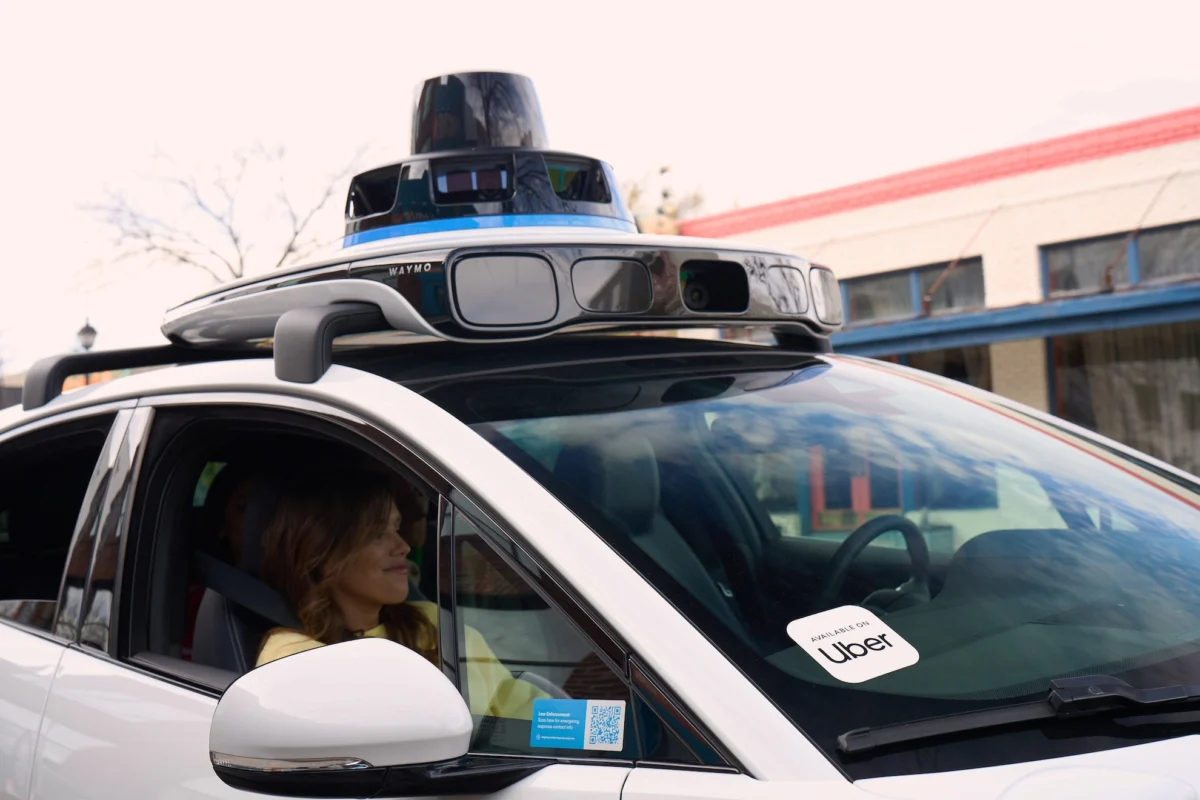
Following a settlement and Uber’s eventual divestiture of its in-house AV unit to Aurora, the companies attempted a pivot toward cooperation. In 2023, Waymo began integrating its driverless vehicles into the Uber app in Phoenix, a move that promised to merge Waymo’s advanced technology with Uber’s massive user base. The partnership expanded to Austin and Atlanta by early 2025, appearing to signal a new era of "frenemy" collaboration.

However, the sheen of this alliance has faded. As Waymo’s fleet scales—now providing over 500,000 rides weekly across 11 cities—Uber has become increasingly vocal about the risks of a purely autonomous landscape. Recent public spats, including social media critiques of robotaxi performance by Uber’s CTO and subtle digs by CEO Dara Khosrowshahi during earnings calls, underscore a relationship that is rapidly approaching a breaking point.
The Hybrid Model: Uber’s Strategic Defense
Uber’s pivot toward a “pro-labor, pro-regulation” stance represents a significant departure from its “move fast and break things” origin. According to industry analysts, this shift is calculated. By advocating for a hybrid network—where consumers can toggle between human drivers and AVs—Uber is attempting to maintain its position as the central utility of the transportation sector.
Javi Correoso, who leads U.S. policy for Uber, has been a central figure in this lobbying effort. During a D.C. Council roundtable, Correoso argued that an “AV-only” regulatory approach would lead to urban congestion, as empty robotaxis cruise for passengers, and would undermine the social safety net provided by human drivers who offer physical assistance to the elderly and disabled.
“We have already seen in other jurisdictions how a flawed, first-party only regulatory approach can disrupt a city,” Correoso stated. His vision is a mandatory regulatory framework requiring human-driven alternatives for every ride request, a move that would force AV companies to either plug into the Uber network or invest heavily in their own human-driver fleets—a move that would fundamentally alter their current, asset-light business model.
Supporting Data and the Economic Stakes
The economic implications for the District are significant. The proposed VMT tax is intended to bridge the gap between innovation and equity. Proponents argue that by splitting the revenue—50% to public transit and 50% to workforce retraining—the city can mitigate the social cost of automation.
However, the opposition is vast. A coalition of labor unions, including the Teamsters and the Service Employees International Union (SEIU), has joined the fray, while a mysterious New York-based group, the Coalition for Accountability and Road Safety, has launched an active canvassing campaign against the legislation. The influence of these groups, combined with Uber’s intense lobbying, has turned the D.C. hearing into a high-stakes gauntlet.
For AV developers, the D.C. bill is seen as a bellwether. If the city adopts a restrictive, tax-heavy framework that mandates hybrid operations, it could set a precedent for other states. Waymo, which maintains that its technology is already safe and equitable, has pushed back against these constraints. In an official statement, a Waymo representative noted, “We would welcome changes clarifying that different types of networks can operate in the District,” suggesting that any attempt to force them into a specific business model is a form of regulatory overreach.

Regulatory Capture or Necessary Oversight?
The debate has reached a fever pitch, with outside experts weighing in on the motives behind the legislative maneuvering. Greg Rogers, executive director of the nonprofit The Innovation Majority, has labeled Uber’s proposal as a classic case of “regulatory capture.”
“Mobility is already a marketplace,” Rogers told reporters. “Any argument that you can improve consumer welfare by forcing certain business models and canceling out others does not improve people’s mobility choices. It risks only further entrenching interests and charging rent on anyone who seeks to operate AVs in the district.”
Uber defends its stance by pointing to its own evolution. COO Andrew MacDonald has publicly acknowledged the company’s past mistakes, stating that the “grow-at-all-costs” approach of the early 2010s led to corporate crises and a breakdown in trust with municipal governments. Today, Uber claims it is seeking to be a partner in urban planning rather than an adversary. Yet, for critics, the “hybrid” proposal looks less like a compromise and more like a defensive moat built to prevent Waymo from achieving true independence.
Implications for the Future of Cities
As the D.C. Council prepares to deliberate, the outcome remains uncertain. Many stakeholders hope for a resolution by the end of the year, before Mayor Muriel Bowser concludes her term in January. Regardless of the immediate outcome, the tension between Uber and Waymo has spilled into the global arena, with both companies currently eyeing a massive, looming showdown in the London market.
The central question remains: Should a city treat an autonomous vehicle as a public utility to be managed under a unified network, or as a private technological asset that should compete freely in an open market?
Uber is betting its future on the former, hoping to convince lawmakers that the transition to autonomy must be mediated by a platform that values human labor. Waymo is betting on the latter, believing that the superiority of its technology will eventually render the need for such gatekeepers obsolete.
For the citizens of Washington, D.C., the result of this legislative battle will determine how they navigate their city for decades to come. As these two tech giants continue their collision course, the only certainty is that the era of unfettered, experimental robotaxi expansion is coming to a close, replaced by a new, more contentious phase of urban regulatory politics.