By: Global Tech & Media Desk
Published in collaboration with industry analysis reports
Introduction: A High-Stakes Clash of Tech Giants
The fault lines dividing the world’s most influential social media conglomerates have erupted into the open. In a striking escalation of industry-wide tensions, TikTok has officially rejected a multi-channel advertising campaign from Meta that publicly called on both TikTok and YouTube to join Meta’s colossal, multibillion-dollar child safety settlement with U.S. state attorneys general.
The move highlights more than just a corporate feud; it exposes the fragile mechanics of modern digital platform policy, the legal vulnerabilities of big tech, and the profound challenges of enforcing cross-industry safety standards. At its core, the dispute centers on billions of dollars, competitive survival, and the fundamental question of who should bear the responsibility for safeguarding minors online.
Main Facts: The Multi-Billion Dollar Ultimatum
Meta’s recent maneuvering stems from a monumental legal agreement forged with U.S. state officials. To resolve sprawling allegations that Facebook and Instagram were intentionally designed to trap, hook, and ultimately harm children and teenagers, Meta agreed to a staggering settlement package worth up to $16.7 billion.
However, this financial and structural agreement comes with a colossal catch: approximately $5 billion of the settlement is entirely conditional. For that portion of the agreement to hold, rival platforms—specifically TikTok and YouTube—must step forward and agree to matching terms, including mirrored restrictions and roughly $5 billion in individual financial contributions from each company.
What Meta’s Settlement Entails:
- Usage Limitations: Strict caps on daily screen time for young users.
- Time-Based Restrictions: Automated lockouts for overnight access.
- School Hours Protections: Complete suppression or limitation of notifications during standard school hours.
- Algorithm Adjustments: Mandatory options for chronological feeds rather than hyper-addictive recommendation engines.
- Reaction Masking: Restrictions on displaying public metrics like "likes" and other validation-heavy feedback loops to minor accounts.
Meta argues that unilateral disarmament is a recipe for corporate suicide. If Facebook and Instagram are forced to operate under these severe constraints while competing platforms remain unburdened, millions of teenage users will simply migrate to TikTok and YouTube. Consequently, Meta has embarked on a aggressive, public-facing campaign to force its rivals to the negotiating table, utilizing everything from direct PR statements to paid media.
Chronology: The Timeline of Escalation
The friction between these platforms has accelerated rapidly over the last several weeks, transitioning from backroom legal negotiations to a very public corporate war of words.
- Late August: Meta shocks the tech sector by agreeing to a settlement package worth up to $17 billion with U.S. states, explicitly stating that its viability relies on industry-wide adoption of child safety rules.
- Early September: Meta launches a coordinated PR and advertising blitz. The campaign features digital ads, public statements, and direct appeals urging TikTok and YouTube to "meet the standard" set by Meta and state attorneys general.
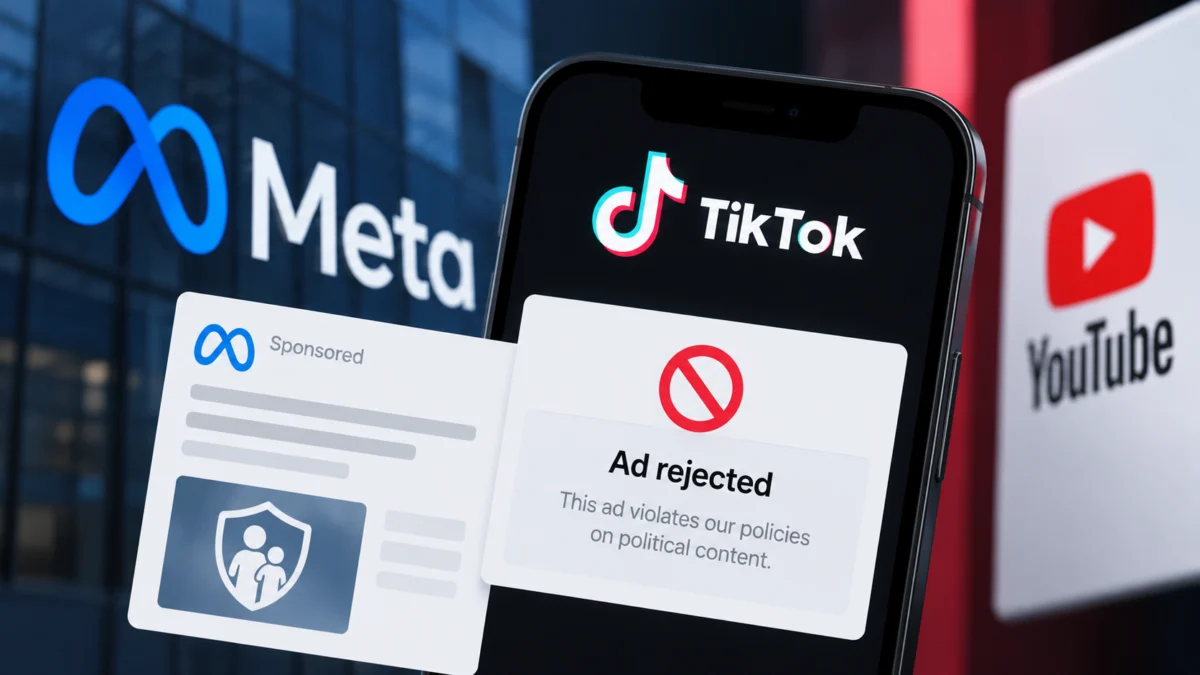
- Mid-September (The Ad Placement): Meta attempts to place sponsored video content directly onto TikTok’s platform. The ads feature targeted text, imagery, and voiceovers calling out TikTok and YouTube directly to accept identical settlement terms.
- Wednesday of the Same Week: TikTok decisively blocks and rejects Meta’s ad campaign. The platform cites its strict corporate policy against "political content," shutting down Meta’s attempt to use paid media to influence its user base.
- Following Days: Both TikTok and YouTube maintain a wall of public silence regarding Meta’s demands. Concurrently, reports emerge that both companies have quietly stepped back from high-profile engagements, including withdrawing from a Health and Human Services (HHS) panel on children’s screen time and backing out of a scheduled congressional meeting with the House China Select Committee.
Supporting Data: The Financial and Structural Stakes
To understand why Meta is willing to wage an aggressive and public public-relations battle against its fiercest competitors, one must examine the underlying numbers and structural realities of the digital advertising and youth attention economy.
- $16.7 Billion: The total ceiling of Meta’s multi-state child safety settlement.
- $5 Billion: The exact financial contingency tied directly to whether TikTok and YouTube agree to parallel settlements and matching regulatory frameworks.
- Zero Dollars: The amount TikTok and YouTube have currently committed to Meta’s proposed framework, leaving the conditional portion of Meta’s settlement hanging in a precarious balance.
- 100%: The portion of Meta’s youth-focused platforms (Facebook and Instagram) that will be subjected to strict chronological feeds, notification blackouts, and time-caps if the settlement fully actualizes—giving competitors an immediate, unmitigated open field to capture displaced teen attention.
Meta’s core argument rests on the principle of market parity. If teenagers are legally or platform-restricted from using Instagram past 10:00 PM, or are denied the dopamine hit of real-time "likes," they will not simply stop using social media. Instead, human and digital traffic will flow along the path of least resistance toward platforms operating under looser regulatory parameters.

Official Responses and Tactical Moves
Thus far, the response from the targeted competitors has been characterized by deliberate disengagement and strategic silence.
TikTok’s Defense: The "Political Content" Shield
By rejecting Meta’s ads under the banner of prohibiting "political content," TikTok utilized its existing terms of service to neutralize a hostile corporate incursion. While industry analysts have debated whether a corporate lobbying ad constitutes "political content" in the traditional sense, TikTok’s policy enforcement gave it a clean, administrative mechanism to refuse service to a rival trying to orchestrate public pressure from within its own walls. Furthermore, TikTok has notably avoided public commentary on the substance of Meta’s safety demands, choosing instead to ignore the ultimatum entirely.
YouTube’s Calculated Silence
Like TikTok, Google-owned YouTube has offered no official statement regarding Meta’s campaign. YouTube already enforces various age-gated protections and parental controls, but it has steadfastly refused to align itself with a framework dictated by a competitor facing unique legal liabilities.
The Institutional Retreat
Beyond direct advertising rejections, the broader ecosystem appears to be reacting to the rising temperature of the child safety debate. Observers noted that both TikTok and YouTube recently withdrew from a draft agenda for a Health and Human Services (HHS) panel focused on children’s screen time. Furthermore, TikTok abruptly pulled out of a scheduled congressional meeting with the House China Select Committee in the immediate wake of Meta’s settlement rollout. Whether these withdrawals are tactical retreats to avoid regulatory crossfire or mere scheduling conflicts remains a subject of intense industry speculation.
Implications: Reshaping the Future of Social Media
The collision between Meta, TikTok, and YouTube carries profound implications for digital marketing, platform governance, and the future of online youth engagement.
1. The Limits of Paid Media in Policy Debates
For digital marketers, media buyers, and platforms alike, this event serves as a glaring case study in platform policy governance. Meta—one of the largest digital advertisers on the planet—found its budget rejected by a competitor’s ad-review systems. This demonstrates that strict platform rules regarding "political" or "advocacy" content can effectively muzzle even trillion-dollar brands from leveraging paid media ecosystems to sway public opinion or orchestrate industry-wide pressure campaigns.
2. A New Era of Teen Safety Standards
Should Meta successfully drag its competitors to the negotiating table, the landscape for underage social media users will transform permanently. Features that have defined modern social media—endless scrolling feeds, algorithmic maximization of engagement, real-time notification loops, and public validation metrics—could become obsolete for users under 18 across all major applications. This would fundamentally alter audience reach, organic engagement metrics, and paid advertising opportunities for brands targeting Gen Z and Generation Alpha.
3. The Prisoner’s Dilemma of Big Tech
Ultimately, Meta’s campaign highlights a classic economic prisoner’s dilemma. Meta has already been caught in the legal crosshairs of state attorneys general and was forced to break first. By attempting to force TikTok and YouTube to join the fold, Meta is engaging in what industry insiders have dubbed "reputational jujitsu"—turning its own regulatory punishment into an industry-wide mandate.
However, TikTok’s rejection of Meta’s ads proves that getting competitors to willingly walk into the same regulatory handcuffs will be an uphill battle. As the standoff continues, the future of teen digital safety hangs in the balance, caught between corporate self-preservation, aggressive PR tactics, and the unyielding machinery of platform policy.