SAN FRANCISCO — In the high-stakes, fast-paced ecosystem of tech startups, a recurring narrative plays out in boardrooms across Silicon Valley and beyond: A founder builds a breakthrough product, hustles to secure the initial customer base, and finally reaches the milestone of hiring their very first Vice President of Sales.
With a sigh of relief, the founder hands over the CRM logins, steps back from the daily grind of pitching, and assumes they can finally pivot entirely to high-level strategy, culture building, and product vision.
According to SaaStr founder Jason Lemkin, that single decision is the number one fatal mistake early-stage founders make.
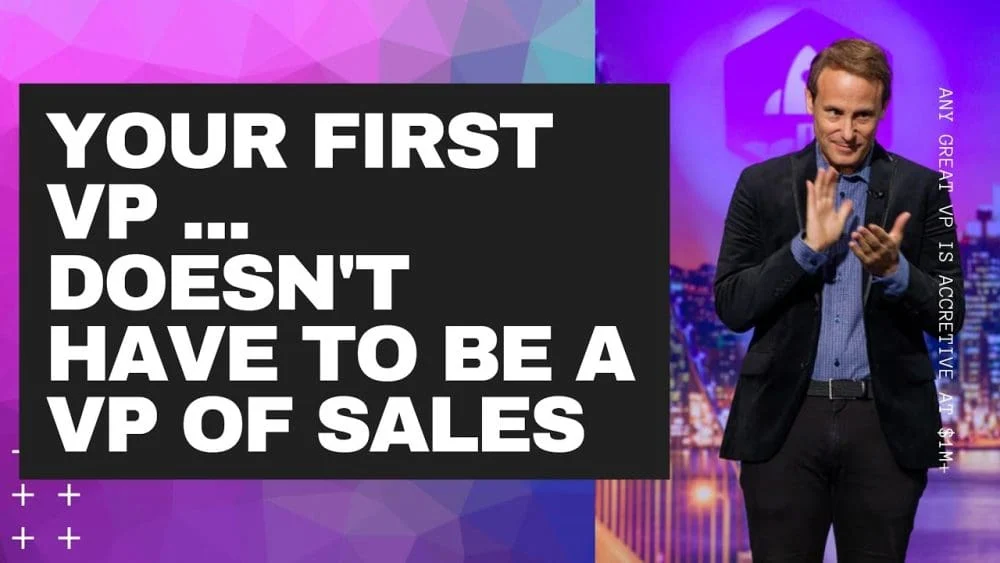
In a recent widely discussed commentary on X (formerly Twitter), Lemkin delivered a blunt warning to the startup community: "The #1 mistake founders make when they hire their first VP of Sales? Or even just their first sales rep? They step back from sales. No. You don’t get that time back. It’s just what you do in sales, changes."
The message is clear: A CEO’s relationship with sales never actually ends. It evolves. Even as companies scale to billions in valuation, the chief executive remains an integral part of the revenue engine.
Main Facts: The Core Dilemma of the Scaling Founder
The transition from founder-led sales to a structured go-to-market (GTM) machine is one of the most perilous phases of company evolution. When early-stage founders hire their first sales leader, they often suffer from a fundamental misunderstanding of delegation.
Delegating the execution of sales is necessary; delegating the ownership of revenue and customer relationships is catastrophic.
- The Fallacy of Disengagement: Many founders treat the hiring of a VP of Sales as a green light to completely divorce themselves from the sales pipeline.
- The Evolution of the Role: While the early days require the CEO to cold-call, pitch, negotiate, and close every single deal, the scaling phase requires the CEO to act as a strategic closer, relationship enhancer, and deal accelerator.
- The Benchmark: According to industry veterans, if a CEO is not maintaining at least 10 customer-facing touchpoints—including meetings, calls, and Zoom sessions—per week after hiring a sales head, they have disconnected too much.
- The Performance Metric: If overall sales metrics do not improve immediately following the onboarding of a VP of Sales, it is often a sign that the CEO has stepped back prematurely, creating a vacuum in executive sponsorship that mid-level buyers still crave.
Chronology: A Lesson from the Trenches of Enterprise Sales
To illustrate that executive sales engagement is a lifelong commitment for top-tier CEOs, Lemkin recalls a defining moment from his own entrepreneurial past involving Groupon and Salesforce.
The Groupon Deployment (Circa 2011)
Back when Groupon was scaling at breakneck speed, they deployed Salesforce across their entire enterprise, reportedly paying an estimated $20 million annually for the software. Around that same time, Groupon became one of Lemkin’s ten largest customers.
In the bitter, freezing middle of a Chicago winter, Lemkin and his executive team—including his VP of Customer Success and VP of Product—flew out to Groupon’s headquarters for a rigorous, hands-on deployment session. They spent hours locked in a small conference room with Groupon’s Sales Operations team, strategizing on how to roll out the technology faster, deeper, and more effectively.
The Benioff Principle
Across the floor, working closely with then-25-year-old Groupon CEO Andrew Mason, was Marc Benioff, the billionaire founder and CEO of Salesforce.
Benioff had flown all the way to Chicago in the dead of winter—potentially traveling from his home in Hawaii—just to be present for a major client engagement. At that time, Salesforce was already a $10 billion enterprise. Today, it is a behemoth worth over $220 billion. Yet, even as the head of a massive publicly traded corporation, Benioff was still personally on the ground, selling, engaging, and securing enterprise value.
If a multi-billion-dollar CEO recognizes the necessity of staying attached to the revenue pipeline, early-stage founders scaling past their first few million in ARR have even less excuse to retreat to an ivory tower.
Supporting Data: Diagnosing the Post-Hire Slump
When a startup brings on its first dedicated sales leader, founders often expect an immediate hockey-stick growth curve. Instead, many experience flatlining revenue or sudden friction in the pipeline.
Lemkin points out a diagnostic reality: If sales do not tick upward, even slightly, right after bringing in a VP of Sales, the founder has likely pulled back too quickly. The remedy requires immediate re-engagement:
- Re-enter Deal Reviews: Do not wait for the end-of-quarter autopsy. Sit in on pipeline reviews to understand where deals are actually stalling.
- Audit the Recordings: Listen to at least 20 Gong or Chorus call recordings a month. Hear the exact objections prospects are raising when the founder isn’t in the room.
- Conduct Post-Mortems on Losses: Actively investigate why the company lost every single lost deal that month. Was it product-market fit? Pricing? Competitor positioning? Or a breakdown in executive alignment?
A CEO cannot fix what they refuse to observe. When a founder completely exits the sales conversation, they lose touch with the market pulse, creating a dangerous disconnect between what the product roadmap delivers and what buyers are actually willing to pay for.
Official Perspectives: The Evolution of Executive Selling
Industry thought leaders consistently emphasize that the nature of a founder’s selling activities changes structurally as the company matures.
Phase 1: Founder-Led Sales (0 to $1M+ ARR)
- Objective: Prove product-market fit.
- CEO Role: The Chief Closer. The founder personally pitches, handles objections, adjusts pricing on the fly, and drags deals across the finish line through sheer willpower and vision.
Phase 2: The First Sales Hire ($1M to $5M ARR)
- Objective: Build repeatable processes.
- CEO Role: The Co-Pilot. The founder hires a VP of Sales or early reps, transfers the playbook, but remains heavily involved in high-stakes pitches. The CEO acts as the ultimate credibility booster for early enterprise deals.
Phase 3: Scaling the Enterprise ($5M+ to $50M+ ARR)
- Objective: Market dominance and operational efficiency.
- CEO Role: The Strategic Closer. The CEO drops into late-stage enterprise deals, hosts VIP dinners, builds executive-to-executive relationships with key accounts, and serves as the ultimate insurance policy for closing major contracts.
As Lemkin notes: "A great VP of Sales will take over a lot of the sales processes from you, and sales recruiting. But you don’t get to stop doing sales. Instead, you as CEO repurpose that time to support deals and drop into deals. Not create them and close them. But that time? You never get that time back. It just changes."
Implications: What This Means for the Future of Startups
The insistence that CEOs must remain tethered to the sales process carries profound implications for how entrepreneurs manage their time, build their teams, and structure their companies.
1. Talent Retention and Morale for Sales Teams
Sales professionals—especially top-tier enterprise account executives and VPs—want to work for leaders who understand the trenches. When a CEO is completely detached from sales, they often develop unrealistic expectations regarding quota attainment, sales cycles, and market friction. Maintaining active customer touchpoints keeps the executive team empathetic and grounded in operational realities.
2. Enterprise Deal Velocity
In B2B SaaS and high-ticket enterprise sales, buyers want to know they are partnering with a stable, committed organization. Having the CEO step into a deal during the final stages signals to the buyer that their account is valued at the highest corporate level. Removing the CEO entirely from the closing stage can drastically reduce win rates for large enterprise contracts.
3. Product-Market Feedback Loops
The fastest way for a product roadmap to drift into irrelevance is for the executive team to stop talking to buyers. Sales calls are the purest form of market research. Every objection heard on a call is a product feature request, a pricing critique, or a positioning flaw waiting to be resolved.
Final Takeaway
For founders dreaming of the day they can hand off all revenue responsibilities and strictly manage from 30,000 feet, the reality check from seasoned operators is absolute: You can delegate the mechanics of sales, but you can never abdicate the responsibility of selling.
The timeline of a growing company shifts the CEO’s role from hunting to harvesting, but the desk remains right there in the arena.