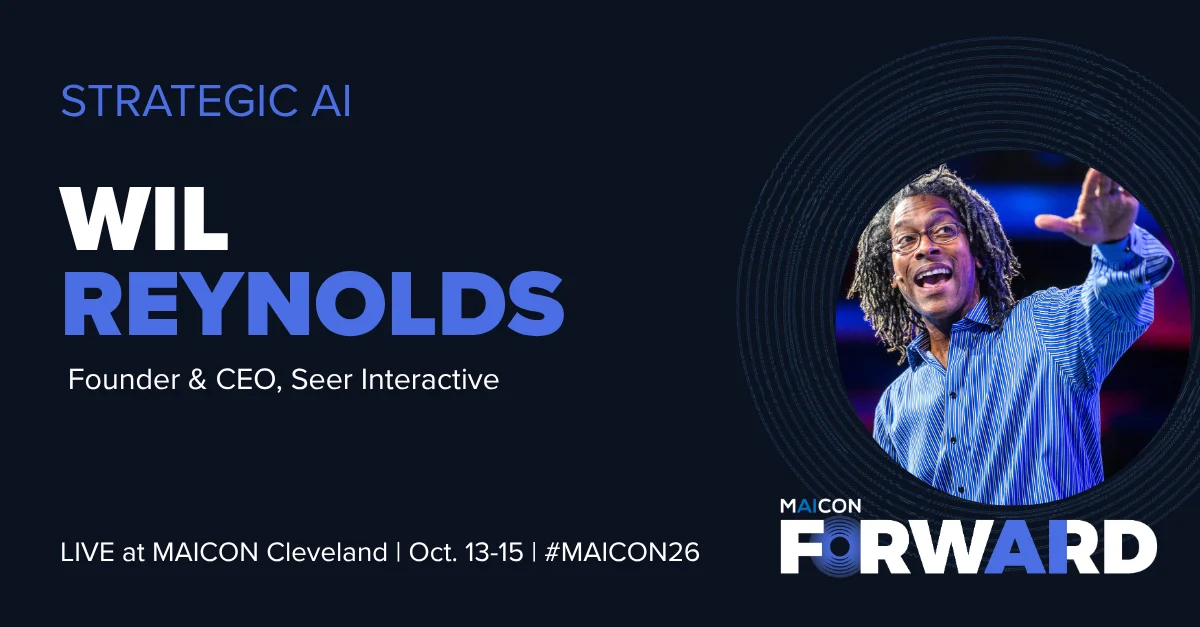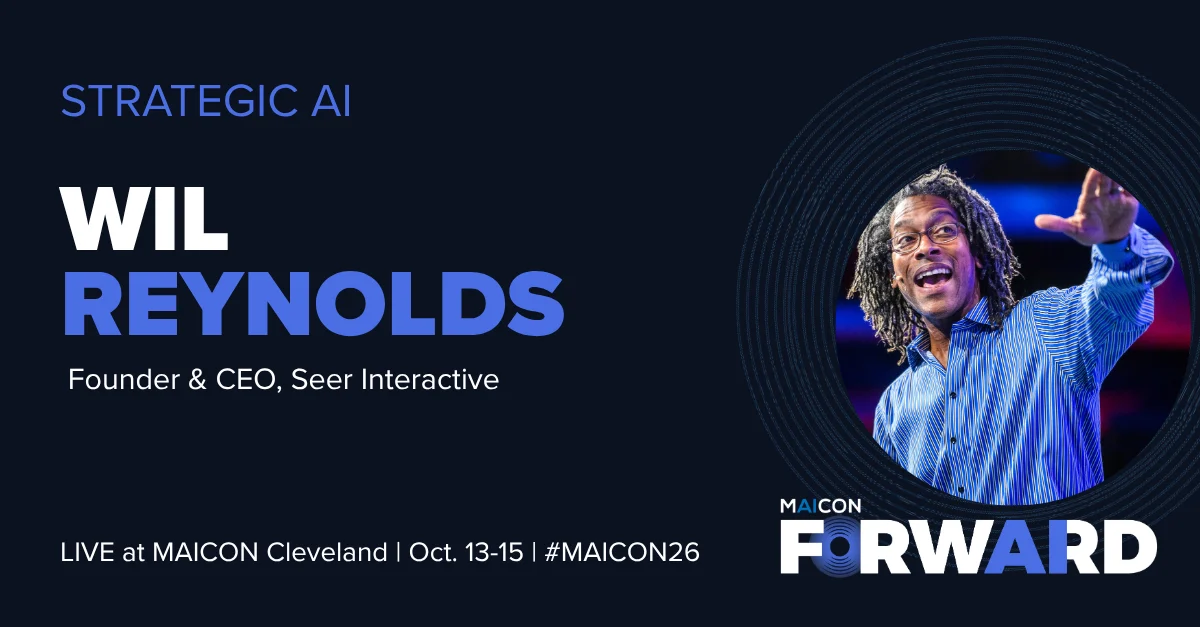
In the hyper-competitive landscape of digital marketing, the allure of artificial intelligence is undeniable. With the promise of limitless content generation, automated workflows, and the ability to scale output at unprecedented speeds, many marketing teams are racing toward a "more is better" philosophy. However, Wil Reynolds, the founder and CEO of Seer Interactive, is sounding a stark alarm: by prioritizing raw visibility over foundational credibility, brands are inadvertently sabotaging their long-term viability.
As the industry prepares for the Marketing Artificial Intelligence Conference (MAICON) 2026, Reynolds is set to deliver a seminal session titled "Seen. Believed. Chosen: AI Optimization That Builds Visibility and Credibility." His message is both a warning and a roadmap, challenging leaders to reconsider the cost of AI-driven efficiency.
The Main Facts: The Great Divergence
The core of Reynolds’ argument lies in a phenomenon he observed firsthand at his agency: a significant, measurable decline in organic search traffic that was, paradoxically, accompanied by an increase in qualified pipeline.
For many marketers, a drop in traffic is viewed as a catastrophe. Yet, for Reynolds, it served as a catalyst for a deeper realization. He posits that the traditional metrics of success—raw hits, vanity traffic, and sheer volume—are increasingly disconnected from the realities of modern buyer behavior. In the age of AI search engines like ChatGPT and Gemini, the algorithms are no longer just looking for keywords; they are looking for entities, authority, and trust signals.
Brands that have treated AI as a "content factory" to flood the market with noise are finding that while they may be "seen," they are rarely "believed," and even less frequently "chosen." Reynolds contends that the next generation of search isn’t just about indexing pages; it is about verifying the reputation of the brand behind those pages.
Chronology: From SEO Pioneers to AI Strategy
Founded in 2002, Seer Interactive has weathered the evolution of the internet from the early days of SEO to the current AI-dominated paradigm. Reynolds has spent over two decades navigating these shifts, evolving his 200-plus person agency from a search boutique into a sophisticated data-driven powerhouse.
- 2002–2010: The era of keyword stuffing and early SEO. Reynolds established his reputation by focusing on technical excellence and user intent.
- 2011–2020: The rise of content marketing. The industry shifted toward building authority through consistent, high-quality information.
- 2021–Present: The AI inflection point. The democratization of generative AI tools has led to a massive influx of synthetic content.
Reynolds notes that the current cycle is fundamentally different. Unlike previous shifts, where technology allowed for better distribution, the current AI boom allows for the mass manufacture of "average" content. This has created a cluttered landscape where search engines are increasingly penalizing low-effort content, effectively raising the barrier to entry for brands that haven’t established deep-seated authority.
Supporting Data: Why "More" is Becoming "Less"
The prevailing market pressure—driven by vendors promising "10x content in half the time"—is, according to Reynolds, a trap. The logic is flawed because it assumes that AI-generated content is a direct substitute for human-authored expertise.
The AI Curation Filter
Modern search models, such as Gemini and ChatGPT, act as curators rather than mere directories. They retrieve information based on a brand’s existing digital footprint and credibility signals. If a brand has spent years producing shallow content to satisfy search bots, the AI model has learned to associate that brand with "noise" rather than "insight."
"ChatGPT and Gemini are now using brands it already sees associated with a topic," Reynolds explains. "They run searches to retrieve information based on those brands and brand signals."
This creates a "Matthew Effect" in digital marketing: the brands that are already trusted receive more prominence in AI-generated answers, while the brands that have tried to take shortcuts find themselves locked out of the conversation. The data suggests that for those who haven’t built a foundation of trust, winning in the AI era is not just difficult—it is becoming mathematically improbable.
Official Stance: The "Human-in-the-Loop" Philosophy
Reynolds is transparent about his own AI workflow, offering a blueprint for how leaders can leverage technology without sacrificing their brand’s integrity. He draws a hard line between using AI to think and using AI to produce.
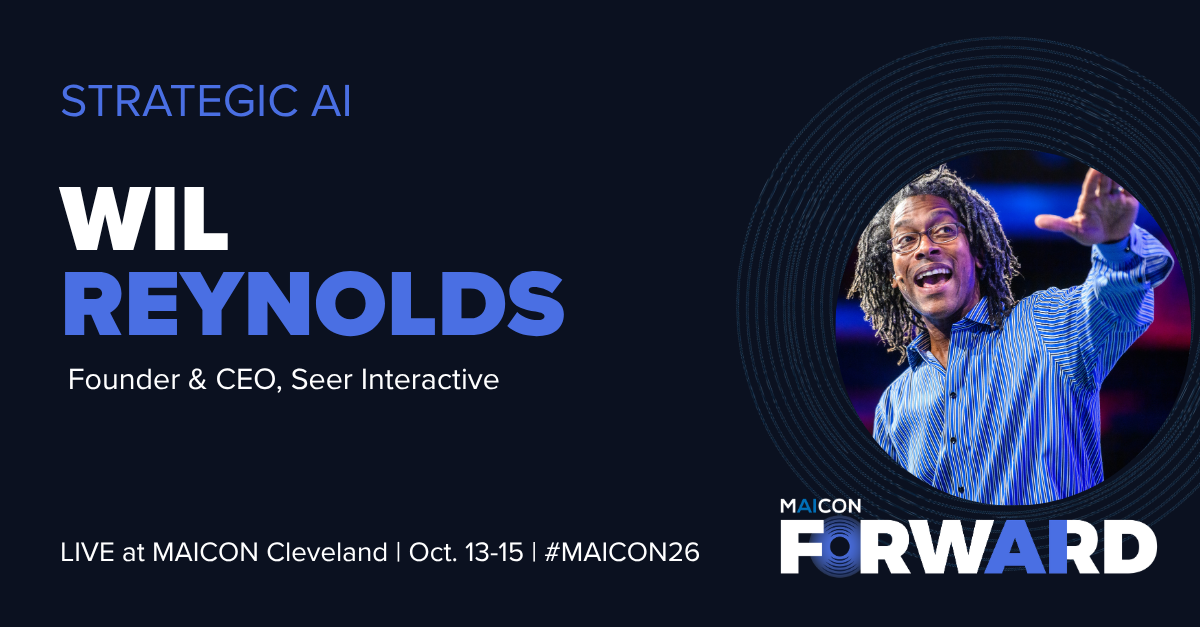
"I use AI to think, challenge, and connect dots between ideas and articles I’ve read," Reynolds says. "It does not auto-produce anything for me personally. No emails, no video edits—those are my two biggies."
This distinction is crucial. By using AI as a sounding board—a tool for cognitive friction—he enhances his own unique voice. By contrast, those who use AI to mimic their voice are, in his view, merely creating hollow echoes of themselves. This principle forms the cornerstone of his upcoming MAICON session: the difference between AI as a quality-enhancer and AI as a trust-diluter.
Implications: The KPI Problem
Perhaps the most disruptive element of Reynolds’ philosophy is his critique of current marketing KPIs. In an environment where the customer journey is increasingly opaque and fragmented across AI platforms, relying on legacy metrics is dangerous.
The Myth of Attribution
"Everyone wants to be more visible and tie the results down to a specific ROI, or else," Reynolds notes. "It’s early innings and these things are not even close to being settled."
The implication for marketing leaders is that they must be willing to have "tough conversations" with stakeholders. Sticking to outdated KPIs—like tracking raw organic traffic—leads to "scared marketing," where teams produce more and more content just to keep the numbers up, even as that content fails to drive actual business value.
Reynolds argues that the divergence he experienced—lower traffic, higher pipeline—is a model for the future. It signals a shift from "marketing to the machine" to "marketing to the buyer." When marketers stop optimizing for bots and start optimizing for the specific problems their customers face, the traffic might decrease, but the quality of the interactions increases.
Building for the Future: What to Expect at MAICON 2026
At MAICON 2026, Reynolds will move beyond abstract theory, offering a practical framework for decision-making. His session will address:
- The "Scale or Slow Down" Audit: How to determine which parts of your marketing funnel are being cannibalized by AI and which are being amplified.
- The Authority Protocol: Strategies for building brand signals that AI models prioritize, ensuring your expertise is the source of truth in search results.
- The Trust-First Metric: Replacing vanity metrics with indicators of buyer trust and pipeline impact.
For marketing leaders, the session serves as a professional gut check. In an era where everyone can publish anything, the competitive advantage shifts back to those who can curate, synthesize, and provide genuine value.
Conclusion: The Path Forward
The shift from being "seen" to being "chosen" is the central challenge of the next decade. As AI continues to saturate the digital ecosystem, the brands that win will not be those that flooded the internet with the most content. They will be the brands that established a reputation for truth, authority, and human insight long before the AI revolution arrived.
Wil Reynolds’ presence at MAICON 2026 is a testament to the industry’s need for a mature, grounded approach to technology. For those who are tired of the "content hamster wheel" and are ready to build a sustainable, trust-based strategy, his insights will prove invaluable.
To learn more about how to navigate this pivot and to hear from over 50 other AI and business leaders, marketing professionals are encouraged to register for MAICON 2026. In a world of automated noise, the ability to build a brand that is truly believed is the ultimate competitive advantage.