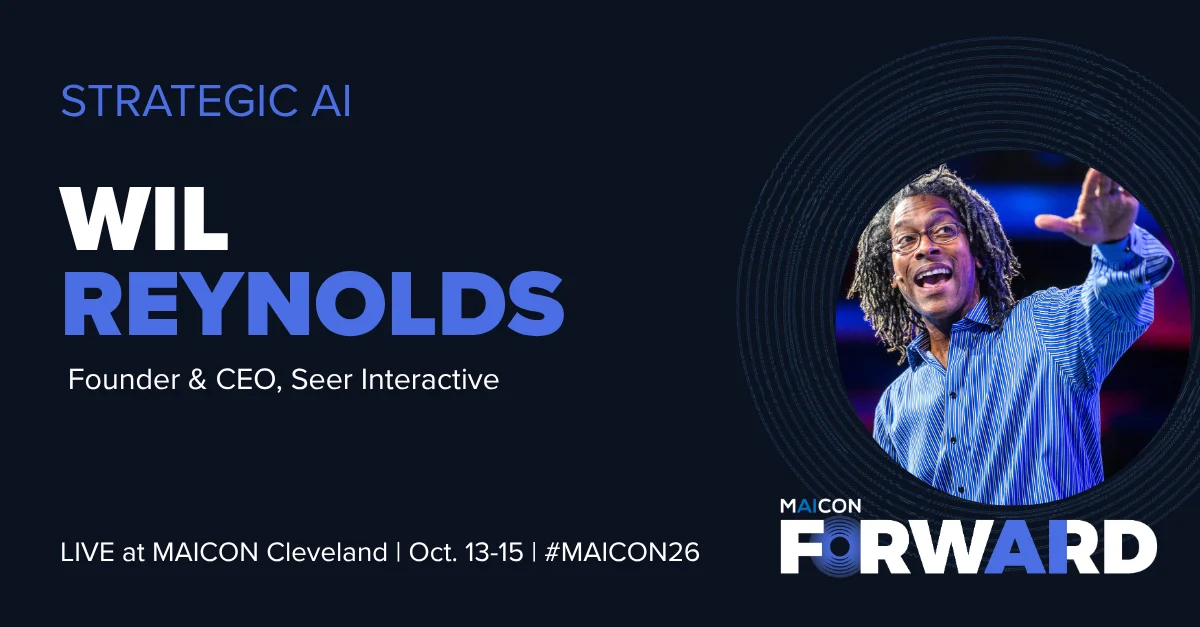
In the hyper-accelerated landscape of modern digital marketing, a dangerous narrative has taken hold: that the primary objective of any brand is to maximize content velocity. With the arrival of generative AI tools like ChatGPT, Gemini, and Claude, marketing teams are under unprecedented pressure to produce more, faster, and cheaper. But according to Wil Reynolds, founder and CEO of the prominent digital agency Seer Interactive, this race to the bottom is fundamentally flawed.
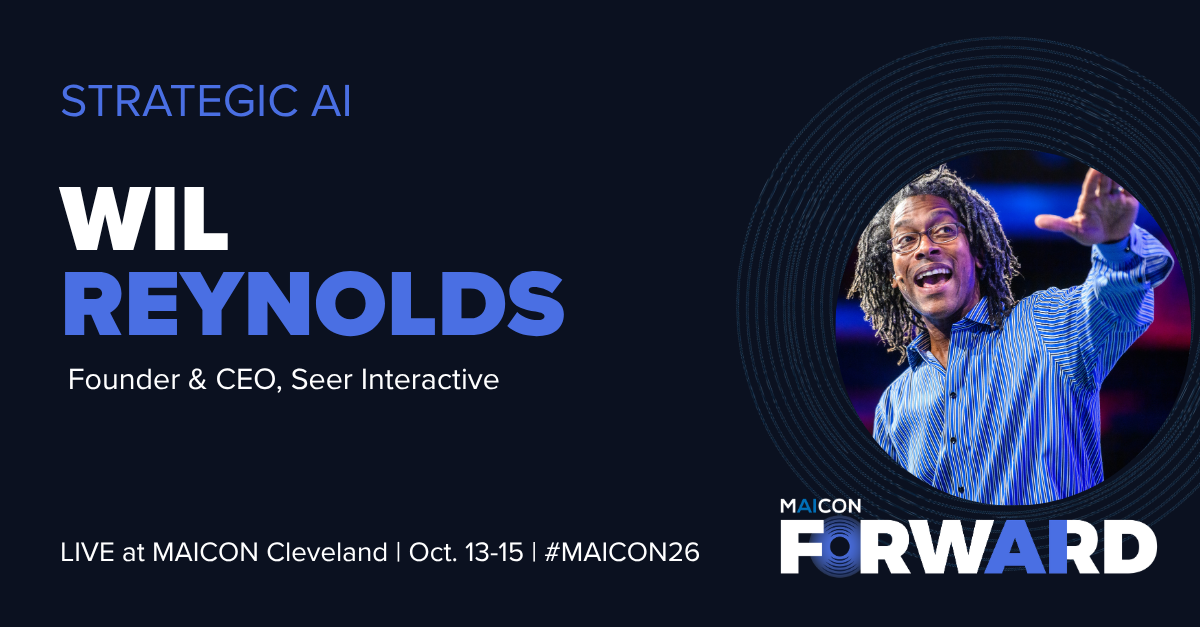
As the industry prepares for MAICON 2026, Reynolds is positioning himself as a contrarian voice in a chorus of automation enthusiasts. His upcoming session, "Seen. Believed. Chosen: AI Optimization That Builds Visibility and Credibility," promises to dismantle the myth that volume equals value. For Reynolds, the industry is at a critical inflection point: brands are prioritizing ephemeral visibility at the direct expense of long-term authority.
The Architecture of the Modern Marketing Shift
To understand the weight of Reynolds’s argument, one must first look at the trajectory of his career. Starting Seer Interactive in 2002, Reynolds has shepherded the agency from a one-man shop to a powerhouse of over 200 employees. His perspective is rooted in two decades of observing the ebb and flow of search engine algorithms and consumer behavior.
The core of his argument lies in the evolving mechanics of AI search. Historically, SEO was a game of keywords and backlinks. Today, it is a game of brand authority and entity association. "ChatGPT and Gemini are now using brands they already see associated with a topic, then running searches to retrieve information based on those brands and brand signals," Reynolds explains.
This means the "short-cut" era—where brands flooded the internet with generic, AI-generated content—is effectively over. Algorithms are no longer just indexing text; they are vetting the credibility of the source. Brands that spent years building trust are now reaping the rewards of that "invisible" equity, while those that opted for rapid-fire, low-quality content are finding themselves increasingly invisible to the very AI models they sought to exploit.
Chronology of a Disrupted Strategy
The shift in marketing tactics began in earnest around 2022, following the public release of advanced LLMs. The timeline of this disruption can be viewed in three distinct phases:
- The Gold Rush (2022–2023): Organizations scrambled to integrate generative AI into their content pipelines. The goal was simple: reduce overhead and increase output. Marketing departments began treating AI as a replacement for human cognition rather than a tool for human enhancement.
- The Divergence (2024): A strange phenomenon began to occur. Many organizations, including Seer Interactive, observed a paradoxical trend: organic traffic numbers began to decline, yet the actual business pipeline—the number of qualified leads and conversion opportunities—remained stable or even increased.
- The Reckoning (2025–Present): Marketing leaders are now facing the reality that traffic is a vanity metric. In the AI era, being "seen" by a bot is less important than being "chosen" by a decision-maker. This has forced a pivot from content saturation to authority-based signaling.
The Data Dilemma: Why Old KPIs Are Obsolete
One of the most compelling aspects of Reynolds’s recent public discourse is his candid admission regarding the death of traditional key performance indicators (KPIs). For years, marketers have been slaves to the "traffic at any cost" model. Reynolds argues that this fixation is the single biggest threat to brand health in the current climate.
"Metrics is the biggest issue of all these days when it comes to AI visibility," Reynolds notes. "Everyone wants to be more visible and tie the results down to a specific ROI, or else. It’s early innings and these things are not even close to being settled."
The implication is clear: marketing leaders who insist on sticking to legacy KPIs are effectively flying blind. If an organization measures success purely by page views, they are incentivized to create "noise." If they measure success by pipeline and authority, they are incentivized to create "truth."
Reynolds suggests that the disconnect between traffic and revenue is a "gift"—a signal from the market that the old map no longer matches the new territory. His warning to the C-suite is blunt: "Scared marketers will stick to outdated KPIs instead of having the tough conversations we need to have. Things are harder to track than ever."
The Human-in-the-Loop Philosophy
While Reynolds is a proponent of AI, he is highly selective about its application. His internal workflow at Seer Interactive serves as a blueprint for how to use technology without sacrificing the "human edge."
He is explicit about the red lines: he does not use AI to auto-generate emails or edit video content. "I use AI to think, challenge, and connect dots between ideas and articles I’ve read," he says. "It does not auto-produce anything for me personally."
This distinction—using AI to think rather than to produce—is a crucial lesson for modern teams. When a brand uses AI to mimic a voice or churn out content, they are effectively commoditizing their own intellectual property. When they use it to synthesize complex information, they are augmenting their unique expertise. The former erodes trust; the latter builds it.
Implications for the Future of Brand Authority
What does this mean for the future of digital marketing? As AI models become the primary gateway through which consumers interact with information, the "authority" of a brand will be determined by its depth of knowledge and the consistency of its voice.
The Three Pillars of Future Strategy
Reynolds’s upcoming session at MAICON 2026 will focus on a framework he calls "Seen. Believed. Chosen." This framework is designed to help marketers navigate the trade-offs of the current environment:
- Visibility: Understanding how AI models crawl and categorize your brand. It is no longer just about SEO; it is about "Brand Signal" optimization.
- Credibility: The rigorous process of proving expertise. If your content is not better than what an LLM can produce in three seconds, it is effectively worthless.
- Trust: The final hurdle. In an age of synthetic media, human-centric, verifiable expertise is the only moat that cannot be easily breached by a competitor’s AI.
The Call to Action for Marketing Leaders
As we look toward MAICON 2026, the underlying message for marketing leadership is one of courage. It takes courage to slow down when the board is asking for more. It takes courage to admit that legacy tracking methods are insufficient. It takes courage to stop the production of "content for the sake of content" and focus on building an authoritative brand that stands the test of time.
Reynolds, who has navigated his agency through decades of technological upheaval, offers a sobering but ultimately empowering perspective. The winners of the next cycle will not be the brands with the highest volume of AI-generated articles. They will be the brands that used AI to amplify their humanity, their research, and their specific, un-copyable expertise.
For those attending MAICON 2026, Reynolds’s session promises to be more than just a lecture on technology. It is a masterclass in strategic leadership. It is an invitation to move away from the noise and toward the signal—to build a brand that is not just visible, but deeply believed and ultimately chosen by the market.
In a world where AI can mimic almost anything, the only thing that remains scarce and valuable is genuine authority. The brands that realize this today will be the ones that own the market tomorrow. The question is no longer how to use AI to scale—it is how to use it to differentiate. And for that, there is no shortcut.