In the hyper-competitive landscape of digital marketing, the mantra for the last decade has been clear: "More is better." More content, more channels, more clicks, and more visibility. But as Generative AI tools like ChatGPT and Gemini redefine how information is discovered and consumed, this "volume-first" philosophy is hitting a brick wall.
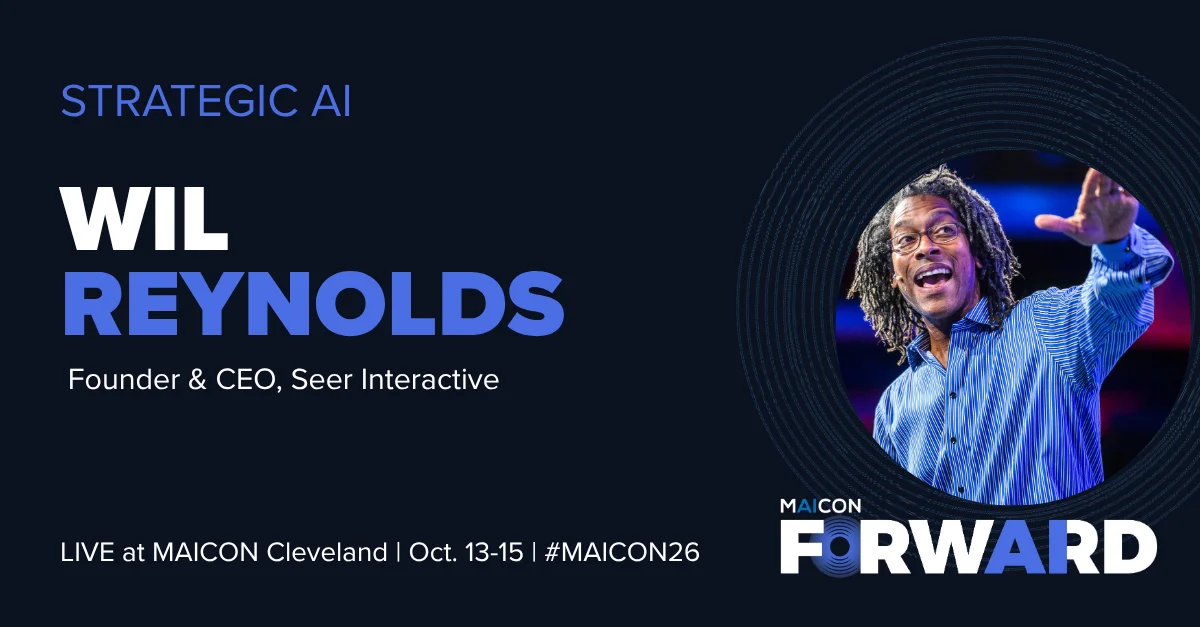
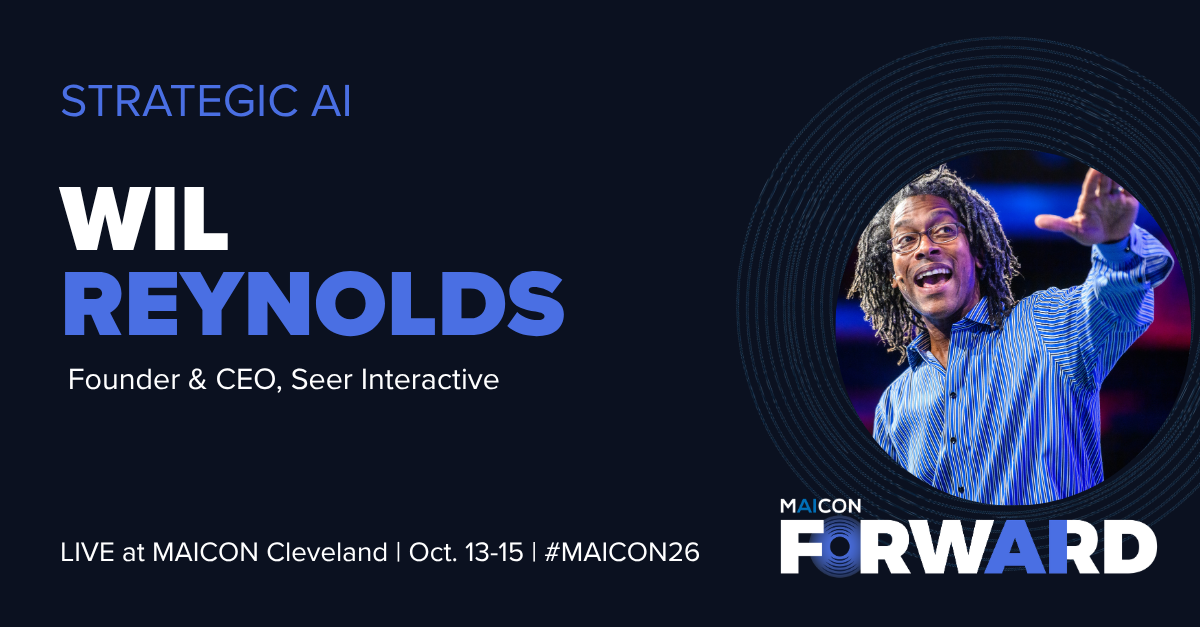
Wil Reynolds, the Founder and CEO of Seer Interactive, believes we are currently witnessing a dangerous divergence in the industry. For Reynolds, the pursuit of algorithmic visibility at the expense of human credibility is a strategic error that could cost brands their future. As he prepares to take the stage at MAICON 2026 for his session, "Seen. Believed. Chosen: AI Optimization That Builds Visibility and Credibility," Reynolds is positioning himself as the industry’s leading voice on why slowing down might be the only way to move forward.
The Mirage of Volume: Why Faster Isn’t Better
The promise of the current AI revolution is seductive: high-velocity content creation with minimal human oversight. Marketing teams, under pressure to deliver ROI, have embraced these tools to flood the internet with articles, social media posts, and automated emails.
However, Reynolds argues that this approach is fundamentally flawed. "Every tool on the market is promising the same thing: more content, faster, with fewer people," Reynolds notes. While this strategy might generate initial spikes in traffic, it fails the "trust test." More output does not equate to more authority, and more visibility does not automatically translate to a healthier sales pipeline.
The core issue lies in how modern AI search engines function. These systems do not merely aggregate information; they curate it based on brand authority. "ChatGPT and Gemini are now using brands they already see associated with a topic, then running searches to retrieve information based on those brands and brand signals," Reynolds explains. If a brand has spent years cutting corners to drive cheap, AI-generated traffic, they are effectively invisible to the systems that matter most. Brands that prioritized quantity over quality are now facing a "tough road" as AI prioritizes entities that have built genuine, verifiable trust.
Chronology of a Shift: From Search Engines to Answer Engines
To understand where we are going, we must look at the shift in the digital ecosystem over the last twenty years.
- 2002: Wil Reynolds founds Seer Interactive. At this time, SEO was largely a game of keywords, meta tags, and backlink building. The focus was on "gaming" the system to appear at the top of Google.
- 2010s: The "Content Marketing" explosion. Agencies and brands began scaling content production to satisfy search algorithms, leading to a decade of "SEO spam" and high-volume, low-value blog posts.
- 2023-2024: The "Generative AI Tipping Point." The release of LLMs (Large Language Models) accelerates content production to a level that dwarfs human capacity.
- 2025-2026 (The Current Moment): The realization of the "Divergence." Marketing leaders begin to notice that organic traffic is dropping across the industry, yet revenue pipelines for high-authority brands remain stable or grow.
This chronology reveals a harsh reality: The search-to-answer transition has fundamentally altered the value of a "click." We are no longer competing for placement on a search engine results page (SERP); we are competing for the "citation" within an AI-generated answer.
The Data Gap: Why Your KPIs Are Lying to You
One of the most compelling aspects of Reynolds’s critique is his focus on the "KPI Problem." Marketing departments are currently obsessed with tracking metrics that may no longer be relevant in an AI-dominated world.
Reynolds has been vocal about a phenomenon he observed at Seer Interactive: a significant decline in organic search traffic that was, paradoxically, accompanied by an increase in pipeline. For many traditional marketers, this would trigger a panic response. For Reynolds, it was a data-driven revelation.
"Metrics is the biggest issue of all these days when it comes to AI visibility," says Reynolds. "Everyone wants to be more visible AND tie the results down to a specific ROI, or else. It’s early innings and these things are not even close to being settled."
The implication is that "scared marketers"—those who refuse to abandon outdated KPIs—will continue to misallocate resources. By chasing vanity metrics like page views and traffic volume, they miss the reality that the "buyer journey" has changed. A user may no longer visit your website to solve a problem; they may get the answer from an AI that cites your brand. If you are only measuring traffic, you are blind to your brand’s growing influence in the AI ecosystem.
Drawing the Line: A Personal Approach to AI
While Reynolds is a proponent of AI, he is notoriously discerning about how it is deployed. In his own workflow, he uses AI as a cognitive partner, not a content factory.
"I use AI to think, challenge, and connect dots between ideas and articles I’ve read," he says. "It does not auto-produce anything for me personally. No emails, no video edits are my two biggies."
This distinction is crucial. It highlights the difference between AI-augmented intelligence and AI-automated mediocrity. By refusing to use AI to mimic his voice or automate his communication, Reynolds protects his personal brand. He warns that flooding channels with synthetic content erodes the very trust that marketing is supposed to build. If a brand’s output feels artificial, the audience—and eventually the AI models—will tune it out.
Implications for the Future: "Seen, Believed, Chosen"
As marketers look toward the 2026 landscape, the path forward requires a radical rethinking of strategy. Reynolds proposes a three-step framework:
- Seen: Your brand must have the digital footprint that AI models recognize as an authority. This is not about the quantity of content, but the quality of the signals you send to the ecosystem.
- Believed: You must maintain a human-centric approach that builds trust. AI can assist in research and synthesis, but the "soul" of the brand must remain human.
- Chosen: You must optimize for the moment of decision. This means moving beyond broad, top-of-funnel content and focusing on deep expertise that makes your brand the obvious answer to a user’s complex question.
The implications for marketing leadership are stark. Executives must have the "tough conversations" about why traffic is changing and why old benchmarks for success are now obsolete. It requires a willingness to stop doing what is "easy" (AI-driven content scaling) and start doing what is "hard" (building unique, authoritative, and defensible expertise).
Conclusion: The Path Through MAICON 2026
The upcoming MAICON 2026 conference represents a turning point for the industry. It is a space where leaders like Wil Reynolds are moving past the "AI hype" to discuss the messy, difficult, and essential work of real-world implementation.
For attendees, the session "Seen. Believed. Chosen" offers more than just theoretical advice; it provides a survival guide. It offers a clear-eyed accounting of the trade-offs involved in the AI shift, delivered by someone who has built an agency from the ground up over two decades.
As Reynolds reminds us, the goal of marketing has never truly changed: it is to be the brand that the customer trusts enough to choose. In the age of AI, the tools have evolved, but the necessity of credibility has never been higher. For those willing to trade the siren song of "more, faster" for the sustainable power of "better, deeper," the future is bright. For the rest, the road ahead may be a losing battle against an algorithm that values truth over noise.
Join the conversation at MAICON 2026 to learn how to navigate this shift, refine your strategy, and ensure your brand remains the one that is not just seen, but chosen.