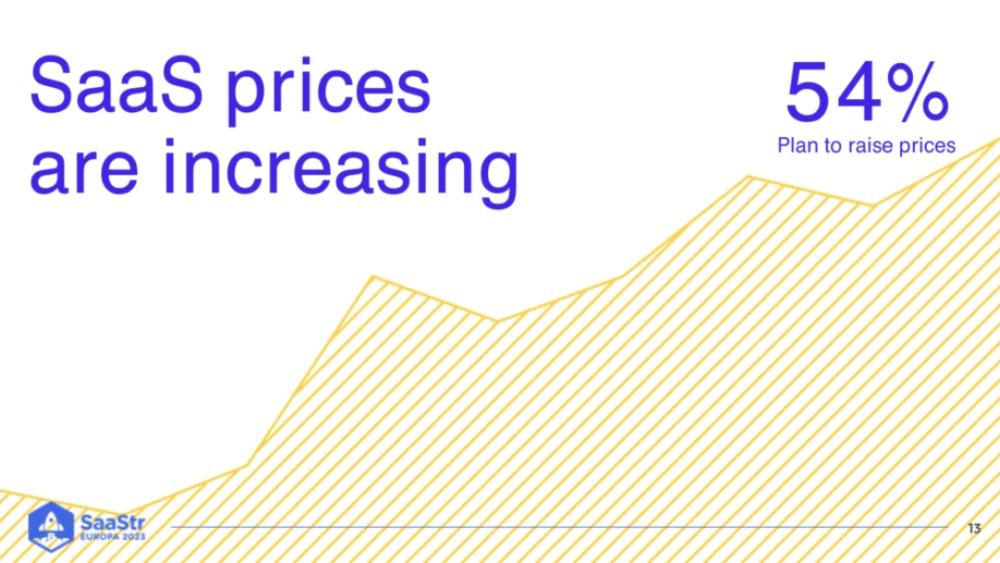
For many SaaS founders, the transition from rapid customer acquisition to sustainable profitability is marked by a single, high-stakes decision: raising prices. While expanding the bottom line is essential for scaling, the Small and Medium-sized Business (SMB) segment presents a unique challenge. Unlike enterprise clients, who often operate under multi-year contracts and prioritize deep integration, SMBs are notoriously price-sensitive, agile, and prone to churn at the slightest friction.
As industry experts—including the seasoned voices at SaaStr—frequently note, the strategy for increasing prices in the SMB sector is less about "taxing" the user base and more about orchestrating a value-based evolution. When handled poorly, a price hike can lead to a mass exodus; when handled with precision, it becomes a lever for long-term growth.
The Strategic Framework: Main Facts and Fundamentals
At its core, a price increase is a communication strategy disguised as a financial maneuver. The fundamental reality for any SaaS company is that growth is finite if it relies solely on new logos. Eventually, ARPU (Average Revenue Per User) must rise.
However, the "golden rule" for SMB SaaS is that price increases should never be a blunt instrument. They must be perceived as a reflection of increased utility. The core facts remain: SMBs operate on thin margins and tight budgets. If a software subscription suddenly demands a larger slice of their operational expenditure without a corresponding increase in productivity, the churn risk becomes statistically significant.
1. Timing: The Growth Trap
A common pitfall for early-stage startups is prematurely raising prices to "fix" cash flow issues. Industry wisdom suggests that if a company is still seeing growth rates of 30% or higher year-over-year, the focus should remain squarely on customer acquisition. Increasing prices too early can stifle momentum. Price optimization is a "mature-stage" strategy, best reserved for when the product-market fit is ironclad and the value proposition is fully established.
2. The Value-First Mandate
The most effective price increases are those that arrive alongside tangible enhancements. Whether it is the introduction of a game-changing AI feature, new API integrations, or a vastly improved support tier, the customer must feel that the "new price" covers a "better product." The goal is to provide at least 2x the perceived value of the actual cost increase.
A Chronology of Strategy: How to Execute a Rollout
Successfully raising prices is not a singular event; it is a phased process that requires careful orchestration over several months.
Phase I: The "Premium Tier" Pilot (Months 1–3)
Rather than a blanket increase, savvy SaaS leaders introduce a "Premium" or "Pro" tier. By carving out advanced features and offering them at a higher price point, the company creates an upsell path that feels like an opportunity rather than a penalty. This allows the business to segment its user base, capturing more value from "power users" while keeping the entry-level price accessible for the core SMB audience.
Phase II: The Testing Window (Months 3–6)
Before a global rollout, the strategy should be stress-tested. By applying price changes to a small, randomized cohort of new sign-ups or a specific geographic segment, companies can gather data on conversion impact and churn triggers. This allows the executive team to "walk back" or adjust the strategy if the data suggests a negative reaction before the brand reputation is compromised.
Phase III: Transparent Communication (Months 6–9)
Transparency is the antidote to churn. If a broad price increase is necessary, it should be announced 3 to 4 months in advance. This lead time serves two purposes: it allows customers to budget for the change, and it demonstrates respect for their business continuity.
Supporting Data and Industry Observations
The friction associated with SMB price hikes is not merely anecdotal. Data from SaaS benchmarks consistently shows that for every 10% increase in price, churn can rise by 2–5% if the increase is not accompanied by product value.
- The "Predictability" Factor: Small, incremental increases—roughly 5% to 6% annually—are generally absorbed by the market as inflationary adjustments. These "cost-of-living" adjustments for software are standard in the industry and rarely trigger significant churn.
- The Power of Grandfathering: One of the most effective retention strategies is to "grandfather" early adopters into their legacy pricing. These customers, who took a risk on the product in its infancy, are the brand’s biggest champions. Protecting them from price hikes—at least for an extended period—often yields higher long-term value through referrals and net promoter scores (NPS) than the marginal revenue gain of a 10% increase.
Official Perspectives: Navigating the Churn
Industry leaders, particularly those who have scaled platforms like Adobe Sign or EchoSign, emphasize that churn is an inevitable byproduct of any price adjustment. The key is to manage the segmentation of that churn.
"SMBs will churn—every single time," notes one industry veteran. "The goal isn’t to prevent all churn; it’s to ensure the revenue gain from the remaining, higher-paying customers outweighs the lost revenue from the departing low-value customers."
This perspective shifts the focus from "customer retention at all costs" to "net revenue retention." If a 10% price increase causes 2% of the user base to churn but increases the revenue from the remaining 98% by 10%, the move is mathematically sound, even if the optics of losing customers are initially daunting.
Implications for Future Growth
The long-term implications of a well-executed price increase strategy are profound.
- Sustainable Margins: By training the market to accept periodic, value-aligned price adjustments, a company protects its margins against rising infrastructure and talent costs.
- Product-Led Growth (PLG) Alignment: A thoughtful pricing model encourages users to move toward the features that actually drive their success. When pricing is tied to value, customers naturally migrate toward the tools that help them grow, creating a mutually beneficial cycle.
- Trust as a Currency: Frequent, erratic price changes erode trust. By keeping increases predictable—no more than once a year—companies maintain the stability that SMBs require.
The Bottom Line
Raising prices for SMBs is an exercise in restraint. The most successful SaaS companies treat their pricing as a dynamic, living document. They add value before they ask for more money; they segment their users to offer choices rather than ultimatums; and they treat their earliest supporters with the loyalty those supporters showed them.
As the SaaS landscape becomes increasingly crowded, the ability to communicate the why behind a price increase is just as important as the what. By focusing on consistent value delivery, clear communication, and measured experimentation, companies can turn the potentially volatile act of raising prices into a reliable engine for long-term, scalable growth.
In the final analysis, the goal is not to maximize short-term extraction, but to build a robust economic partnership where both the provider and the SMB client can thrive in tandem.