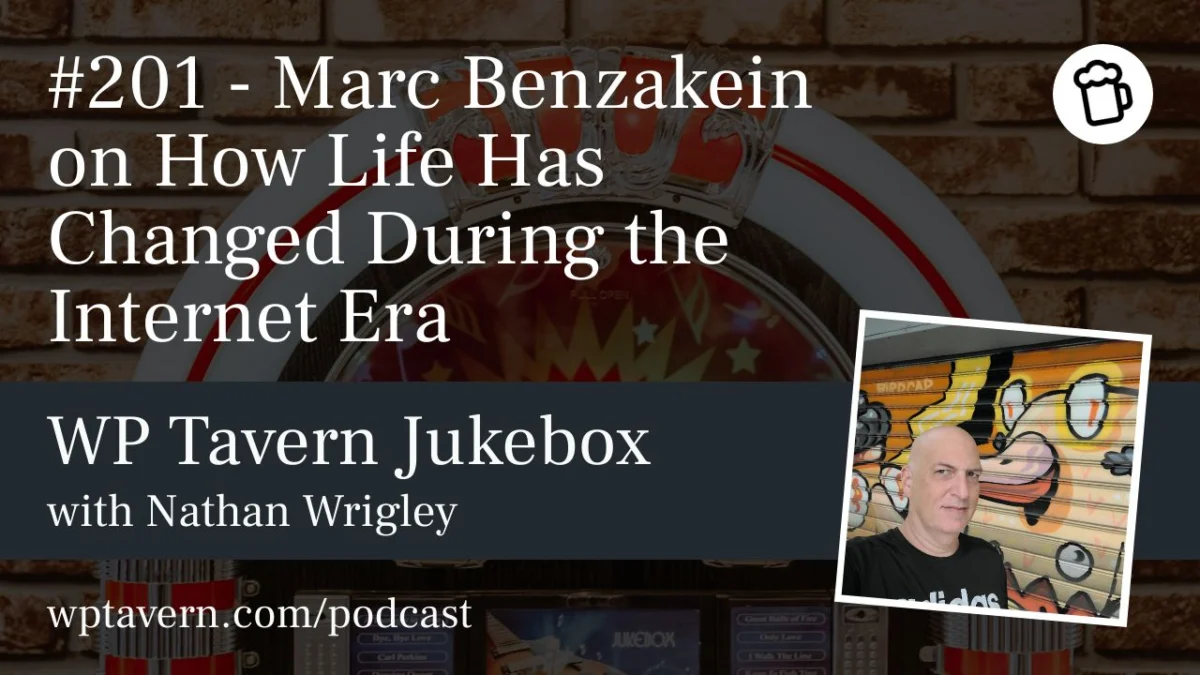
In the fast-paced world of technology, where the shelf life of a breakthrough is often measured in months, it is easy to forget that the internet—the very fabric of our modern existence—was once a quiet, experimental frontier. In a recent episode of the Jukebox Podcast from WP Tavern, host Nathan Wrigley sat down with industry veteran Marc Benzakein for a reflective look at the digital landscape.
Moving away from the usual technical discussions regarding plugins and WordPress development, the conversation served as a cultural excavation. It explored how the internet transitioned from an intentional, slow-paced hobby for the few to an invisible, "always-on" utility that dictates the rhythm of modern society.
Main Facts: A Journey Through the Decades
Marc Benzakein’s career spans nearly the entire history of the commercial internet. His journey began in the mid-1990s, a time when connectivity was a deliberate, often arduous task rather than a background service.
At the time, Benzakein was running a coffee importing business, managing logistics through archaic methods like fax machines and snail mail. His foray into the digital world was driven by pure curiosity—an attribute he credits for guiding him through the rapid shifts of the last thirty years. He transitioned from importing coffee from Burundi to co-founding initiatives that wired schools for internet access, navigating the "Wild West" era of 14.4K modems and nascent network configurations.
The discussion highlights a fundamental truth about the internet’s history: it was built by a loose, global collective of individuals who often didn’t know one another, connected only by their shared fascination with the emerging technology.
Chronology: From BBS to the Always-On Era
The Age of Bulletin Board Systems (BBS)
Before the World Wide Web became a household term, the internet was a collection of siloed communities. Benzakein recalls his early days running a Bulletin Board System (BBS) from his apartment. In this era, bandwidth was so precious that only one user could connect at a time.
"I was the first BBS in our region to have a one-gigabyte SCSI hard drive," Benzakein noted, illustrating how the "status symbols" of the 90s were vastly different from the high-speed, cloud-based metrics of today. During this period, friendships were forged over long-distance phone lines—a stark contrast to the instantaneous, frictionless communication of modern social media.
The Rise of ISDN and DSL
As the late 90s approached, the technology began to shift. Benzakein moved from basic dial-up to ISDN (Integrated Services Digital Network) and eventually DSL. These were the pioneering days of broadband, where the promise of "always-on" connectivity was just beginning to take root.
"We had these crazy ideas that we wanted to connect schools to the internet," Benzakein explained. It was a time of learning on the fly, where technicians and enthusiasts spent hours on the phone with one another, troubleshooting DNS issues and routing problems, driven by the realization that they were building something that would eventually define the future of human interaction.
Supporting Data: The Efficiency Paradox
A recurring theme in the discussion was the "Efficiency Paradox." For generations, the promise of technological advancement has been the liberation of time—the idea that if we can do in two hours what previously took eight, we will have six hours of newfound freedom.
However, historical data and personal observation suggest the opposite has occurred. As technology integrated into our homes and personal lives, the workday did not shrink; it expanded. Benzakein noted, "People were not only bringing their work home, but they were working 14 and 16-hour days."
This phenomenon suggests that humanity’s capacity to fill available time with productive (or semi-productive) tasks is near-infinite. Whether it is checking emails at midnight or managing constant digital notifications, the internet has blurred the lines between labor and leisure, leading to a society that is perpetually "on the clock."
Implications: The Psychological and Cultural Shift
The Loss of "Slow"
The transition from the slow, deliberate nature of 1990s technology to the high-velocity world of 2025 has had profound implications for human attention spans. Benzakein and Wrigley discussed the modern tendency to consume media—podcasts, movies, and audiobooks—at 1.5x or 2x speed.
This adaptation has created an intolerance for the "slow." When people become accustomed to high-speed consumption, real-world interactions can feel sluggish and frustrating. This shift has fundamentally changed how we process entertainment and social engagement, moving away from the meditative, patient pace of past generations—exemplified by the magic lantern shows of the 19th century—toward a model of instant gratification.
The Digital Minimalism Movement
Perhaps the most optimistic implication is the emergence of a "tech-minimalist" trend among the younger generation. Benzakein observed that his own son, and many of his peers, have developed a healthy skepticism toward constant connectivity.
This cohort is increasingly reclaiming "analog" experiences: reading physical books, prioritizing face-to-face or voice-based communication over texting, and consciously limiting their digital footprint. This suggests that the pendulum is beginning to swing back toward a more balanced relationship with technology, where the internet is treated as a tool to be utilized rather than a master to be served.
Future Outlook: Navigating the AI Frontier
As we stand on the precipice of an AI-driven future, the conversation turned toward the sustainability of this rapid evolution. Benzakein posits that society is currently "leveling the playing field" through access to information, yet he acknowledges the challenges posed by corporate dominance.
The early internet was defined by open standards—like RSS—that fostered a decentralized web. Today, that web is dominated by "walled gardens" and social media giants. However, the spirit of the early internet—the desire for a level playing field—remains the goal for many, particularly in the open-source and WordPress communities.
Concluding Thoughts
The history of the internet is not a linear march toward perfection, but rather a complex, often messy, human evolution. It is a tool that has empowered millions, democratized knowledge, and connected the planet, even as it introduced new anxieties and time-management struggles.
As Benzakein aptly put it, the internet is "the eighth wonder of the world." While the rapid pace of change, particularly with artificial intelligence, can feel overwhelming, the key to the future lies in our ability to exert discipline. By choosing when to connect and when to step away, and by maintaining the spirit of curiosity that defined the early days of the digital frontier, we can ensure that the technology serves us—not the other way around.
For those interested in the full dialogue, the episode provides a fascinating, nostalgic, and thoughtful look at the digital world we all call home. As the internet continues to evolve, the lessons from the "dial-up days" remain more relevant than ever.