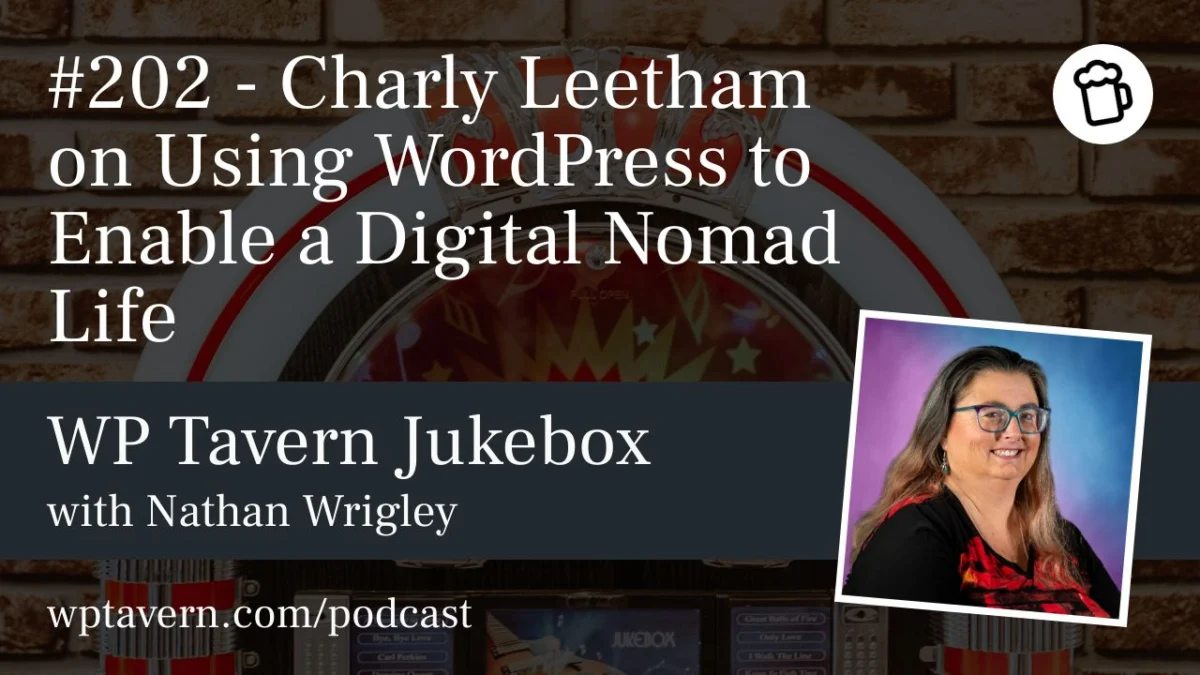
In an era where remote work has become the standard for the tech industry, a new frontier is emerging: the digital nomad. While many professionals have traded their office cubicles for home offices, some are taking the concept of "location independence" to its ultimate conclusion. Among them is Charly Leetham, a veteran of the WordPress ecosystem who has replaced a fixed address with a camper van and a Starlink satellite dish, traversing the vast landscapes of Australia while managing a high-stakes tech consultancy.
For the readers of WP Tavern, Leetham’s story is more than a travelogue; it is a case study in how modern connectivity, combined with a disciplined approach to business, can shatter the traditional tether between a professional and their desk.
A Lifetime of Tinkering: The Path to WordPress
To understand Leetham’s nomadic transition, one must first look at her four-decade journey through the evolution of technology. Her fascination began in her teenage years in Australia, where she earned an amateur radio license at 13. By 16, she had bypassed traditional academic paths to secure an associate diploma in electronic engineering, balancing her studies with a full-time role as a laboratory technician at a major university.
Her professional career was a whirlwind of field service, sales, and contract management, eventually leading her into the retail sector. However, when those retail ventures struggled in the mid-2000s, Leetham found herself at a crossroads. Needing to secure a reliable income to support her family, she turned to the nascent field of web support.
"WordPress was just in its infancy," Leetham recounts. "I knew C++, Pascal, and Basic, but this was PHP. I learned the ecosystem from the ground up—themes, plugins, and troubleshooting." Nearly 20 years later, that initial pivot has evolved into a robust consultancy where she acts as a technical translator, demystifying the complexities of the digital world for small business owners.
The Nomadic Pivot: From Home Office to Open Road
The transition to a nomadic lifestyle was not a mid-life whim, but a response to both economic reality and a long-held desire for flexibility. Leetham notes that the current housing crisis in Australia made traditional renting an increasingly stressful and impractical prospect.
"Rather than stressing over rent or the impossibility of finding a home, I fitted out a commercial vehicle," she explains. With the help of her brother and her son—an electrician—she transformed a van into a fully functional, mobile office. This lifestyle, she argues, is the fulfillment of a dream she held 30 years ago when her children were young. Back then, the technology required to support a work-from-home parent—let alone a mobile one—simply did not exist. Today, through video conferencing and remote access software, she can troubleshoot a client’s email issue or debug a WordPress plugin from a remote campsite in Queensland as effectively as if she were in a city center.
The Technological Infrastructure of Nomadism
A nomadic lifestyle is only as viable as the technology supporting it. Leetham’s setup is a masterclass in efficiency, prioritizing portability without sacrificing professional performance.
- Computing Power: She relies on high-end gaming hardware—specifically an MSI laptop—not for entertainment, but for the robust cooling systems that allow for processor-intensive tasks like graphic design and complex WordPress troubleshooting.
- The Peripheral Workflow: Inside the van, space is at a premium. Her workspace is roughly one square meter. She utilizes a 21-inch monitor wall-mounted for stability, which she deploys only when parked for extended periods.
- The Starlink Revolution: The most critical component of her nomadic life is Starlink. Leetham notes that mobile data in rural Australia is frequently non-existent. Starlink, however, provides high-speed, low-latency internet anywhere with a clear view of the sky. "It’s faster and more stable than the landline connections I’ve used in cities," she says.
She recently upgraded to the Starlink "Version 3" hardware, which is significantly lighter and more portable than previous iterations, reinforcing the feasibility of mobile work.
Supporting the Business: The "Async" Advantage
One of the primary implications of Leetham’s lifestyle is the necessity of a strictly asynchronous communication model. In traditional support roles, employees are expected to be "on-call" or responsive within minutes. Leetham has built a business model that rejects this frantic pace.
"I’ve trained my clients," she says. By setting clear expectations regarding response times and leveraging tools like Slack, Discord, and email, she has created a framework where she can be traveling, hiking, or spending time with family without compromising the quality of her service.
This model requires a high degree of trust. She admits that she has had to "fire" clients who could not adapt to her workflow. However, she views this not as a loss, but as a necessary step in refining her business to match her values. "It is commercial, it is cutthroat, but it is necessary," she notes. By offboarding clients who require constant, synchronous presence, she creates space for those who value the results she delivers over the speed of her response.
Implications for the WordPress Ecosystem
Leetham’s journey offers several key takeaways for the broader WordPress professional community:
- Redefining "Professionalism": Leetham’s career proves that professionalism is defined by the quality of output and the integrity of the relationship, not the location of the office.
- The Necessity of Boundaries: The ability to work from anywhere is useless if the practitioner cannot say "no." Leetham’s rule—"If I haven’t needed it four times, I don’t buy it"—applies not just to her physical gear, but to her client base.
- Technological Democratization: Tools like Starlink have effectively erased the "digital divide" between urban and rural areas. A WordPress developer in the middle of the Australian outback now has the same bandwidth capacity as one in London or New York.
Conclusion: The Freedom to Choose
For Charly Leetham, the nomadic life is not about escaping work; it is about choosing the environment in which that work occurs. Whether she is house-sitting in a regional town or parked near the coast in North Queensland, her primary objective remains the same: helping business owners navigate the technical complexities of their digital lives.
"I worked hard to get to this point," Leetham reflects. "I have a concept of how blessed I am to be able to do it." As the lines between work and life continue to blur for the global workforce, Leetham stands as a pioneer of a new, deliberate way of living—one where the world is the office, and the only requirement is a steady connection to the sky.