By [Author Name]
Technology & Privacy Correspondent
Main Facts
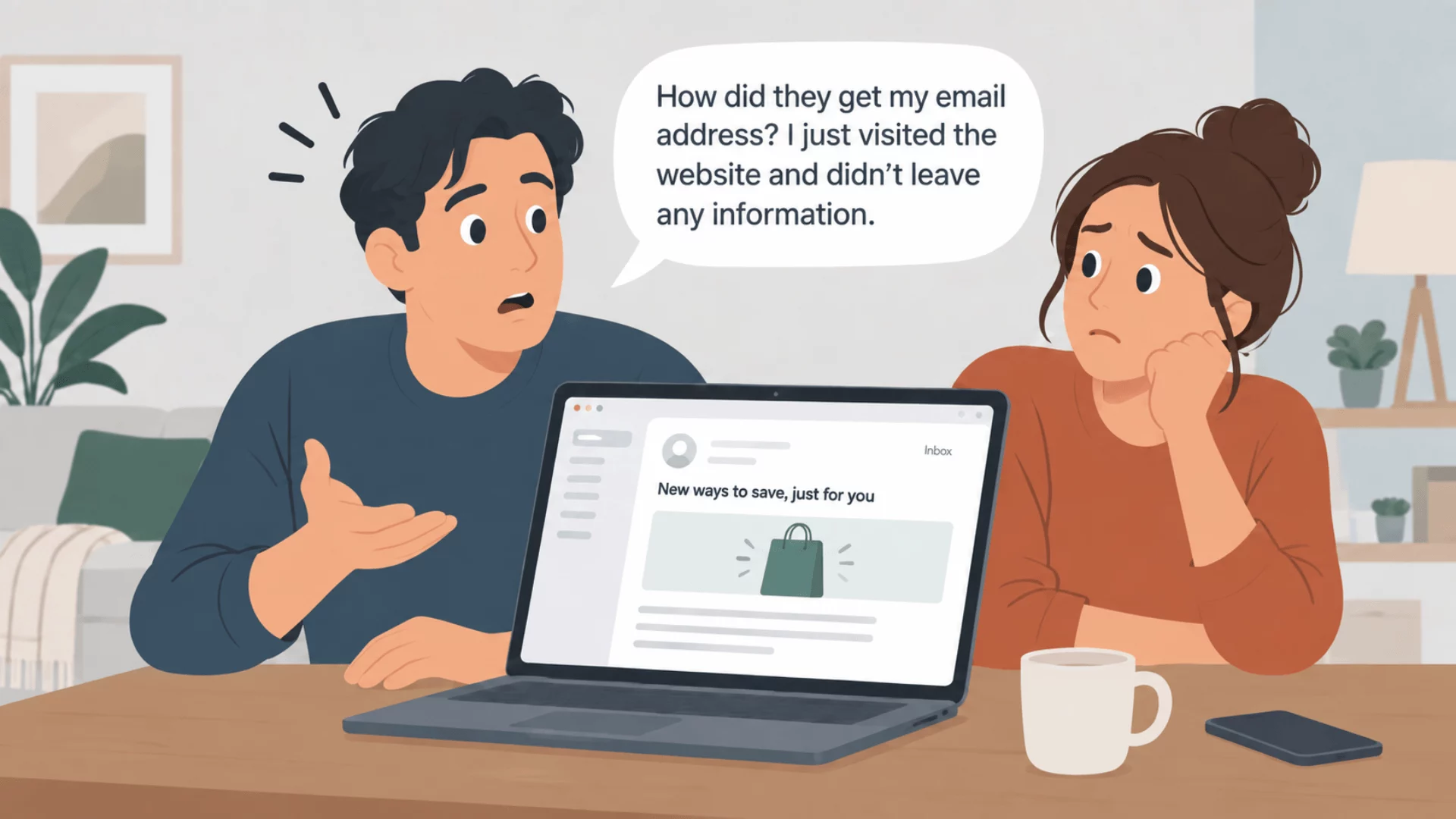
Imagine visiting a software company’s pricing page, looking over the subscription tiers for a few quiet moments, and closing the tab. You never type your name into a form, you never click a "Contact Sales" button, and you certainly never type your email address into a prompt. Yet, within hours, a targeted sales email lands in your inbox, referencing the exact product you were eyeing.
For the average internet user, this scenario feels like a digital magic trick—or a violation of digital boundaries. How did they know who you were?
The mechanics behind this phenomenon are moving from the shadowy fringes of marketing technology into the mainstream of enterprise software. At the center of this shift is Warmly, a specialized tech firm that develops software designed to turn anonymous website traffic into identifiable companies and individual human beings.
The issue burst into prominent industry focus following Warmly’s June 30 announcement that it had entered into an agreement to be acquired by HubSpot, one of the world’s largest customer relationship management (CRM) and inbound marketing giants.
This acquisition bridges two powerful, rapidly evolving technological capabilities:
- De-anonymization technology: Software that tracks, identifies, and profiles anonymous website visitors using complex digital footprints.
- Autonomous AI prospecting: Agents that can automatically ingest those profiles and fire off personalized sales emails without human intervention.
When combined, these tools allow companies to track your browsing habits, stitch together your personal or professional identity, feed that data into a CRM, and trigger automated sales outreach—all without you ever formally identifying yourself to the website. This raises urgent questions regarding consent, data privacy, corporate policy enforcement, and the ethics of modern digital surveillance.
Chronology of an Acquisition and Escalating Capabilities
To understand how we arrived at this crossroads, it is necessary to examine how tracking technology has evolved alongside automated sales infrastructure over the past decade.
From Basic Analytics to Deep Fingerprinting
Historically, website analytics were aggregate and anonymous. Companies knew how many people visited a page, but not who they were. Over time, lead-generation tools evolved to track corporate IP addresses, allowing B2B companies to infer that "someone from Company X" was browsing their site.
However, the proliferation of remote work, mobile devices, and residential IP addresses fractured the reliability of simple IP lookup tools. Enter next-generation attribution firms like Warmly, which developed sophisticated multi-signal matching engines. Rather than relying solely on a corporate network, these platforms began synthesizing IP addresses, device IDs, browser fingerprints, and cross-site tracking cookies to resolve anonymous traffic down to individual professional profiles.
The Warmly and HubSpot Convergence
The trajectory of this technology shifted dramatically on June 30, when HubSpot announced its agreement to acquire Warmly.
HubSpot has spent recent years aggressively expanding its artificial intelligence capabilities, most notably rolling out its autonomous "Prospecting Agent." This AI-driven tool is designed to research prospective leads, draft tailored sales copy, and initiate contact. Crucially, HubSpot’s platform allows customers to choose between a "Review before sending" mode or a fully automated "Send automatically" mode, in which the AI dispatches outreach emails without human oversight.
By absorbing Warmly, HubSpot stands to connect its top-of-funnel AI prospecting engines directly to real-time, de-anonymized website visitors. The integration creates a seamless loop: a user browses a site anonymously; Warmly’s engine identifies them; the data is automatically synced into HubSpot’s CRM; and HubSpot’s AI Prospecting Agent immediately launches an automated outreach campaign.
Supporting Data: How Anonymous Visitors Are Unmasked
Warmly’s own technical documentation and public-facing product guides provide a remarkably candid look at how modern visitor identification operates under the hood. Far from relying on magic, the process is an aggressive exercise in data aggregation, probabilistic modeling, and cross-referencing.
1. Multi-Signal Data Collection
According to its documentation, Warmly collects a wide array of technical identifiers from website visitors, including:
- IP Addresses and Device IDs: Used to establish network location and hardware signatures.
- Browser Details: User-agent strings, installed fonts, screen resolutions, and canvas fingerprints that uniquely identify a browser environment.
- Third-Party Cookies and Identifiers: Including proprietary tracking tokens such as the "Shared Warmly Cookie."
2. Cross-Referencing and Database Matching
Once these signals are gathered, the system cross-references them against vast, opaque networks of data publishers, data brokers, and identity graphs. Warmly’s documentation highlights several core identification sources:
- Personal and professional email databases.
- IP-to-contact matching algorithms.
- Historical cross-site browsing behavior tied to shared identifier networks.
3. Partial Form-Fill Capturing
In addition to tracking passive browsers, Warmly’s technology monitors interactive elements like online forms in real-time. If a user begins typing their email address into a form but abandons it before hitting "Submit," the system attempts to capture and autocomplete the partial data. This allows the platform to tag and tie the visitor’s identity to their browsing session when they return.
4. Probabilistic Matching and Error Rates
Crucially, Warmly acknowledges that this identification process is not infallible. Because the technology relies on data synthesis rather than explicit user authentication, it operates on probabilistic matching—assigning confidence scores to potential identities.
In its own risk assessments, Warmly frames the accidental targeting of incorrectly identified individuals as an acceptable trade-off against the risk of missing potential sales leads. For the consumer on the receiving end, however, this trade-off manifests as misdirected cold emails, invasions of privacy, and digital ghosting based on faulty algorithmic assumptions.
Official Policies, Compliance Frameworks, and Regulatory Questions
As the lines between public browsing and private identity blur, legal and regulatory scrutiny is intensifying. The integration of visitor de-anonymization tools into major CRM ecosystems collides directly with existing corporate acceptable use policies and international privacy laws.
The HubSpot Acceptable Use Policy Dilemma
Within HubSpot’s own ecosystem, an uncomfortable regulatory and ethical question arises regarding its corporate policies. HubSpot’s Acceptable Use Policy (AUP) explicitly states that customers may not use the platform in a way that:
"harvests or otherwise collects information about others, including e-mail addresses, without their consent."
This policy establishes a clear philosophical boundary against unauthorized data harvesting. However, tech and legal experts point out a vital distinction: there may be significant technical, contractual, and legal semantics separating what constitutes prohibited "harvesting" versus permitted "data enrichment" and "visitor identification" services.
Neither HubSpot nor Warmly has been formally accused of violating statutory laws or corporate policies through this acquisition. Yet, the ambiguity creates an urgent need for transparency. HubSpot must clearly explain where it draws the line between permissible lead enrichment and prohibited data harvesting.
The European Regulatory Reality Check
For companies operating in Europe, or targeting European citizens, the legal landscape is significantly more hostile to unconsented visitor tracking.
- The GDPR (General Data Protection Regulation): Under the GDPR, the processing of personal data requires a lawful basis, such as explicit consent or a rigorously justified "legitimate interest." European data-protection authorities have consistently ruled that tracking users and profiling them without clear, affirmative consent cannot simply be hand-waved away as a commercial interest. Assessments must rigorously prove necessity, evaluate the impact on the individual, and respect the reasonable expectations of the user.
- The ePrivacy Framework: Operating in tandem with the GDPR, Europe’s ePrivacy regulations strictly govern the deployment of tracking technologies, cookies, and unsolicited electronic marketing (spam).
- B2B Marketing Nuances: While some national implementations of European law offer slightly more flexibility for business-to-business (B2B) marketing than B2C outreach, the baseline requirement for transparency and opt-out rights remains stringent. Warmly’s methodology—identifying individual humans visiting a site without their knowledge—faces formidable hurdles under European compliance standards.
Implications: The Future of Digital Privacy and Consent
Beyond the legal definitions and corporate terms of service lies a profound philosophical question about the social contract of the internet.
For decades, an unspoken understanding has governed web browsing: you navigate publicly available pages anonymously, leaving traces only if you choose to interact. Filling out a form, signing up for a newsletter, or purchasing a product represents an explicit transaction: I give you my data, you give me your service or communication.
Technologies like those developed by Warmly—and supercharged by automated enterprise platforms like HubSpot—systematically dismantle that barrier. They operate on the premise that if your browser leaves a trail, companies have a right to reverse-engineer your identity from it.
The Erosion of User Agency
The implications for the everyday internet user are stark:
- The Death of Anonymous Browsing: As de-anonymization technology improves, the simple act of researching a competitor, exploring a healthcare option, or looking at pricing models becomes an identifiable event.
- The Rise of Algorithmic Harassment: Combined with generative AI prospecting agents, consumers face a future where their every digital hesitation is met with automated, hyper-personalized sales pressure before they are even ready to converse with a vendor.
- The Compliance Burden Shifts to the Consumer: Instead of privacy being the default state, users are forced into an arms race of ad-blockers, virtual private networks (VPNs), and browser hardening tools just to maintain basic anonymity on public websites.
Conclusion
The acquisition of Warmly by HubSpot marks a watershed moment in marketing technology. It signals that the tech industry is doubling down on turning passive digital exhaust into active sales leads, utilizing AI to execute the outreach at unprecedented scale.
Yet, the core tension remains unresolved. There is a vast, unbridgeable chasm between casually browsing a pricing page and explicitly handing over your personal email address.
While engineering and data science are rapidly building tools to bridge that gap, the ultimate privacy question is not whether the technology can connect those dots.
The question is whether it should.