Nearly four years have passed since the public launches of ChatGPT and Claude, fundamentally altering how humans interact with technology, ask questions, and seek information. Yet, despite the massive paradigm shift toward conversational search, marketers and SEO professionals have largely been left in the dark. For years, the industry has suffered from a profound lack of granular data regarding actual consumer prompts, conversational nuances, and the underlying response methodologies utilized by major artificial intelligence platforms.
Aside from Microsoft’s Bing—which stands virtually alone in offering a degree of AI transparency by reporting the "Grounding Queries" that drive complex "fan-out" responses—marketers have had to rely on traditional, fragmented search query data to reverse-engineer generative AI (genAI) interactions.
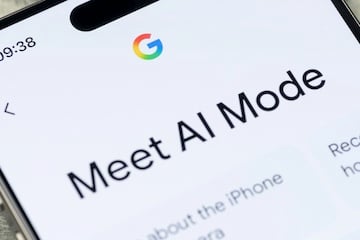
However, a recent breakthrough has cracked open this data black box. It turns out that Google’s AI Mode quietly records both initial and conversational follow-up prompts, logging them directly into Google Search Console (GSC) as traditional search queries. For digital marketers and search engine optimization (SEO) strategists, this discovery provides a rare, unprecedented window into consumer behavior within AI-driven search environments.
Main Facts: The Discovery in Google Search Console
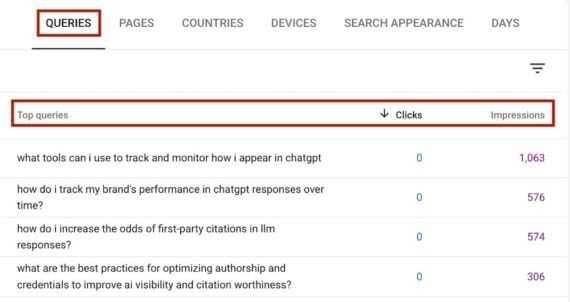
The revelation came to light when SEO professionals noticed unusual, highly conversational strings of text appearing inside their Google Search Console performance reports. Rather than concise keyword phrases like "best project management software" or "how to fix a leaking pipe," GSC properties were suddenly populating with complex sentences, direct questions, and even bizarrely minimal follow-up fragments such as "yes," "yes, pricing," and "tell me more."
Anastasia Kourou, SEO Manager for Greece-based Relevance Digital Agency, decided to investigate these anomalies. Taking the conversation public, Kourou tagged Google’s Search Advocate John Mueller on LinkedIn, pressing him for an explanation as to why Search Console was indexing these conversational, genAI-like phrases as standard search queries.
Mueller confirmed the community’s suspicions, verifying that these entries were indeed captured follow-up prompts generated by real users interacting with Google’s AI Mode. This confirmation transforms Google Search Console from a traditional keyword tracking tool into an invaluable, accidental repository of generative AI prompt data.
Chronology of the Breakthrough
To understand how the SEO community unlocked this hidden data stream, it helps to trace the timeline of discoveries leading up to Mueller’s confirmation:
- Late 2022 to 2025: ChatGPT, Claude, and various AI search iterations launch. Throughout this period, marketers struggle to acquire direct user prompt data, relying instead on third-party estimation tools and traditional keyword research to guess how consumers query AI models.
- Early 2026: Google rolls out deeper integrations of AI-driven conversational experiences, including AI Mode, across its search landscape. Simultaneously, digital marketers begin noticing strange, long-tail queries flooding their Google Search Console accounts—queries that yield high impressions but zero traditional clicks.
- Mid-2026: Anastasia Kourou spots fragmented responses like "yes" and "yes, pricing" inside her client data. She reaches out directly to Google’s John Mueller on LinkedIn to demand clarity.
- August 2026: Mueller officially confirms that these anomalies represent user interactions within Google’s AI Mode. Shortly after, SEO leaders—including Jean-Christophe Chouinard, an SEO strategist at Tripadvisor—publish advanced Regular Expressions (regex) to help the wider industry isolate and analyze these prompts at scale.
Supporting Data: How to Isolate AI Prompts Using Regex and APIs
Because Google Search Console does not feature a dedicated "AI Prompts" toggle, marketers must use creative filtering techniques to separate traditional short-tail keywords from conversational, multi-word prompts. The most effective method involves utilizing Regular Expressions (regex) within the GSC interface.
Step-by-Step: Filtering via Regular Expressions
- Navigate to your Google Search Console property and open the Performance report.
- Click on New to add a filter, then select Query.
- Change the matching criteria from "Contains" to Custom (regex).
- Paste a length-based regex string into the field to target long-form conversational inputs.
To start, you can use a basic word-count filter such as:
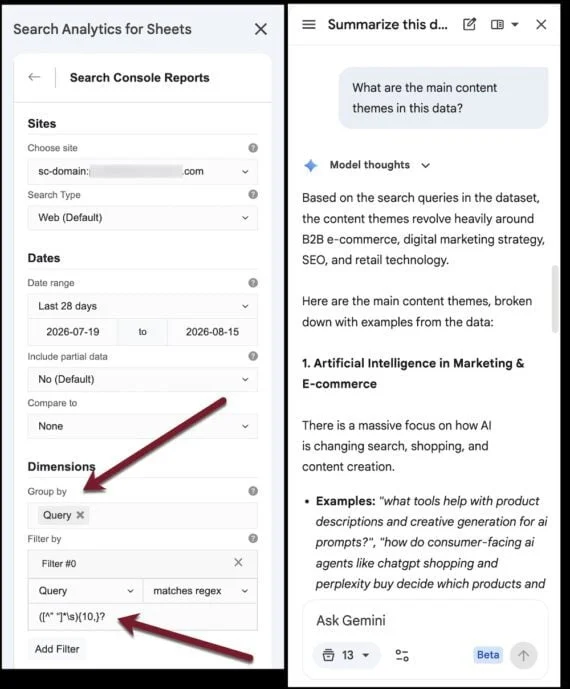
([^" "]*s)10,?This regex filters for queries containing ten or more words, immediately stripping out standard search phrases and highlighting lengthy, paragraph-style prompts (e.g., "what tools can i use to track and monitor how i appear in chatgpt").
For a more comprehensive analysis that captures both initial long-tail questions and subsequent conversational follow-ups—such as "yes, please" or "tell me more"—advanced SEO practitioners like Jean-Christophe Chouinard have engineered expanded regex formulas that account for the disjointed, multi-turn nature of chat logs.
Leveraging External Tools and APIs
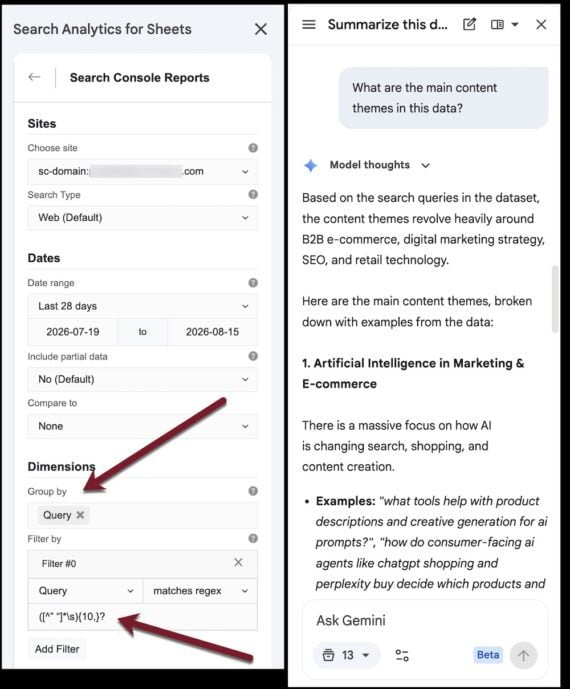
While the standard GSC front-end interface is helpful, it is limited by row caps and sampling. To pull deeper datasets without requiring dedicated developer resources, marketers frequently turn to free, trusted third-party integrations such as Search Analytics for Sheets.
By connecting Search Console via API to a spreadsheet environment, users can bypass standard interface limitations. Marketers can export massive sets of query data, run regex filters locally, and even pair the data with large language models like Google’s Gemini to automatically categorize prompt themes, extract user intent clusters, and identify content gaps.
Note: While utilizing third-party tools requires sharing confidential performance data, the immense analytical benefits—such as enhanced export capabilities, historical depth, and automated thematic sorting—usually outweigh the friction for enterprise SEO teams.
Official Responses and Industry Reactions
The confirmation from Google’s John Mueller represents a rare moment of transparency regarding how conversational features intersect with traditional search infrastructure. By acknowledging that AI Mode interactions feed back into Search Console, Google has inadvertently given SEOs a backdoor into the generative engine.
Industry reaction has been swift and deeply analytical. Rather than viewing these long, zero-click queries as "noise" or reporting errors, top-tier SEO agencies and enterprise brands are treating them as goldmines of qualitative user research.
However, experts caution that not all long-tail data points represent human behavior. Some excessively repetitive, highly structured long queries with massive impression spikes may actually stem from automated prompt-tracking software and competitor monitoring bots rather than actual consumers. Paradoxically, even these bot-driven queries offer valuable intelligence, as they reveal precisely what metrics, phrases, and topics your competitors are actively tracking in the generative landscape.
Strategic Implications for the Future of SEO
Uncovering generative AI prompts inside Search Console fundamentally changes how digital marketers must approach content strategy, keyword targeting, and optimization. Traditional SEO has long relied on search volume, exact-match keywords, and rank-tracking tools. AI-driven search, however, operates on intent, context, and multi-turn conversational relevance.
Here are the key implications and actionable takeaways for optimization tactics moving forward:
1. Shift from Keywords to Intent Clusters
Because users type fully formed paragraphs, direct questions, and contextual follow-ups into AI Mode, targeting a single two-word keyword is no longer sufficient. Marketers must analyze the semantic themes emerging from their regex-filtered GSC reports and build comprehensive content hubs that answer multi-part questions in a natural, authoritative voice.
2. Optimize for Conversational Follow-Ups
The presence of multi-turn prompts like "yes, pricing" or "tell me more" proves that users engage in dialogue with AI search engines before making a decision. Content must be structured with clear hierarchies, logical next steps, and deeply detailed sub-sections that anticipate what a user might ask after their initial query. If an AI engine recommends your brand initially, does your website provide the immediate, frictionless follow-up information required to seal the deal in subsequent conversational turns?
3. Redefine Success Metrics
Generative search experiences often resolve user intent directly on the search results page, leading to high impressions and zero traditional clicks. Marketers must look beyond standard click-through rates (CTR) when evaluating AI-influenced queries in Search Console. Visibility, brand mention tracking in generative summaries, and overall impression growth for complex conceptual queries are becoming critical new key performance indicators (KPIs).
Conclusion
The accidental exposure of AI Mode prompts inside Google Search Console marks a turning point for the digital marketing industry. While tech giants like OpenAI and Anthropic keep their prompt architectures tightly locked down, Google’s integrated ecosystem has inadvertently handed SEOs the keys to the kingdom.
By mastering regex filtering, leveraging API-driven spreadsheet tools, and learning to interpret the conversational nuances of multi-turn prompts, forward-thinking brands can finally bridge the gap between traditional search optimization and the generative AI future.