In the sprawling, interconnected landscape of the modern web, few phenomena are as complex or as vital as the WordPress ecosystem. With a reach that powers over 40% of the internet, WordPress is far more than just software; it is a massive, decentralized economy comprising thousands of agencies, specialized product companies, and critical infrastructure providers.
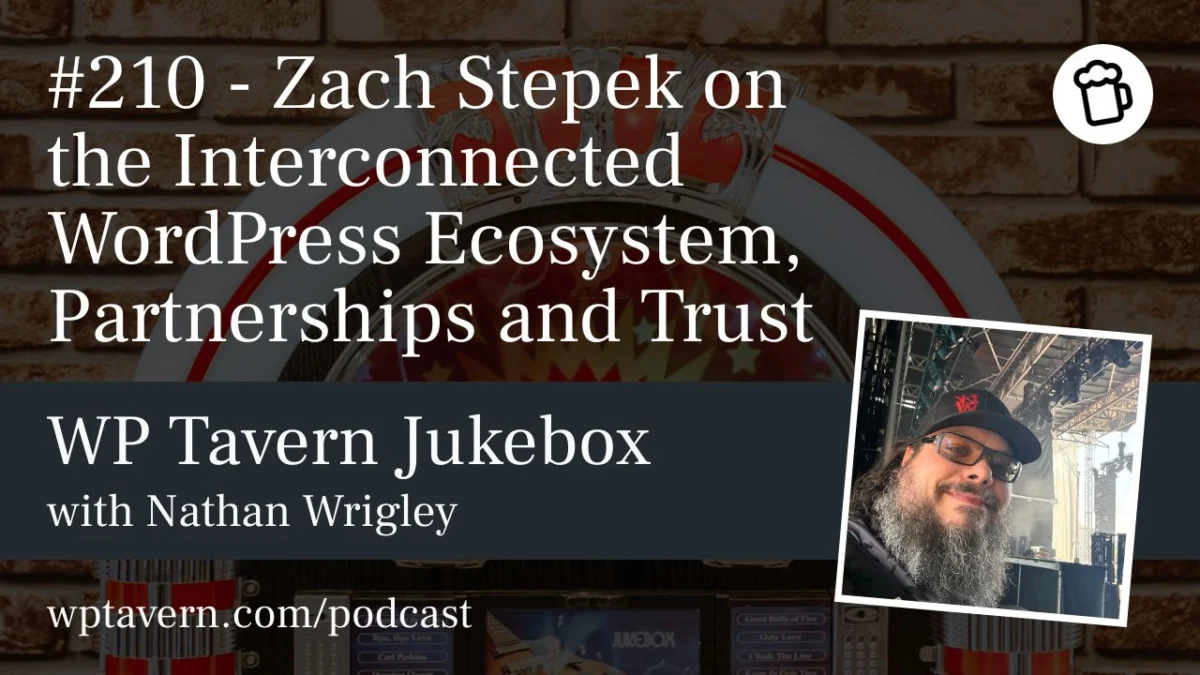
However, as the platform enters a new era in 2026, the foundational philosophy that fueled its meteoric rise—a commitment to open-source collaboration and the "rising tide lifts all boats" mentality—is facing a stress test. In a recent episode of the Jukebox Podcast from WP Tavern, host Nathan Wrigley sat down with industry veteran Zach Stepek to discuss the shifting dynamics of partnership, the dangers of transactional thinking, and why trust remains the most valuable asset in an increasingly uncertain economic climate.
The Three Pillars of WordPress Success
To understand the health of WordPress, one must first understand its anatomy. Stepek, a veteran of the tech world with experience ranging from Cold Fusion and Flash to modern JavaScript and WooCommerce, defines the WordPress ecosystem through three interconnected pillars:
- The Agency/Individual: The builders and implementers who translate client needs into functional, high-performing websites.
- The Product Companies: The creators of plugins and themes that provide the modular functionality required to build sophisticated digital experiences.
- The Infrastructure (Hosting): The bedrock upon which the entire ecosystem sits, providing the performance, security, and stability required for modern e-commerce.
These pillars do not exist in isolation. They function as a "Celtic knot"—an intricate, overlapping structure where the failure of one thread threatens the integrity of the whole. A high-end e-commerce site, for instance, requires the expertise of an agency, the specialized functionality of third-party plugins, and the robust performance of premium hosting. If any of these links weaken, the entire user experience—and the business model behind it—collapses.
A Chronology of Evolution: From Viral Moments to Institutional Scale
Stepek’s perspective is informed by a career that mirrors the evolution of the web itself. His journey into the WordPress ecosystem was not planned but catalyzed by a high-stakes "viral moment."
While working with the Oscar Mike Foundation, an organization supporting injured veterans, Stepek was tasked with troubleshooting a site failure during a high-traffic television appearance during a Thanksgiving NFL game. The site, which was running on a modest virtual private server (VPS), was overwhelmed by order volume. The root cause? A misconfigured email spool that exhausted the server’s memory.
This crisis was a turning point. It illustrated the stark reality that in the world of e-commerce, infrastructure is not merely a utility—it is the digital equivalent of a retail storefront. "If you skimp on hosting and go for the cheapest rent, you cannot expect to handle the traffic of a premier location on Madison Avenue," Stepek explains. This realization led him to pivot toward the hosting space, where he has since focused on the art of partnership and the necessity of building infrastructure that can survive the pressures of growth.
The Perils of Transactional Thinking and ROI-Driven Models
As the WordPress economy has matured, a new, more clinical approach has begun to take hold. In recent years, an influx of private equity and a focus on aggressive revenue targets have introduced a "transactional" mindset. This shift, while predictable in a maturing market, creates a fundamental tension with the open-source values that defined WordPress’s early years.
The Conflict of Values
In an open-source environment, success is traditionally measured by long-term growth and community contribution. However, when external investors prioritize immediate ROI, the focus narrows. This "bean-counter" approach often leads to the erosion of long-term investments, such as developer hours spent contributing to core software or the sponsorship of community events.
The "Death by a Thousand Paper Cuts"
Stepek characterizes the current state of the ecosystem as a potential "death by a thousand paper cuts." If companies prioritize short-term profit over the health of the community, they are effectively removing bricks from the foundation of the skyscraper they inhabit. While the building may stand for a while, the structural integrity is compromised. As fear regarding the broader global economy intensifies, the instinct to "circle the wagons" and prioritize self-preservation over collaborative growth threatens to diminish the collective innovation that made WordPress a leader in the first place.
Infrastructure and the Component Shortage
The conversation also highlights a looming physical reality that many in the digital space overlook: the supply chain. The rise of large language models (LLMs) and so-called "Artificial Intelligence" applications has created a massive, unforeseen demand for server components.
Data centers are currently struggling to keep pace with the power and cooling requirements of high-performance hardware, and the shortage of RAM and processing power is no longer a theoretical concern. For hosting companies operating on thin margins—particularly those that rely on low-cost models—this physical reality is a reckoning. The cost of infrastructure is rising, and businesses that fail to account for these costs or maintain strong, value-based relationships with their partners will find their models unsustainable in the coming years.
The Case for Relationship Equity
Despite the pressures of the current landscape, Stepek remains optimistic about the future of WordPress, provided the ecosystem remembers the value of "relationship equity."
Beyond the Spreadsheet
Revenue is a signal, but it is not the only one. In a professional, values-driven partnership, success should also be measured by:
- Trust: The level of transparency and reliability between teams.
- Proactive Collaboration: How often partners work together to solve systemic issues rather than just reacting to outages.
- Customer Outcomes: The quality of the final experience for the end-user.
Stepek argues that those who invest in these intangibles—treating partners as collaborators rather than line items—will find themselves more resilient in the face of economic uncertainty. Reputation compounds over time, and in a tight-knit community like WordPress, that reputation is a far more durable asset than a quarterly revenue spike.
Implications for the Future: An Inflection Point
The WordPress ecosystem stands at a definitive inflection point. The next few years will reveal whether the platform will continue to be a model for collaborative, decentralized success or if it will succumb to the pressures of hyper-transactionalism.
For agencies, the lesson is clear: bridge the gap between product companies and infrastructure providers by cultivating deep, informed relationships. For product companies, the imperative is to be good stewards of the code and the community that enables their success. And for hosting companies, the mandate is to look beyond the server and see the humans and the businesses that rely on their stability.
As the industry faces rising hardware costs, economic anxiety, and the shifting nature of the web, the most successful entities will likely be those that reject the "zero-sum" game. By focusing on the "rising tide," participants can ensure that the WordPress skyscraper continues to rise, not because of a single wrecking ball, but through the deliberate, collaborative addition of new, stronger floors.
In the words of Stepek, "The first casualty of fear is patience." If the WordPress community can maintain its patience and continue to nurture the garden of its ecosystem, the future remains bright. But it requires a collective commitment to the idea that we are building something that, when maintained correctly, is greater than the sum of its parts.