
In the fast-paced world of digital marketing, the traditional "set-it-and-forget-it" campaign is becoming a relic of the past. For years, marketing teams have operated under the pressure of the "home run" mentality—launching massive, multi-faceted campaigns with the hope of immediate, sweeping success. However, data increasingly suggests that this approach is fraught with risk and inefficiency.
Enter iterative testing: a methodology rooted in the principle of continuous improvement, where marketing assets are refined through a cycle of small, evidence-based experiments. By shifting the focus from massive, singular overhauls to incremental adjustments, businesses are finding they can reduce wasted spend, adapt to shifting consumer behaviors, and achieve sustainable growth.
The Core Concept: What is Iterative Testing?
Iterative testing is a process of repeated experimentation, measurement, and refinement. Borrowed from agile product development—where software is built in cycles—this approach applies the same logic to marketing. Instead of waiting for a campaign to conclude before reviewing its effectiveness, marketers run a series of small, targeted tests that build upon the insights gained from the previous round.
The fundamental shift here is one of mindset. Marketing is no longer viewed as a static "launch" event, but as a dynamic, living system. By treating every campaign as a hypothesis to be tested rather than a fixed truth, marketers can identify "leaks" in their conversion funnels—small inefficiencies that drain budgets—and plug them systematically.
The Chronology of an Experiment: A Step-by-Step Guide
For many, the biggest barrier to testing is the perceived complexity. To demystify the process, we can break down a successful iterative cycle into six actionable steps.
1. Defining a Laser-Focused Hypothesis
The most common pitfall in testing is the "everything at once" approach. When a team changes a headline, a hero image, a button color, and a form field simultaneously, they lose the ability to isolate the variable that actually caused the change in performance. An effective iterative test focuses on a single, isolated element. A strong hypothesis sounds like: "By changing the call-to-action (CTA) button from ‘Submit’ to ‘Get My Free Guide,’ we will see a 5% increase in lead generation."

2. Prioritizing Based on Impact and Effort
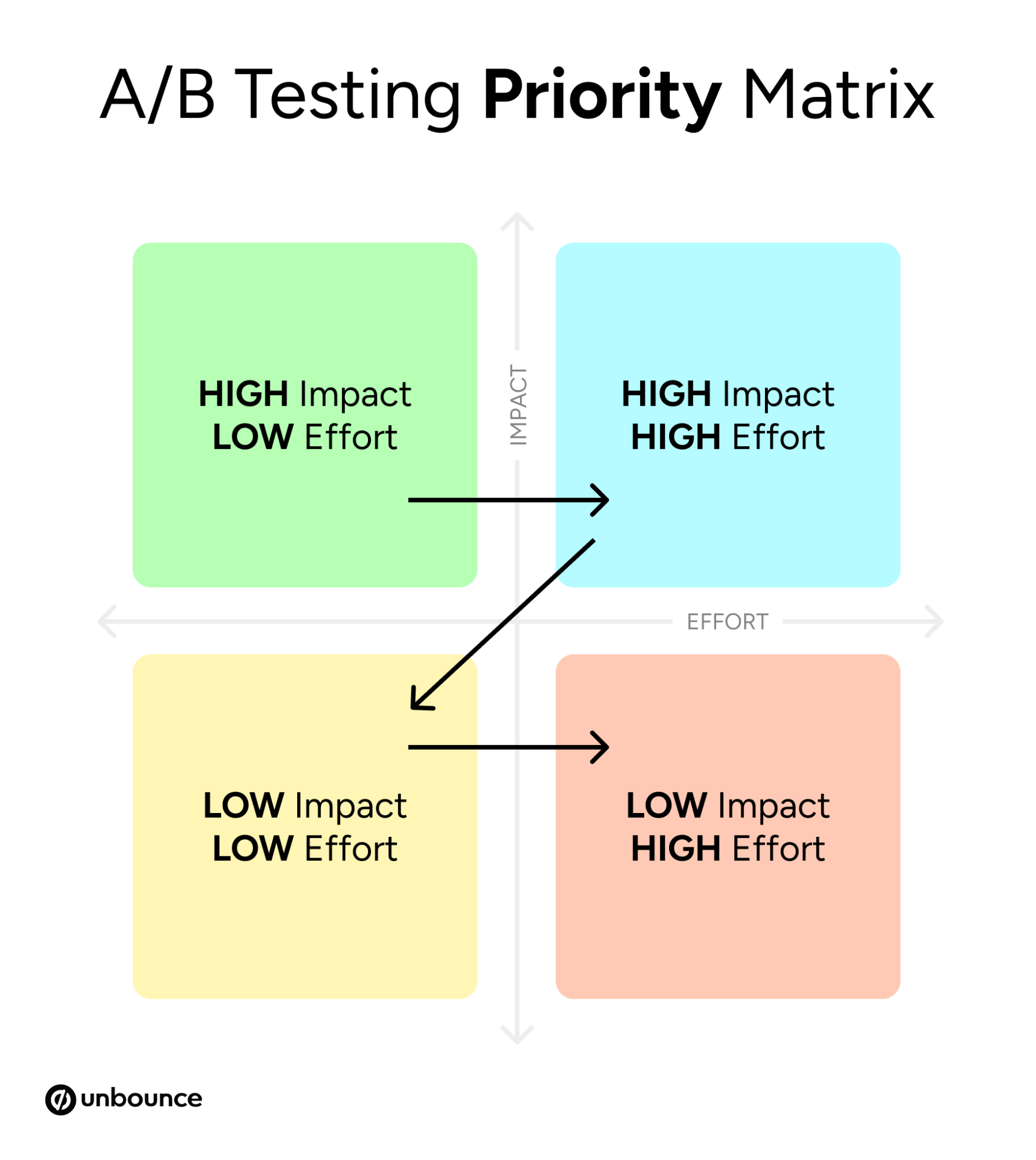
Not all tests are equal. Marketers should utilize a 2×2 prioritization matrix. On one axis, measure the potential impact of the change; on the other, measure the effort required to implement it. Focus on "quick wins"—high-impact, low-effort changes—to build internal momentum for the testing program.
3. Building a Minimal, Testable Variation
Keep variations clean. If you are testing a headline, the rest of the landing page should remain identical to the control. This ensures that any change in user behavior can be directly attributed to the variable you altered. Tools like Unbounce allow teams to duplicate and tweak pages rapidly, removing the need for developer intervention.
4. Launching and Gathering Statistical Significance
Patience is a virtue in data analysis. A common mistake is stopping a test as soon as a slight trend appears. Without achieving statistical significance—a mathematical assurance that the results aren’t just due to random chance—you risk making decisions based on "noise." Ensure your sample size is adequate before calling a winner.
5. Extracting Actionable Insights
Once the data is in, the work is only half-done. If Variant B outperformed the Control, don’t just celebrate. Ask why. Did the simpler headline work because it was clearer? Or because it addressed a specific pain point? These insights become the foundation for your next, more sophisticated test.
6. Iterating and Scaling
Success in one area should inform the next. If a clearer, more concise headline boosted conversions by 15%, consider applying that "clarity-first" philosophy to your email subject lines or social media ad copy. This creates a "flywheel effect" where every test makes the next one more likely to succeed.
Supporting Data: The Evidence for Incrementalism
The case for iterative testing is backed by compelling industry data. According to the 2024 Conversion Benchmark Report, the impact of small, nuanced changes on a page can be profound. For instance, landing pages written at a 5th-7th grade reading level convert at a rate of 11.1%—more than double that of professional-level, high-complexity copy.

Furthermore, data suggests that while 83% of landing page traffic now originates from mobile devices, desktop experiences continue to convert 8% better on average. This data point serves as a perfect candidate for an iterative test: rather than blindly following a trend, teams can use iterative cycles to experiment with mobile-specific layouts and messaging to close that conversion gap.
Official Industry Perspectives
Marketing leaders are increasingly advocating for this "test-and-learn" culture. Josh Gallant, founder of Backstage SEO, emphasizes that successful experimentation isn’t about being a genius—it’s about being a "spreadsheet nerd" who respects the data. "The best marketers aren’t the ones who guess right the most often," Gallant notes. "They are the ones who fail the fastest and learn the most from those failures."
By fostering an environment where failure is treated as data, organizations can eliminate the fear that often stifles innovation. When a team realizes that a "failed" test is simply a confirmation of what doesn’t work, the entire creative process becomes more fluid and less intimidating.
The Implications for Modern Marketing Teams
The implications of adopting an iterative testing strategy are significant, affecting everything from budget allocation to team culture.
1. Financial Efficiency
Marketing budgets are tightening. Iterative testing acts as a guardrail against massive, failed investments. By testing small segments before rolling out changes to the entire audience, companies can save thousands in potential wasted ad spend.
2. Agility in a Changing Market
Consumer behavior is not static; it is influenced by macroeconomic trends, seasonality, and the actions of competitors. An iterative approach allows teams to pivot in real-time. If a competitor launches a new feature, a team can immediately test how their own messaging needs to adjust to counter that threat, rather than being stuck in a rigid, quarterly plan.
3. Cultural Transformation
Perhaps the most lasting implication is the cultural shift. When departments like support, sales, and product are encouraged to contribute to the "testing backlog," the marketing department becomes more aligned with the actual needs of the customer. A support agent who notices a recurring question about pricing can submit a test hypothesis to address that confusion directly on the landing page. This collaboration breaks down silos and creates a unified organizational goal: the customer experience.
Conclusion: The Path Forward
The goal of iterative testing is not to reach a state of perfection—because "perfection" is a moving target in a digital landscape. Rather, the goal is progress. Every test, whether it results in a conversion spike or a null result, provides a building block for a more effective strategy.
By prioritizing speed, simplicity, and cross-departmental collaboration, marketers can transform their operations from a series of disjointed efforts into a cohesive, data-driven machine. As the digital marketplace becomes increasingly competitive, those who can learn and adapt the fastest will inevitably capture the lion’s share of the market.
For teams ready to begin, the advice is simple: Start with one page, one variable, and one hypothesis. The journey of a thousand conversions begins with a single test. Whether you are using specialized conversion toolkits or foundational analytics, the most important step is to stop guessing and start measuring. The data is waiting; the only question is whether you are prepared to listen to what it has to say.