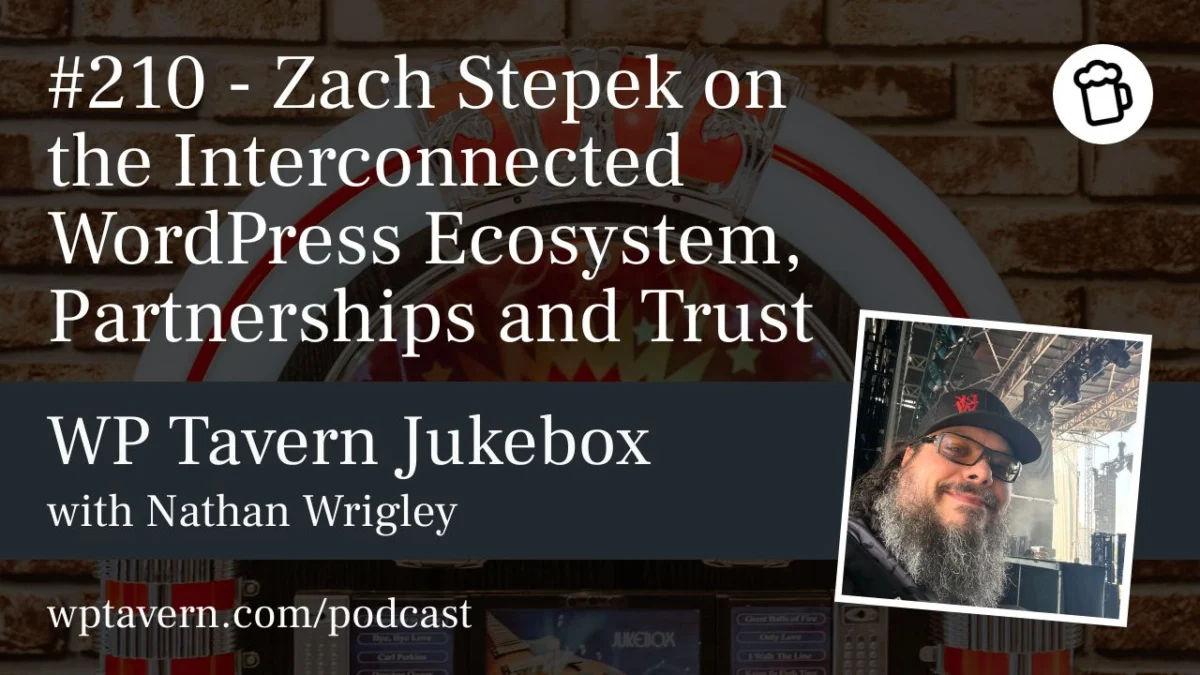
In the expansive, interconnected world of WordPress, the architecture of success is built not just on code, but on a complex, invisible network of relationships. As the platform enters its third decade, the mechanisms that have historically driven its growth—the synergy between agencies, product companies, and infrastructure providers—are facing a period of intense scrutiny. Zach Stepek, a seasoned industry veteran and “unicorn” of the tech world, recently joined the Jukebox Podcast to discuss why the current approach to partnerships is at an inflexion point and why the industry must pivot back to value-driven collaboration to survive.
The Pillars of WordPress Success: A Three-Tiered Ecosystem
To understand the health of the WordPress ecosystem, Stepek identifies three fundamental, interconnected pillars that sustain the platform. Like a Celtic knot, these entities are inextricably linked; the failure of one inevitably destabilizes the others.
- Agencies and Freelancers: These are the architects of the user experience. They bridge the gap between complex software and business goals, implementing the tools that make websites functional for end users.
- Product Companies: These are the innovators—the creators of plugins, themes, and extensions. They solve specific problems, such as form management, SEO, or e-commerce, and their success depends on their ability to serve the needs of the agencies implementing them.
- Hosting and Infrastructure: Often viewed as the digital "real estate," hosting is the bedrock upon which the entire structure rests. In an era where traffic spikes and e-commerce performance can make or break a business, high-quality infrastructure is no longer a luxury—it is a critical business asset.
Stepek argues that these pillars must operate in harmony. When an agency, a plugin developer, and a hosting provider align their values, the result is a robust, scalable digital experience. However, when these relationships are treated as purely transactional, the foundation of the ecosystem begins to crack.
A Chronology of Evolution: From Flash to the Modern Web
Stepek’s perspective is informed by a career that spans the evolution of the web. His journey began in the era of Cold Fusion and Flash, a period characterized by rapid, often volatile technological shifts. He recalls the "Flash apocalypse"—a moment where a single letter regarding the future of the technology effectively erased millions of dollars in potential revenue overnight.
This period of instability taught him the value of resilience and adaptability. Following that, his pivot into the WordPress ecosystem was cemented by a "baptism by fire." Tasked with saving a website for the Oscar Mike Foundation—a non-profit supporting injured veterans—Stepek experienced firsthand the dangers of poor infrastructure. A surge in traffic during an NFL broadcast caused the organization’s server to crash because it was improperly configured for high-concurrency e-commerce.
"The server ran out of memory because the email spool ran the server out of memory," Stepek explains. "That experience taught me that in the WordPress space, the infrastructure is as vital as the code itself." This event, and his subsequent talk at WordCamp Milwaukee in 2015, launched a decade-long relationship with the WooCommerce team, eventually leading to a keynote at WooConf 2017. His trajectory from a hands-on developer to a fractional consultant specializing in partnership strategy serves as a blueprint for the current state of the industry.
The Economics of Partnership: ROI vs. Relationship Equity
The core tension currently gripping the WordPress world is the shift from "relationship equity" to "transactional ROI." As the broader economic landscape becomes more uncertain, many companies are retreating into a defensive posture.
The Perils of Short-Term Thinking
Stepek notes that the influx of private equity and the pressure to deliver immediate quarterly returns have fundamentally altered the behavior of some major players. "When you focus on short-term wins only and ignore the potential of long-term partnership… you lose out on potential revenue because of shortsightedness," he says.
The "bean-counter" approach to business—where every interaction is measured solely by immediate revenue—is fundamentally at odds with the open-source ethos of WordPress. In a community where trust is the most durable asset, transactional thinking acts like a slow erosion. It is, as Stepek describes, "death by a thousand paper cuts."
The Hardware Reality
Beyond the philosophical shifts, there is a tangible, physical pressure on the hosting industry. The rise of AI-driven computing and Large Language Models (LLMs) has created an unprecedented global demand for high-end processing power and specialized memory components. This has led to a supply chain bottleneck that is driving up the raw cost of server infrastructure.
"Companies that were built on $3 hosting are going to very quickly find that their model is no longer supported by component cost," Stepek warns. As these costs rise, the "race to the bottom" in pricing becomes unsustainable, forcing hosting companies to either pivot to value-added services or risk insolvency.
Implications: The Rising Tide or the Circling Wagons?
The implications of this shift are profound. The WordPress community is currently choosing between two paths: the path of the "rising tide," where collective investment in the ecosystem benefits all boats, and the path of "circling the wagons," where individual entities attempt to insulate themselves from market pressures by cutting costs and ending community initiatives.
The Value of Stewardship
Stepek highlights companies like Fueled (the team behind ElasticPress) and WebDevStudios as examples of good stewardship. By releasing high-quality, open-source solutions to address the needs they encounter in their agency work, these companies strengthen the entire WordPress platform. They understand that by solving a problem for the community, they are building a reputation that acts as a long-term compound interest for their brand.
Redefining Success Metrics
To survive the current inflexion point, Stepek suggests that businesses must broaden their definition of success. If the spreadsheet is the only source of truth, the ecosystem will continue to decline. Instead, he proposes that companies start tracking:
- Trust and Collaboration Metrics: How often are partners collaborating proactively rather than reactively?
- Community Contribution: How much time and resource is being dedicated to Core, documentation, or events?
- Customer Outcome: Are the end-users experiencing better stability and performance because of the partnerships in place?
Conclusion: A Call to Action
The WordPress ecosystem is at a crossroads. The fear-driven belt-tightening currently seen across the industry—evidenced by the dwindling number of sponsors and attendees at major tech events—is a symptom of a larger, systemic challenge. However, Stepek remains optimistic. He argues that the companies that will define the next decade of WordPress are those that treat their partnerships as a garden to be tended, not a field to be stripped.
"Partnerships compound slowly," Stepek concludes. "When you’re in an environment where patience is thin because fear is high, taking the time to develop true partnerships is hard. But it is always the people who do the hard work that succeed in the end."
For agencies, product companies, and hosts, the message is clear: the era of easy growth is over. The era of intentional, value-driven partnership has begun. Those who can navigate this shift, prioritizing human relationships and long-term ecosystem health over the quick, transactional win, will not only survive the coming economic turbulence but will emerge as the leaders of the next generation of the web.