The WordPress plugin directory, the bedrock of the world’s most popular content management system, is currently navigating a period of unprecedented transformation. As the ecosystem grapples with a surge in AI-generated submissions and evolving user expectations, long-time community contributors are calling for a fundamental shift in how the platform manages growth, discoverability, and commercial integration.
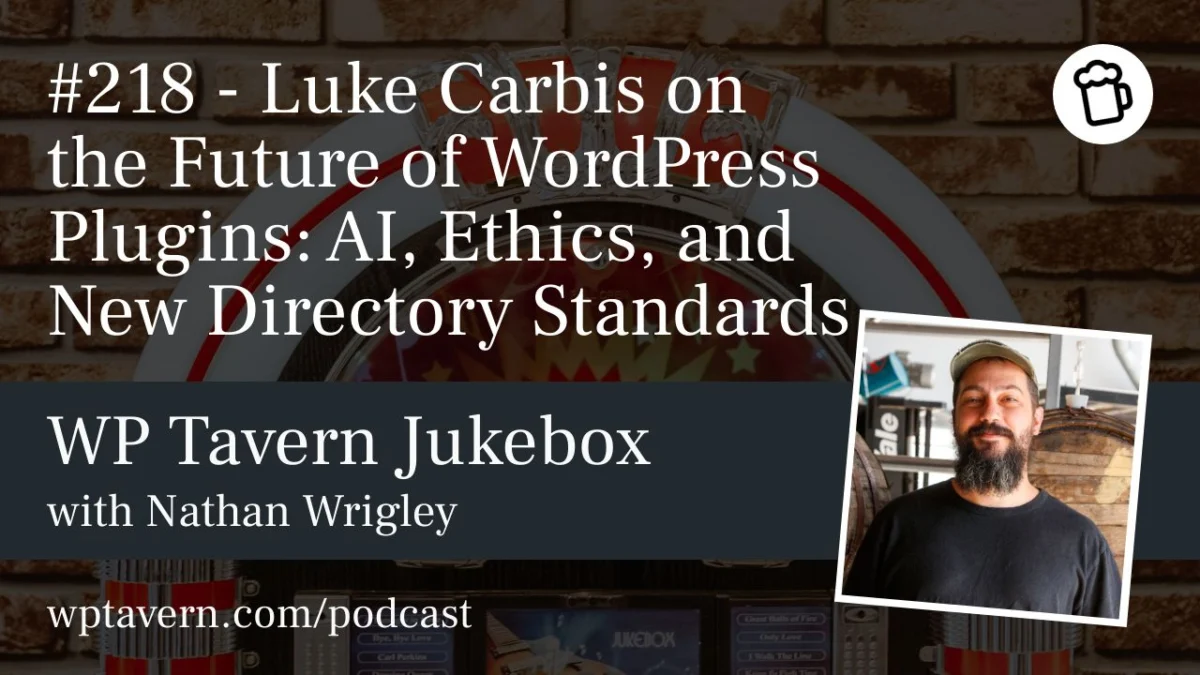
Luke Carbis, a veteran of the WordPress space with over 20 years of experience—ranging from agency development to his current role on the Plugin Review Team—recently took the stage at WordCamp Asia to address these challenges. In a wide-ranging discussion on the WP Tavern Jukebox podcast, Carbis articulated a vision for a "safer, more transparent" ecosystem, balancing the raw power of artificial intelligence with the need for sustainable human oversight.
The AI Deluge: A New Frontier for Plugin Review
The WordPress plugin repository has long served as the primary gateway for users to extend their sites. However, the last 12 months have introduced a significant mechanical challenge: a massive increase in submission volume. Carbis notes that the influx of plugins has been driven largely by the proliferation of AI-assisted development tools.
While the Plugin Review Team has successfully maintained relatively short wait times—currently hovering around one week—the sheer volume of submissions has created a bottleneck of complexity. "We’ve seen, in the last 12 months, something like four times the amount of plugin submissions than 12 months ago," Carbis explains.
This is not merely a logistical hurdle for the reviewers; it is a discovery problem for the end user. As the directory becomes more crowded, high-quality, human-crafted tools risk being buried under a sea of "vibe-coded" AI plugins. For the user, the challenge is no longer just finding a tool that works; it is distinguishing between a robust, long-term solution and a transient, AI-generated script that may lack proper maintenance.
A Chronology of Discovery and Control
The history of the plugin repository is marked by periodic attempts to refine its ranking and discovery mechanisms. Historically, the "algorithm"—an open-source system—has relied on metrics such as active installations, support forum responsiveness, and keyword relevance.
However, Carbis argues that these legacy systems are becoming strained. As developers learn to "game" the system through keyword optimization, the traditional signals of quality are being diluted. During the podcast, Carbis proposed a multi-step evolution for the repository:
- Account Connectivity: Enabling users to connect their
wordpress.orgprofiles to their local WordPress installs to streamline the management of favorite plugins. - External Repository Integration: Allowing developers to link their own Git-based repositories (like GitHub) to their WordPress profiles. This would permit users to install vetted "untrusted" or custom plugins directly through the WordPress dashboard, essentially creating a private marketplace experience.
- Commercialization: A controversial, albeit pragmatic, suggestion to allow the sale of premium plugins directly through the repository, with a portion of proceeds supporting the WordPress Foundation and the future of the project.
Supporting Data and Ethical Implications
The conversation surrounding AI in WordPress is fraught with tension. On one hand, the productivity gains for developers are undeniable. On the other, there is a palpable concern regarding the "dehumanization" of the open-source spirit.
Carbis highlights a growing generational divide. In his experience with younger students and Gen Z developers, there is a strong, principled resistance to AI. "A full half of the class stood up and said, ‘No, we do not use AI. That is bad for the environment. We’re going to get dumb if we use it,’" Carbis recounts. This demographic shift suggests that the WordPress community cannot afford to become an "AI-only" space if it wishes to attract the next generation of contributors.
To address this, Carbis proposes an AI Disclosure Protocol. He envisions a simple header system where plugin authors can voluntarily specify their level of AI usage—ranging from simple idea generation to full-scale automated code production. This metadata, surfaced on the plugin repository, would empower users to make informed decisions without forcing a binary "AI vs. No-AI" narrative on the ecosystem.
Official Responses and the "Strong Leader" Paradigm
The leadership style of WordPress co-founder Matt Mullenweg has recently shifted toward a more direct, interventionist approach. Following WordCamp Asia, a surge of activity on the project’s Slack channels signaled a move away from the slow-moving, committee-driven consensus model toward a more decisive, top-down strategy.
For Carbis, this shift is a double-edged sword. While it initially caused frustration, he has come to view it through a different lens. "I’ve decided to recast Matt in my mind from being this Elon Muskian figure to being someone more akin to Steve Jobs or DHH—figures known to be a little rough around the edges, but also visionary in their product thinking."
This perspective acknowledges that WordPress faces a "seismic" challenge. The platform is currently at an inflection point: it can continue to move slowly, risking obsolescence, or it can accept a more aggressive leadership style that prioritizes modernization and competition. Carbis suggests that a period of strong, centralized direction might be exactly what the project needs to survive the current market volatility.
Implications for the Future of Open Source
The implications of these proposed changes are significant. If WordPress chooses to integrate commercial marketplaces or deepen its reliance on AI, it risks alienating a portion of its core user base that values "code as poetry" and strictly non-commercial ethos. However, remaining static is equally dangerous.
The potential for a "commercial" plugin repo, specifically, carries immense weight. If the platform could facilitate premium transactions—perhaps taking an 8% cut (3% for processing, 5% for the Foundation)—it could provide a sustainable revenue stream for WordCamps, core contributors, and the very developers who keep the ecosystem alive.
Yet, as Carbis admits, the community remains deeply divided. The "honesty box" problem—the idea that bad actors will simply lie about their AI usage or commercial motives—remains a major hurdle. Trust, once a pillar of the WordPress community, is now something that must be actively engineered rather than assumed.
Conclusion: A Call for Adaptation
As WordPress moves forward, it is clear that the status quo is no longer sufficient. The rise of AI and the changing expectations of a new generation of developers have forced a reckoning. Whether through more robust discovery tools, transparent AI disclosures, or a re-evaluation of how commercial products coexist with open-source ideals, the platform must evolve.
Luke Carbis’s vision is not one of total revolution, but of "guarded adaptation." By introducing clear, opt-in standards and embracing a more decisive leadership model, WordPress has a fighting chance to remain the primary engine of the web. As Carbis puts it, the goal is to ensure that when the next generation looks back at the decisions made today, they see a community that chose to evolve, innovate, and lead, rather than one that simply faded away into the background of a rapidly changing digital landscape.
The future of WordPress will not be defined by a single algorithm update or a new policy document, but by the ongoing, often messy, dialogue between its contributors—a dialogue that, as demonstrated by the WP Tavern Jukebox podcast, remains as vital and vibrant as ever.