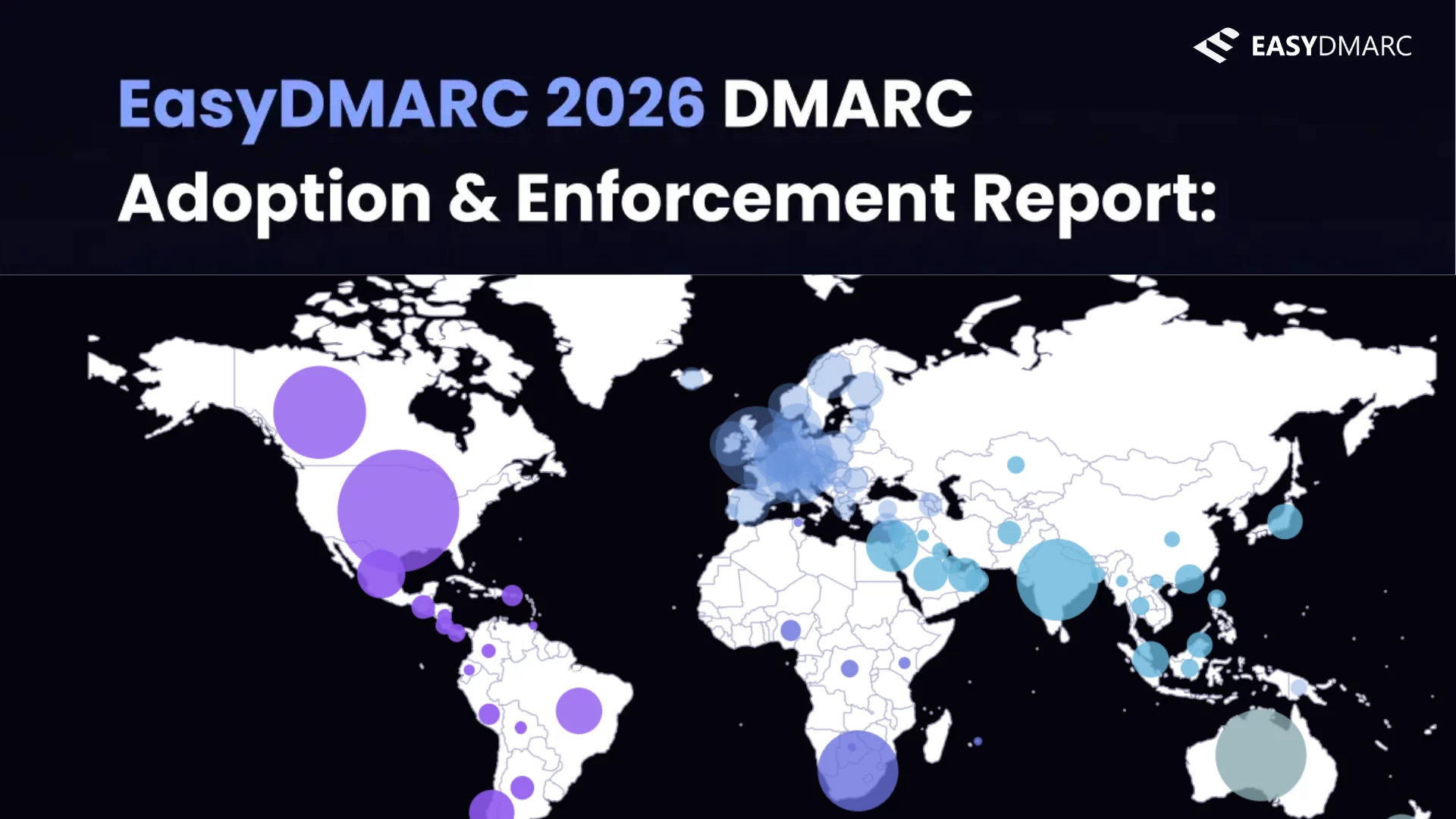
In the modern digital landscape, email remains the primary gateway for both enterprise communication and sophisticated cyberattacks. For years, the industry has pinned its hopes on Domain-based Message Authentication, Reporting, and Conformance (DMARC) as the ultimate panacea for domain spoofing. According to the newly released 2026 DMARC Adoption Report from EasyDMARC, the global effort to secure the internet’s mail stream has hit a critical, paradoxical milestone.
While more domains than ever have adopted DMARC, the vast majority are choosing to remain in a state of perpetual "monitoring"—effectively leaving their metaphorical front doors unlocked. The report, which analyzed the top 1.8 million domains by traffic, confirms that while the industry has crossed the 50% threshold for adoption, it has failed to translate that visibility into actual security.
The Main Facts: A Milestone Masking a Failure
The headline numbers provided by EasyDMARC are, on their face, celebratory. Out of the world’s top 1.8 million domains, 937,931 now publish a valid DMARC record. This represents 52.1% of the total—a massive leap from 47.7% just last year and a staggering increase from the 27.2% recorded in 2023. Over the last three years, DMARC adoption has grown by 79%.
However, the report’s most sobering statistic serves as a reality check: of those 937,931 domains, 525,996 are configured with a policy of p=none.
In the language of email authentication, p=none is "monitoring mode." It tells receiving mail servers to watch for unauthorized email spoofing your domain and to generate reports about it, but crucially, it instructs those servers to deliver the fraudulent mail anyway. It was designed as a temporary diagnostic step—a bridge to help organizations identify their legitimate email senders before moving to a policy that actually blocks malicious traffic.
The 2026 data reveals that for more than half of the adopting population, this "temporary" bridge has become the final destination. The industry is effectively watching itself get spoofed, logging the evidence, and doing nothing to stop the flow of illicit mail.
A Chronology of Compliance-Driven Adoption
To understand how the internet arrived at this stalemate, one must look at the timeline of the last three years. The surge in adoption is not a result of a sudden, altruistic global commitment to cybersecurity; it is the direct outcome of market pressure.
The 2023 Foundation
In 2023, DMARC was still largely a "best practice" recommendation. Adoption hovered at 27.2%, primarily among large, security-conscious enterprises and government agencies. It was a period of slow, organic growth where security teams took the time to map out their third-party email stacks and move toward strict enforcement.
The 2024-2025 "Bulk Sender" Catalyst
The trajectory changed abruptly with the announcement of new bulk sender requirements from industry titans like Google and Yahoo. These platforms demanded that high-volume senders implement DMARC at a minimum of p=none.
This regulatory-style move had an immediate impact: the industry scrambled to comply. Organizations published records to avoid having their marketing and transactional emails blocked by the world’s largest inbox providers. The growth was "compliance-shaped." Companies did exactly what was required to keep their mail flowing—and not one step more.
The 2026 Reality
By early 2026, the industry is left with a "half-built fence." The compliance surge brought millions of domains into the ecosystem, but because the requirements set the bar at the lowest possible technical level, the vast majority of companies have stopped at the threshold of p=none. They have checked the box for their deliverability partners but have left their domain reputation vulnerable to the very phishing attacks DMARC was meant to eliminate.
Supporting Data: The Enforcement Gap
The true efficacy of DMARC is found in enforcement policies: p=quarantine (sending suspicious mail to spam) and p=reject (blocking it entirely). The EasyDMARC analysis of 1.8 million domains paints a stark picture of the current state of enforcement:
- Total domains at Enforcement (
p=quarantineorp=reject): 411,935. - The "Gold Standard" (Enforcement + RUA reporting): Only 9% of the analyzed total.
- The Strict Benchmark (
p=reject+ RUA): A mere 159,691 domains.
When you look at these numbers, you realize that for every eleven domains that have "bothered" to engage with DMARC, only one has reached the level of true security. The rest are essentially a rounding error in the eyes of sophisticated threat actors.
Disparity Between the Elite and the Aspiring
The report highlights a significant divide between the Fortune 500 and the Inc. 5000.
Among the Fortune 500, the story is one of maturity:
- 95% have valid DMARC records.
- 80% are at an enforcement policy.
- 97.9% utilize reporting.
These organizations have navigated the complex task of auditing their mail streams and enforcing policies. Conversely, the Inc. 5000 list—representing fast-growing, dynamic companies—shows a different trend:
- 76.2% adoption rate.
- Only 15.2% reach
p=reject. - More than 50% remain at
p=none.
The discrepancy isn’t a lack of awareness; it is a lack of "operational courage." Growing companies often have sprawling, opaque third-party email stacks. They fear that moving to p=reject will inadvertently break legitimate business workflows (e.g., automated invoices, marketing platforms, or HR systems). Consequently, they choose the safety of the status quo—monitoring their vulnerability rather than fixing it.
Official Responses and Industry Implications
The consensus among cybersecurity experts is clear: authentication without enforcement is merely paperwork.
The publication of DMARCbis earlier this spring—which modernized the DMARC standard—has signaled a shift in the ecosystem. Organizations like GMX, WEB.DE, and mail.com have begun moving their own domains to p=reject, setting a leadership example for the rest of the industry. Furthermore, Google’s latest "Postmaster" verdicts treat technical compliance as the mere "entry ticket" to the ecosystem, not a badge of security.
EasyDMARC CEO Gerasim Hovhannisyan argues that the industry’s current state of "adoption-only" is a dangerous illusion. "Adoption driven by compliance and deliverability requirements has arrived," Hovhannisyan notes, "but adoption alone doesn’t protect anyone. The industry now needs a coordinated, industry-wide push to move from records to enforcement."
The Threat Landscape: Why the Fence Must Be Finished
Threat actors are not waiting for the industry to catch up. Modern phishing campaigns, such as those utilizing device-code kits or hijacked Software-as-a-Service (SaaS) accounts, often pass basic authentication checks because they are operating from within legitimate, trusted infrastructure.
While DMARC enforcement cannot stop every type of attack—it is not a silver bullet against compromised accounts or sophisticated social engineering—it is the definitive fix for the "low-hanging fruit" of domain spoofing. By choosing to stay at p=none, half a million organizations are providing a safe harbor for the most basic, yet most common, forms of domain-based deception.
Conclusion: How to Bridge the Gap
For the 525,996 domains currently stuck in the p=none parking lot, the path forward is no longer an exercise in guesswork. The tools for visibility—RUA (Aggregate Reporting) files—are already being collected by over 553,000 domains. The data required to safely move to enforcement is already sitting in their inboxes.
The strategy for organizations is straightforward, though operationally demanding:
- Analyze: Use existing RUA reports to inventory every legitimate sender.
- Align: Ensure all legitimate mail is properly signed with SPF and DKIM.
- Ratchet: Move from
p=nonetop=quarantine, test for impact, and finally, move top=reject.
The Fortune 500 benchmarks prove that this is not a technical impossibility; it is a management choice. For any board or C-suite executive asking if full DMARC enforcement is realistic, the answer is simple: if the most complex email estates on the planet can achieve it, the "parking lot" is no longer a necessity—it is a choice to remain vulnerable.
The industry has built the fence, but until it is locked at p=reject, the gate remains wide open.