The global race for artificial intelligence dominance has transcended terrestrial boundaries, sparking a fierce debate among the world’s most influential tech moguls. At the heart of the controversy is a radical proposal: moving massive data centers into orbit. While Elon Musk and SpaceX champion the concept as the future of compute infrastructure, industry veterans like SoftBank’s Masayoshi Son are sounding the alarm, dismissing the plan as an impractical distraction in a race that will be won or lost in the next few years.
The Vision: Orbital Data Centers as the New Frontier
The narrative of "orbital data centers" is rooted in the current, desperate global scramble for compute power. As AI models grow in complexity, the demand for processing power has outpaced the physical capacity of Earth-bound infrastructure. Constraints such as energy availability, cooling costs, and local regulatory "NIMBY" (Not In My Backyard) opposition have made building massive data centers on land increasingly difficult.
Musk’s vision suggests that by placing servers in space, SpaceX can bypass these terrestrial hurdles. By utilizing the company’s massive satellite constellation capabilities, SpaceX aims to create an orbital infrastructure that provides scalable compute power. For Musk, this is a natural evolution of his mission to minimize regulatory friction and maximize technological throughput.
A Chronology of the Compute Conflict
The discord surrounding orbital computing is not a sudden development, but rather the culmination of shifting market dynamics over the past two years:
- 2024-2025: As the generative AI boom accelerated, compute scarcity became the primary bottleneck for tech giants. Companies like OpenAI and Google began aggressively securing data center capacity.
- Early 2026: SpaceX began pivoting its narrative, positioning itself not just as a launch provider, but as a critical node in the global AI infrastructure, signing deals to rent compute power to third-party AI labs.
- May 2026: SoftBank announced a massive $75 billion investment in French data centers, signaling its commitment to traditional, land-based infrastructure.
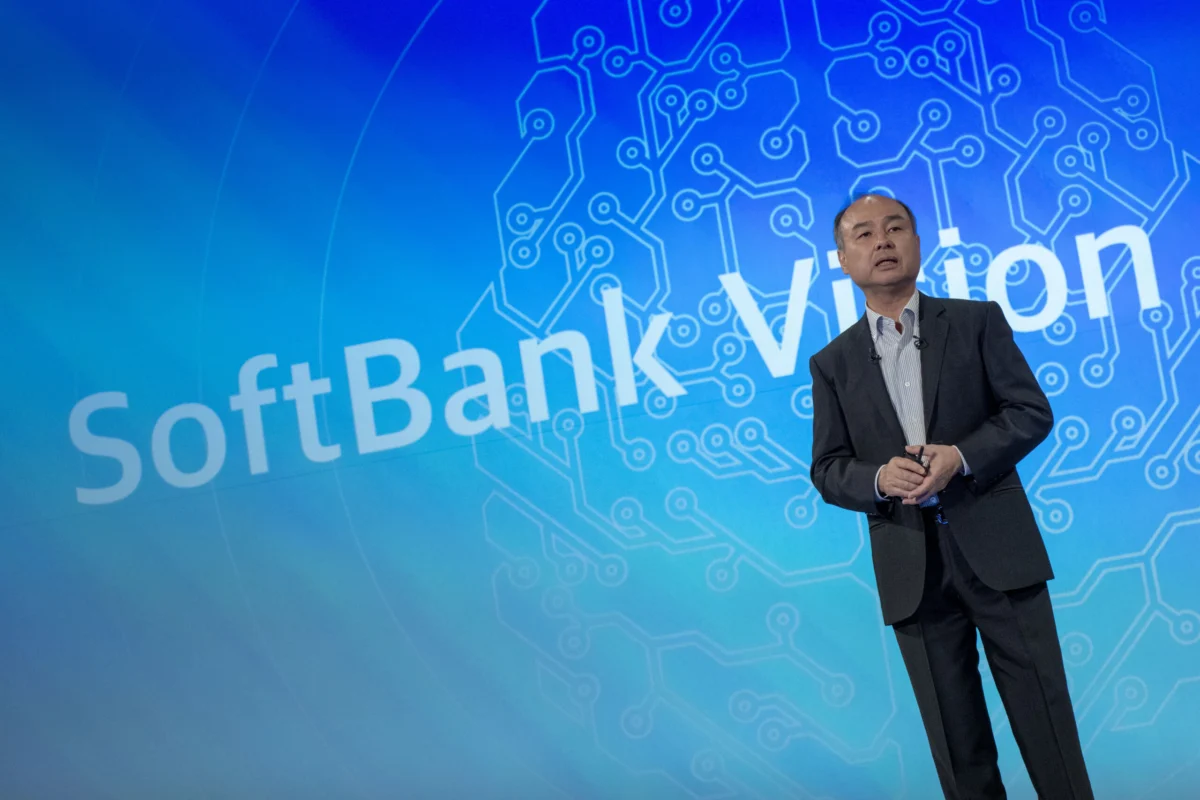
- June 2026: During a high-profile shareholder meeting, Masayoshi Son publicly questioned the viability of orbital data centers. This prompted a wave of industry analysis regarding the long-term feasibility of Musk’s space-based strategy.
- Late June 2026: The discourse reached a fever pitch following the Equity podcast discussion, where industry analysts highlighted the circular economic incentives behind SpaceX’s proposal.
The Skeptic’s Argument: Why SoftBank is Betting on Earth
Masayoshi Son’s critique of the orbital model is grounded in the urgency of the current AI arms race. Son argues that the "battle for AI" is a short-term, high-intensity competition. The next three to five years will determine which companies capture the market share of the future.
"What is the point of data centers in space?" Son asked at his recent shareholder meeting. His point is simple: the engineering hurdles, the launch costs, and the latency issues involved in space-based computing make it a solution for a problem that is decades away, not one that solves the immediate hunger for compute that exists today.
Furthermore, critics point out the irony of Son—a man who built his reputation on massive, high-risk venture bets like WeWork—adopting a conservative stance. However, analysts suggest that SoftBank’s pivot to massive, land-based data center investments in Europe and beyond demonstrates that Son is not necessarily anti-risk, but rather hyper-focused on projects with immediate, tangible revenue potential.
Economic Implications: The "Talking Your Own Book" Phenomenon
The debate has surfaced a persistent reality in the tech industry: "talking your own book." Every CEO and investor weighing in on the future of data centers is motivated by their existing portfolio and strategic business goals.
The SpaceX Incentive
Sean O’Kane of TechCrunch argues that Musk’s push for orbital data centers is a masterclass in business vertical integration. SpaceX’s launch business is heavily reliant on its Starlink constellation. By proposing a data center model that requires constant satellite maintenance and replacement, Musk is effectively guaranteeing a captive, long-term customer for his own launch services.
If one removes the Starlink-driven demand from the equation, SpaceX’s dominance in the global launch market drops significantly. By turning space into a data hub, SpaceX ensures that its rockets remain the essential "trucks" for the new digital economy.
The OpenAI and SoftBank Counter-Strategy
Conversely, figures like Sam Altman have displayed skepticism toward the orbital model, opting instead to focus on custom chip development and terrestrial infrastructure. For companies like OpenAI, the priority is chip efficiency and power consumption on the ground—areas where they are currently investing billions.
SoftBank, meanwhile, is betting that the path to AI dominance is paved with concrete, fiber-optic cables, and massive power grids in stable, geopolitically secure locations. By investing $75 billion in French data centers, SoftBank is positioning itself as a primary landlord for the AI era, a role that offers predictable, long-term returns compared to the speculative nature of space-based computing.
Engineering and Economic Realities
Beyond the corporate maneuvering, the engineering challenges remain formidable. Data centers are, by their nature, heat-intensive. In space, heat dissipation is significantly more difficult than on Earth, where liquid cooling and massive HVAC systems are standard. Additionally, the replacement cycle for satellites—which must be de-orbited and replaced every few years—creates an ongoing operational cost that may prove insurmountable for all but the most well-funded entities.
Sean O’Kane notes that the "neo-cloud" trend—where companies are pivoting from their core businesses to become compute providers—is a symptom of a broader market panic. Whether it is a former shoe company like Allbirds exploring AI compute or SpaceX leveraging its launch monopoly to rent out processing cycles, the industry is grasping for any available compute resource.
The Road Ahead: Will the Cloud Move Upward?
The question of whether data centers will migrate to orbit remains unresolved, but the industry has moved into a phase of intense scrutiny. The "orbital data center" is currently more of a strategic vision than a technical reality.
As the industry grapples with the transition from the experimental phase of AI to the scaling phase, several key indicators will determine the winner of this debate:
- Energy Efficiency Metrics: Can orbital cooling systems ever compete with terrestrial geothermal or modular nuclear-powered data centers?
- Regulatory Shifts: Will governments provide subsidies for space-based infrastructure in the same way they are currently providing tax breaks for terrestrial data centers?
- The "Compute Floor": Once the initial AI boom plateaus, will the demand for compute remain high enough to justify the extreme costs of orbital operations?
Ultimately, the disagreement between Musk and Son represents two distinct philosophies of capital allocation. Musk is betting on the disruption of physical geography, believing that by leaving the planet, he can outrun the limitations of terrestrial regulation and resource scarcity. Son is betting on the optimization of the status quo, believing that the winning AI firms will be those that can scale the fastest, most efficiently, and most reliably right here on Earth.
For the observer, the lesson is clear: in the high-stakes world of AI, there are no impartial voices. Every vision of the future is a reflection of the infrastructure currently being built by the people proposing it. Whether the cloud stays grounded or reaches for the stars, the battle will be fought not just with code, but with the massive, multi-billion dollar infrastructure projects that underpin the modern world.