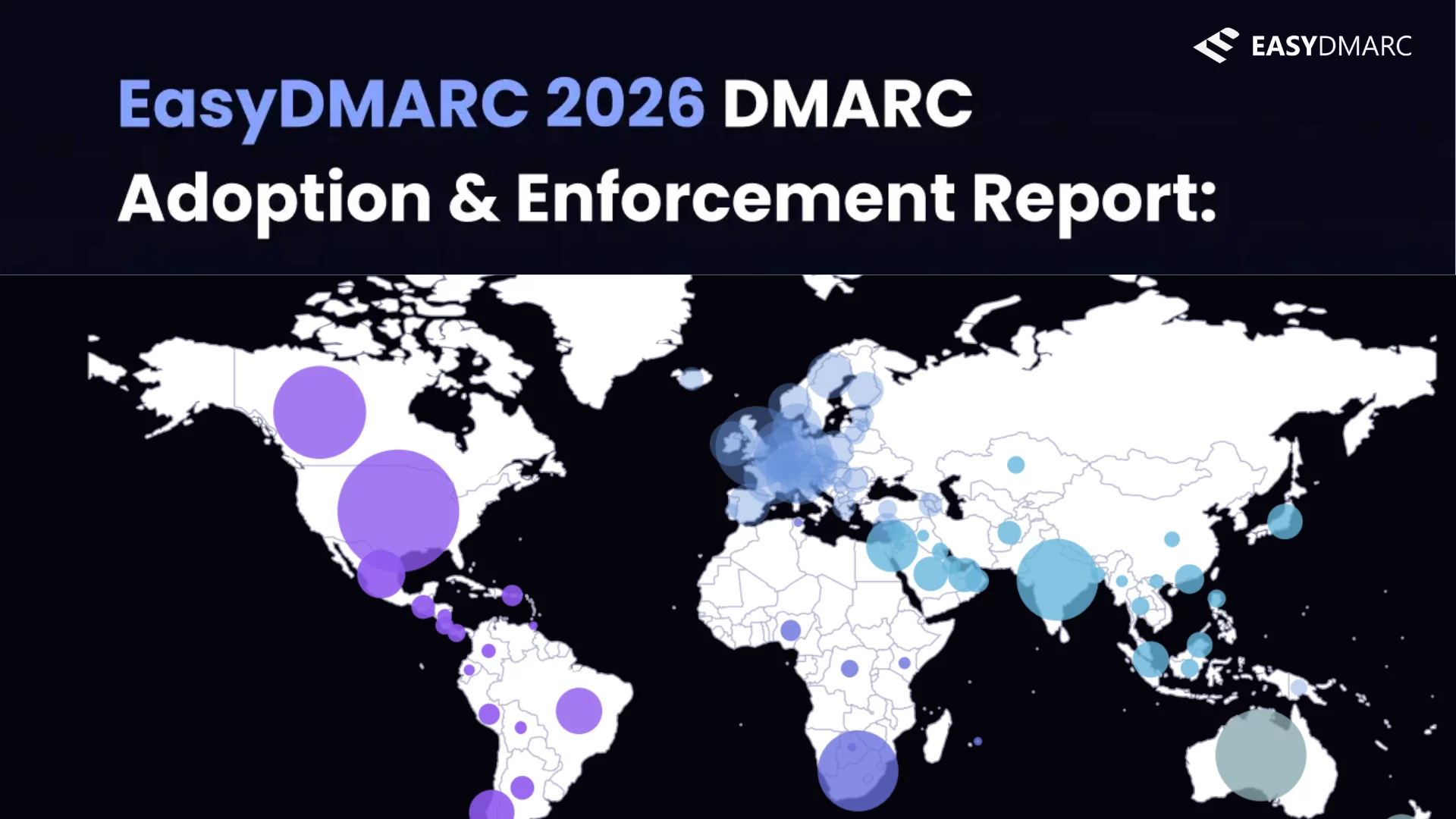
The global internet infrastructure is currently undergoing a massive, albeit superficial, transformation. According to the newly released 2026 DMARC Adoption Report from EasyDMARC, the Domain-based Message Authentication, Reporting, and Conformance (DMARC) protocol has reached a long-awaited milestone: more than half of the world’s top 1.8 million domains now publish a valid DMARC record.
At first glance, the numbers are a triumph of industry pressure. With 937,931 domains—52.1% of the total—now utilizing DMARC, adoption has skyrocketed by 79% since 2023. For a protocol that spent its first decade on the fringes of technical obscurity, crossing the halfway mark is a signal that email authentication has finally entered the mainstream. However, beneath the celebratory headline lies a sobering reality: for the vast majority of these organizations, DMARC has become a checkbox for compliance rather than a shield against cybercrime.
The Chronology of Compliance: How We Got Here
The rapid acceleration of DMARC adoption was not a spontaneous awakening of cybersecurity consciousness among domain owners. Instead, it was a direct reaction to the "Great Email Crackdown" initiated by major mailbox providers.
2023: The Foundation
Three years ago, only 27.2% of the top 1.8 million domains had implemented DMARC. At this stage, the protocol was largely considered an optional best practice for organizations with high-security requirements or those proactively managing their brand reputation.
2025: The Catalyst
The landscape shifted dramatically as industry giants—most notably Google and Yahoo—began enforcing stricter bulk sender requirements. These providers mandated that any entity sending significant volumes of email must implement DMARC, with a minimum requirement of p=none. This policy created an immediate, artificial spike in adoption. Organizations scrambled to publish a record simply to ensure their marketing and transactional emails would continue to reach their destinations.
2026: The "Parking Lot" Plateau
Today, the industry finds itself at a standstill. While adoption has climbed to 52.1%, the quality of that adoption has stagnated. Data indicates that 525,996 domains—more than half of all those that have adopted DMARC—are currently operating in p=none mode.
In the language of email security, p=none is the "monitoring" setting. It tells receiving servers to record and report on email activity, but to take no action if that email fails authentication. It was designed as a temporary transition phase—a way for administrators to identify legitimate traffic before tightening the screws. Instead, it has become a permanent destination, a "parking lot" where organizations remain perpetually vulnerable to the very spoofing attacks DMARC was built to prevent.
Supporting Data: The Enforcement Gap
To understand the scale of the "half-built fence," one must look at the enforcement numbers. While 937,931 domains have published a record, only 411,935 have taken the necessary steps to set a policy of p=quarantine or p=reject.
The most rigorous standard—p=reject combined with aggregate reporting—is currently held by just 159,691 domains. Out of the 1.8 million analyzed, that is roughly one in eleven. In the context of global internet security, this represents a rounding error.
The report highlights a stark contrast between institutional "giants" and high-growth, mid-market companies:
- The Fortune 500: These organizations have largely mastered the protocol, with 95% adoption and over 80% currently at enforcement level. Their reporting culture is near-universal at 97.9%.
- The Inc. 5000: While these companies show a healthy 76.2% adoption rate, they lag significantly in execution. Only 15.2% have moved to
p=reject, with the majority lingering in the "monitoring" limbo.
The disparity is not rooted in a lack of technical awareness, but rather in "operational courage." For a rapidly scaling company, moving to p=reject is a daunting prospect. It requires a granular audit of every third-party vendor, marketing platform, and internal service that sends mail on the company’s behalf. Fear of breaking critical business communications keeps these organizations anchored to p=none.
Official Perspectives and Industry Implications
The consensus among cybersecurity experts is clear: authentication that does not enforce is merely expensive paperwork.
Gerasim Hovhannisyan, CEO of EasyDMARC, emphasizes that the industry has successfully navigated the "awareness" phase, but is failing the "protection" phase. "Adoption driven by compliance and deliverability requirements has arrived," Hovhannisyan notes, "but adoption alone doesn’t protect anyone. The industry now needs a coordinated push from simple record-keeping to actual enforcement."
This sentiment is echoed by the recent publication of DMARCbis, the modernized iteration of the standard that aims to simplify implementation. Furthermore, mailbox providers are shifting their "Postmaster" verdicts to a pass/fail model. Technical compliance is no longer a merit badge; it is simply the entry ticket to the inbox. If an organization cannot prove its identity, it is increasingly being treated as a threat.
The Evolving Threat Landscape
The urgency of this transition is amplified by the changing nature of phishing attacks. Modern threat actors have moved past "dumb" domain spoofing. Today’s campaigns, such as those utilizing device-code kits or hijacked Simple Email Service (SES) accounts, pass authentication because they are technically legitimate.
However, the "old guard" of cybercrime remains a significant threat. Millions of phishing emails are still sent using simple domain impersonation. These attacks are easily blocked by a p=reject policy. By choosing to stay in p=none, half a million organizations are effectively choosing to log their own exploitation rather than stopping it.
The Path Forward: Breaking the Impasse
For the 525,996 domains currently "parked" in monitoring mode, the path to security is no longer a matter of guesswork. The infrastructure for transition exists, and the tools for analysis are more accessible than ever.
1. Leverage the Data You Already Collect
The fact that over 553,000 domains are collecting RUA (Aggregate Reporting) data suggests that the "visibility habit" has been established. The next step is active analysis: using these reports to identify legitimate senders, categorize them, and move them into a verified state.
2. Follow the Proven Staged Route
The roadmap is established and well-documented:
- Monitor: Validate that all legitimate senders are accounted for in your RUA reports.
- Fix Alignment: Ensure that your SPF and DKIM signatures are correctly aligned with your domain.
- Quarantine: Transition to
p=quarantineto flag suspicious mail as spam rather than blocking it outright. - Reject: Move to
p=rejectto ensure that unauthorized mail is stopped at the gate.
3. Borrow "Operational Courage" from the Fortune 500
The most complex email estates on the planet have achieved 80% enforcement. If global enterprises managing thousands of subdomains and complex global marketing stacks can reach a p=reject policy, then the technical barrier for mid-sized organizations is largely psychological.
The lesson for the industry is that the "parking lot" is a choice. As email providers tighten their requirements and attackers evolve their tactics, the luxury of staying in "monitoring mode" is rapidly evaporating. Organizations must recognize that a DMARC record without enforcement is not a security measure—it is a false sense of security that leaves the front door open while you watch the intruders walk in.
Source: EasyDMARC 2026 DMARC Adoption & Enforcement Report, analyzing the top 1.8 million domains by traffic with comparative snapshots from 2023, 2025, and 2026. Disclosure: EasyDMARC is an Enterprise Member of Emailexpert. Coverage decisions are made independently of commercial relationships.