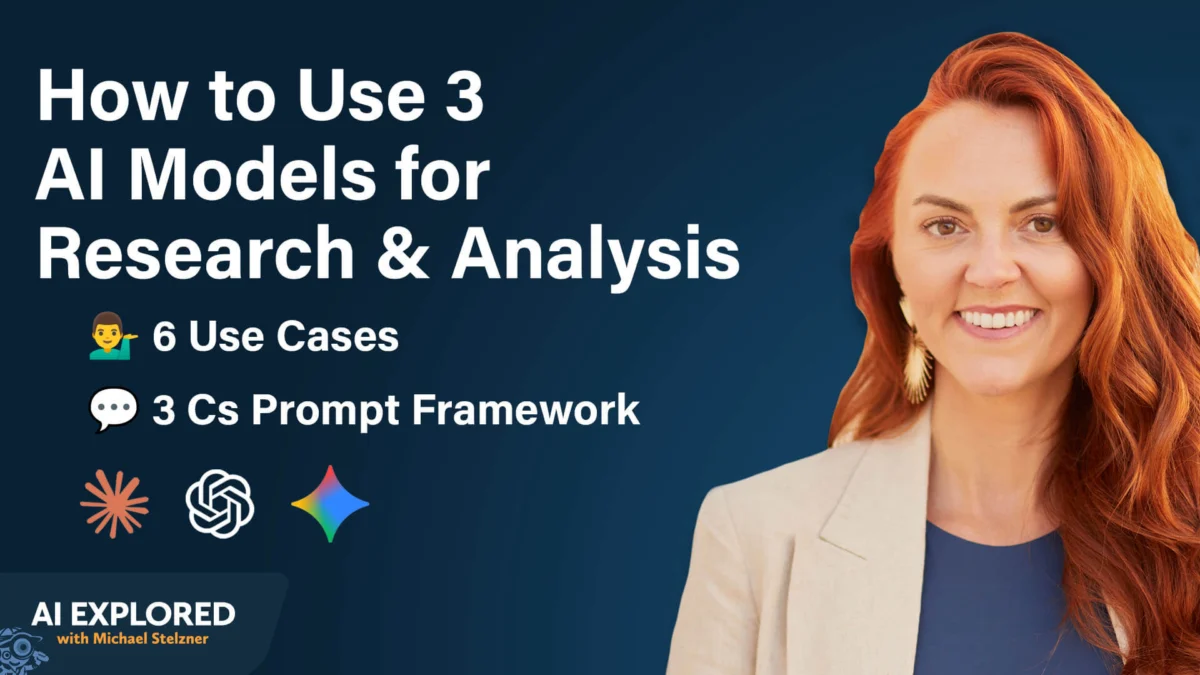
In the high-stakes theater of modern business, information is the ultimate currency. Yet, for the average marketing executive or industry analyst, the sheer volume of data produced daily has become an existential challenge. We are living in an era where the ability to synthesize, analyze, and act upon information faster than the competition is no longer a luxury—it is a prerequisite for survival.
As the landscape shifts, a new discipline has emerged: AI Deep Research. By leveraging advanced large language models and autonomous research agents, professionals are now compressing workflows that once spanned weeks into mere hours. This transformation is not merely about speed; it is about depth, accuracy, and the ability to uncover hidden insights that remain buried beneath the noise of the digital age.
The Main Facts: The New Frontier of Market Analysis
The core premise of AI Deep Research is the shift from "passive consumption" of information to "active synthesis." Traditionally, research involved manually scouring industry reports, white papers, search engine results, and social sentiment data. This process is prone to cognitive bias, fatigue, and the inevitable "information gap"—where critical insights are missed simply because a human researcher cannot read everything at once.
AI Deep Research utilizes multi-step reasoning models that treat research as an iterative process. Instead of a single query, these systems perform:
- Recursive Search: The AI evaluates a topic, identifies gaps in its own understanding, and generates subsequent searches to fill those voids.
- Synthesized Reporting: Rather than providing a list of links, the AI curates a comprehensive, cited report that mirrors the analytical framework of a management consultant.
- Verification Protocols: Advanced frameworks now allow AI to cross-reference data points against authoritative sources to mitigate the risks of "hallucination."
This methodology allows marketers to move from being data processors to being strategic architects.
Chronology: The Evolution of AI in Marketing
To understand where we are, we must look at how quickly the professional landscape has evolved:
- 2022 – The Generative Dawn: The release of foundational LLMs introduced the world to text generation. At this stage, AI was a writing assistant—helping with blog posts and emails, but lacking the context to perform deep research.
- 2023 – The Integration Phase: AI plugins and web-browsing capabilities were introduced. For the first time, models could access real-time data, but the "context window" was limited, often leading to fragmented, shallow analysis.
- 2024 – The Agentic Shift: We moved from "chatbots" to "agents." These systems began taking on multi-step workflows. If a user asked for a competitive landscape analysis, the AI could now structure its own research plan, identify competitors, and analyze their recent public pivots.
- 2025 – The Era of Deep Research: We have reached a point where AI models are specifically optimized for "reasoning." They are now capable of conducting longitudinal studies, comparing diverse data sets, and identifying emerging industry trends before they hit the mainstream.
Supporting Data: The 2025 AI Marketing Industry Report
A recent comprehensive study—the 2025 AI Marketing Industry Report—surveyed over 730 marketing professionals to gauge the ground-level impact of these tools. The data is unequivocal: the industry is undergoing a structural overhaul.
Key Performance Indicators (KPIs)
The report reveals that 60% of marketers now integrate AI into their daily workflows. This is no longer an "early adopter" phenomenon; it is the new standard of operation.
Perhaps more importantly, 90% of respondents reported significant time savings. When broken down, these savings are primarily concentrated in three areas:
- Content Ideation and Drafting: Reducing the "blank page" syndrome.
- Market Intelligence: Replacing manual competitive monitoring with automated dashboards.
- Data Synthesis: Turning raw survey results or social media comments into actionable sentiment reports.
The Friction Points
Despite the widespread adoption, the report highlights that the transition is not seamless. The five biggest challenges identified by the respondents include:

- Prompt Engineering Complexity: Knowing how to talk to the AI to get professional-grade output.
- Data Privacy Concerns: Navigating how to use proprietary data within public LLMs.
- Consistency and Quality Control: Ensuring the AI maintains a consistent brand voice.
- Integration with Legacy Systems: Making AI tools talk to older CRM or ERP platforms.
- The "Hallucination" Factor: The necessity of human-in-the-loop oversight to ensure factual accuracy.
Official Perspectives: Navigating the AI Transition
Industry leaders emphasize that AI Deep Research is not a replacement for human intellect, but rather a "force multiplier."
"The most successful firms we see today aren’t using AI to replace their analysts," says one industry lead. "They are using AI to liberate them. By automating the data collection and synthesis process, the human analyst is free to focus on high-level strategy, ethics, and creative direction—the things that AI still struggles to replicate."
However, there is a cautionary note regarding the "black box" nature of these tools. Experts advise that organizations must implement "AI Literacy" programs. If the staff does not understand how an LLM arrives at a conclusion, they are susceptible to blindly accepting flawed data. The consensus is clear: the future belongs to the "Centaur" model—the combination of human strategic intent and machine processing power.
Implications: The Competitive Advantage
The implications for businesses that fail to adapt are stark. In a market where your competitor can generate a 50-page competitive analysis in an afternoon—while your team takes two weeks to compile the same data—the competitive gap widens exponentially.
Strategic Implications
- Velocity of Decision Making: Companies that master AI research can pivot their marketing strategies in real-time. If a competitor launches a new feature, a deep-research-enabled team can analyze the market reaction and draft a counter-campaign within hours.
- Resource Allocation: By offloading the "grunt work" of research to AI, budgets can be shifted from administrative data collection toward high-value creative and experiential marketing.
- Hyper-Personalization: Deep research allows for a granular understanding of niche market segments. Instead of broad-brush demographic targeting, brands can use AI to synthesize psychographic data, resulting in highly effective, tailored messaging.
The Human Element: Re-skilling the Workforce
The most profound implication is the shift in required skill sets. The marketer of 2026 will not necessarily be the one who can write the best copy, but the one who can craft the best "research prompts." The ability to structure a logical inquiry, define the parameters of a search, and critically evaluate the AI’s output will become the most valuable currency in the corporate sector.
Conclusion: The Path Forward
The 2025 AI Marketing Industry Report makes one thing clear: we are past the point of experimentation. The tools for deep research are here, they are highly effective, and they are being used by your competitors to gain an edge.
To stay ahead, organizations must move beyond the "AI as a toy" mentality. This requires a three-pronged approach:
- Adopt a Framework: Develop internal standards for how AI is used in research to ensure consistency and security.
- Prioritize Training: Invest in the team’s ability to interact with LLMs. Prompt engineering is a skill that can be taught, and it is the single greatest determinant of AI success.
- Maintain the Human Filter: As AI becomes more powerful, the role of the human editor becomes more critical. Use AI to build the foundation, but rely on human expertise to provide the final, strategic layer of insight.
The future of marketing is not about doing more work; it is about doing smarter work. By embracing the power of AI Deep Research, marketers can transcend the limitations of traditional analysis and unlock a level of clarity and speed that was, until recently, strictly the domain of science fiction. The question is no longer whether AI will change your industry, but whether you will be the one driving that change or the one left behind by it.
The data is waiting. The tools are ready. The only remaining factor is your willingness to integrate this new intelligence into your organizational DNA.