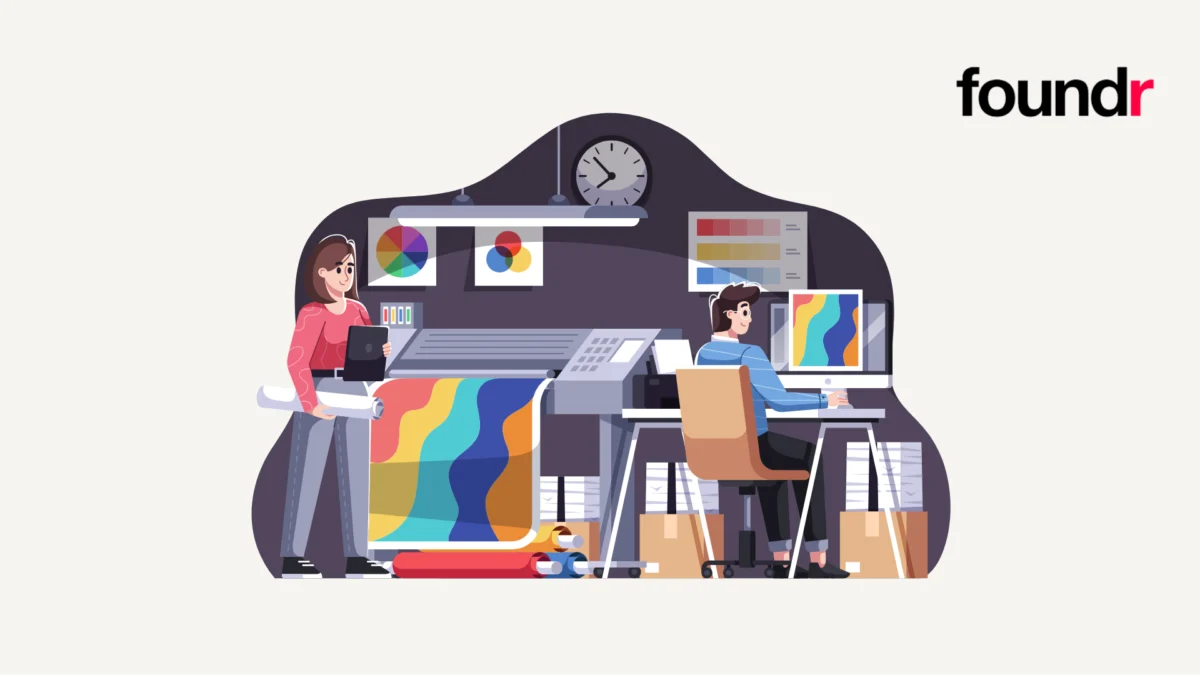
In the rapidly evolving landscape of modern e-commerce, the barrier to entry for aspiring entrepreneurs has never been lower. Yet, the traditional hurdles of retail—inventory management, warehouse overhead, and the financial risk of unsold stock—remain the primary "death traps" for new businesses. Enter the print-on-demand (POD) model, a digital-age solution that has fundamentally altered how brands are conceived and scaled.
At the center of this movement is Printful, a global powerhouse that has become synonymous with the "sell first, create later" philosophy. But what exactly is Printful, and is it the right engine to power your entrepreneurial ambitions? This guide explores the mechanics, the strategic implications, and the realities of building a brand through the Printful ecosystem.
Understanding the Core: What is Printful?
Printful is, at its most fundamental level, a white-label, print-on-demand fulfillment service. It acts as the invisible bridge between your digital storefront and your customer’s doorstep. When an entrepreneur designs a product—be it an embroidered hoodie, a minimalist ceramic mug, or a high-quality poster—they upload their design to the Printful platform.
Once integrated with an e-commerce storefront like Shopify, Etsy, or WooCommerce, the process becomes automated. When a customer clicks "buy" on your website, the order is automatically routed to Printful. They print, package, and ship the product under your brand’s name. This "white-label" approach ensures that the customer’s entire experience is centered on your brand identity, with Printful operating entirely behind the curtain.
The Evolution of the POD Model: A Chronology
The shift toward print-on-demand was not an overnight phenomenon; it was a response to the inefficiencies of traditional wholesale retail.
- Pre-2010: Entrepreneurs relied on bulk manufacturing. To start a clothing line, one needed to invest thousands in inventory, storage units, and manual shipping logistics.
- 2013: Printful enters the market as a response to the growing need for high-quality, on-demand apparel printing for the burgeoning "creator economy."
- 2015–2018: The integration era. Printful shifts focus toward seamless API connections with major platforms like Shopify and Amazon, effectively turning any blogger or influencer into a potential retailer.
- 2020–2022: The pandemic-era boom. With brick-and-mortar stores closed, demand for POD services skyrocketed as creators sought new ways to monetize their audiences without physical contact or inventory management.
- 2023–Present: The focus shifts to sustainability and advanced customization. With the rise of AI-driven design tools and eco-conscious printing techniques, Printful continues to refine its role as a scalable backbone for global e-commerce.
Supporting Data: The Economics of On-Demand Fulfillment
For founders, the financial appeal of Printful lies in the elimination of "dead stock." In traditional retail, a failed product line results in a warehouse full of unsold items, tying up capital and space. With Printful, the "cost of goods sold" (COGS) is only triggered when a sale occurs.
Key Financial Advantages:
- Zero Upfront Inventory Costs: You no longer need to purchase 500 units of a t-shirt to get a "wholesale" price. You can list 500 designs and print only the ones that sell.
- Global Logistics: Printful operates a network of fulfillment centers across the United States, Canada, Europe, and Australia. This reduces shipping times and customs duties, which are critical metrics for customer retention.
- No Minimum Order Quantities (MOQs): This allows for "lean startup" methodology. You can test a design for 24 hours; if it doesn’t sell, you pull it. If it goes viral, you scale immediately.
The Trade-off: Margin Compression
Journalistically, one must present the counter-balance. Because Printful charges a premium for the service of printing, packing, and shipping on your behalf, your per-unit profit margin is inherently lower than if you were printing 10,000 units in a factory overseas. This is the "Convenience Tax." For most startups, this is an acceptable trade-off in the early stages, as it allows for cash flow to be diverted into marketing rather than manufacturing.

Official Perspectives and Operational Reality
When examining Printful’s position in the market, it is vital to look at how they manage quality—the common Achilles’ heel of the POD industry.
Quality Control and Brand Integrity
Printful’s official stance emphasizes their investment in state-of-the-art Direct-to-Garment (DTG) printers and embroidery machinery. They frequently release updates regarding their quality control procedures, which involve multi-step inspections before a package leaves their facility.
However, because the production is outsourced, the founder remains the "customer experience manager." If a print is slightly off-center or a shipment is delayed, the customer will hold you responsible, not Printful. This requires a robust customer service strategy. Smart founders often order "samples" of every product they sell to ensure the output matches their vision.
Strategic Implications: Is It Right for Your Business?
The decision to use a service like Printful should be based on where you are in your business lifecycle.
The "Startup Phase" (0–2 Years)
For entrepreneurs in the testing phase, Printful is an invaluable tool. It allows you to build a community and identify what your audience actually wants to wear or own. During this time, the lower profit margins are offset by the lack of financial risk. You are essentially paying for "market data" through the convenience of the service.
The "Scaling Phase" (2+ Years)
Once a product design hits consistent, high-volume sales, the strategic calculus changes. At this point, the cost of POD fulfillment might start to impede your ability to scale profitably. Many successful founders use Printful to identify their "winners," and once a product reaches a certain volume, they transition that specific SKU to a bulk wholesaler.
Critical Considerations for Success
- Design Ownership: You must ensure that you own all copyrights to the artwork being printed. Intellectual property disputes are a major risk for POD stores.
- Customer Trust: In the world of POD, shipping transparency is key. Because you are not the one packing the box, you must be clear with your customers about production times.
- Brand Voice: Since Printful provides the blank canvas, your brand is defined entirely by your design aesthetic, your marketing, and the community you build.
Conclusion: The Path Forward
Printful is not a magic wand for instant wealth; it is a sophisticated, high-utility tool that removes the operational friction of retail. For the creator who wants to focus on design, audience building, and marketing, it offers an ideal path to market.
By removing the barriers of warehousing and inventory, Printful allows founders to act as "lean retailers." However, success still requires the same fundamentals that have governed commerce for centuries: a high-quality product, a deep understanding of your target demographic, and an unwavering commitment to customer satisfaction.
As we look toward 2025 and beyond, the integration of AI in design and faster, more localized fulfillment will likely keep Printful at the forefront of the creator economy. Whether you are launching a side hustle or building a global lifestyle brand, the framework provided by Printful is a robust foundation—provided you are ready to put in the work to build the brand that sits on top of it.
Frequently Asked Questions (Expanded)
Q: Does Printful handle returns?
A: Printful generally handles returns for damaged or misprinted items. However, returns for sizing issues or "change of mind" purchases are usually at the discretion of the store owner. You must have a clear return policy published on your site.
Q: Can I use my own custom packaging?
A: Printful offers branding options, such as custom labels and packing slips, which allow you to maintain a professional, personalized feel, even though the order is fulfilled by a third party.
Q: How does the design tool actually work?
A: Printful provides an online mockup generator. You upload your file (PNG, JPG, or vector), and the tool shows you exactly how it will look on the product. It even provides warnings if your image resolution is too low for a high-quality print, which significantly reduces the risk of customer complaints.
Q: What happens if Printful runs out of a specific product?
A: Because Printful sources from multiple garment suppliers, they are usually resilient to stock shortages. However, in the rare event of a stockout, the system typically notifies you so you can update your storefront immediately.