For nearly three decades, search engine optimization (SEO) was governed by a relatively straightforward playbook: write high-quality content, optimize keywords, build authoritative backlinks, and structure pages so that web crawlers could easily index them. However, the rapid rise of Generative Engine Optimization (GEO) and AI-driven search engines—such as Google’s AI Overviews, Microsoft Copilot, and Perplexity—has fundamentally disrupted this paradigm.
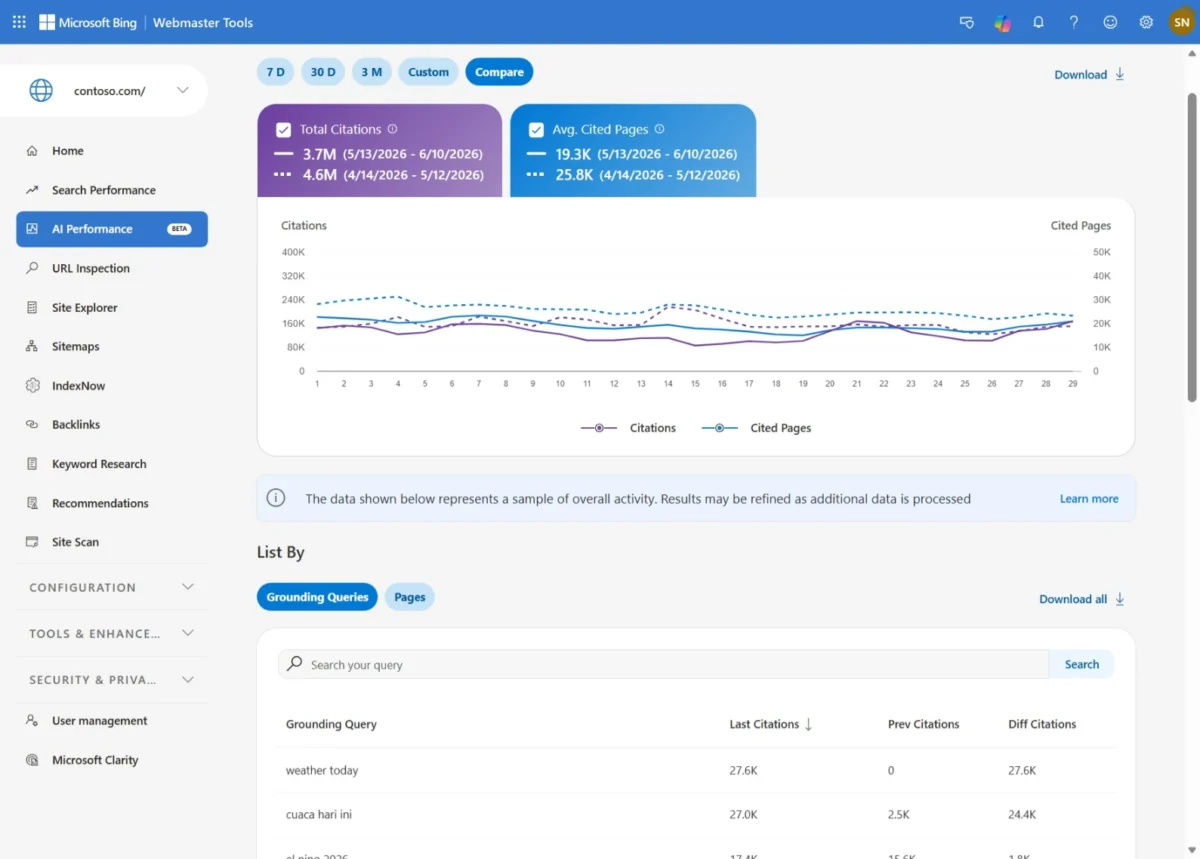
Today, getting a brand cited by an AI model is no longer just about keyword relevance or domain authority. Beneath the user-facing chat interfaces lies a complex retrieval layer that is changing how artificial intelligence identifies entities, connects facts, and decides which brands to trust.
At the center of this technological shift is GraphRAG (Graph Retrieval-Augmented Generation). By combining traditional vector-based search with structured knowledge graphs, GraphRAG is transforming "optimize for AI" from a vague marketing concept into a precise, machine-readable engineering strategy.
1. Main Facts: The Core Mechanics of GraphRAG
To understand why high-quality content is frequently overlooked by AI engines, one must first understand the structural limitations of traditional Retrieval-Augmented Generation (RAG) and how GraphRAG resolves them.
Traditional (Naive) RAG and the "Confidence Gap"
Traditional RAG works by slicing text documents into fixed-size chunks, converting those chunks into numerical representations called vectors, and storing them in a vector database. When a user asks a query, the system searches for chunks with the closest mathematical proximity to the query and feeds them to a Large Language Model (LLM) to synthesize an answer.
While highly effective for simple, direct queries (e.g., "What is the capital of France?"), naive RAG struggles with complex, multi-step, or relational queries. For instance, if a user asks:
"Find a cybersecurity provider that offers SOC 2 compliance auditing, holds an ISO 27001 certification, and operates in the Pacific Northwest."
Naive RAG (Vector Search Only):
[User Query] ──> [Vector Database] ──> [Retrieves Disconnected Chunks] ──> [LLM Guesses Connections] ──> (High Risk of Hallucination or Omission)

GraphRAG (Vector + Knowledge Graph):
[User Query] ──> [Knowledge Graph Map] ──> [Traverses Defined Entities & Links] ──> [LLM Verifies Facts] ──> (Accurate, Sourced Citation)
Naive RAG attempts to answer this by retrieving disconnected text fragments that sound contextually relevant. Because it lacks an explicit map of how these facts connect, the system is forced to infer relationships. When an AI model is forced to guess, its safety protocols often trigger a "confidence gap." To avoid generating false information (hallucinations), the engine will simply omit a brand from the generated answer rather than risk presenting unverified connections as facts.
The GraphRAG Solution
GraphRAG, which emerged from Microsoft Research, addresses this limitation by overlaying traditional vector retrieval with a knowledge graph. A knowledge graph represents information as a network of "entities" (nodes representing people, places, organizations, or concepts) and "relations" (edges representing the connections between them).
By navigating this pre-structured map, an AI engine does not have to guess whether Entity A holds Certification B in Region C; it simply follows the verified semantic paths. This structured approach dramatically improves the accuracy of multi-hop reasoning, allowing AI search engines to generate highly complete, factual, and well-grounded answers while minimizing hallucinations.
2. Chronology: The Evolution from Flat Text to Structured Graphs
The transition toward graph-based AI retrieval has been building for years, driven by academic research, patent filings, and the evolution of open web standards.
[2023: Naive RAG Boom] ──> [Early 2024: Microsoft GraphRAG] ──> [April 2024: RDF 1.2/RDF-star] ──> [June 2024: EntityMap Standard] ──> [July 2024: EntityMap Launch]- 2023: The Naive RAG Boom: Following the public release of ChatGPT, developers rapidly adopt traditional RAG to ground LLMs in private data. However, enterprise implementations quickly run into limitations regarding document chunking, lost context, and multi-document synthesis.
- Early 2024: Microsoft Research Introduces GraphRAG: Microsoft open-sources its GraphRAG framework, demonstrating that combining knowledge graphs with LLMs yields vastly superior performance in global query processing and holistic document understanding.
- April 2024: W3C Advances RDF-star: The World Wide Web Consortium (W3C) advances its Resource Description Framework (RDF) 1.2 specifications, pushing the RDF-star (RDF*) standard to "Candidate Recommendation" status. This standard allows site owners to make "statements about statements," laying the groundwork for highly contextual web metadata.
- May 2024: Microsoft Patent Publication: Microsoft’s patent application US20250131289A1, titled "Knowledge Graph Extraction," is published. The patent details how AI systems can extract entities and relationships from unstructured text, resolve duplicate entities, and build robust internal knowledge graphs to bypass the recall limitations of naive RAG.
- June 1, 2024: EntityMap Public Consultation Opens: Led by Fred Laurent (CTO of InLinks and Waikay) and supported by industry veteran Dixon Jones, a 33-day public consultation begins for EntityMap, a new open standard designed to serve as a machine-readable directory of an organization’s knowledge.
- July 1, 2024: EntityMap Official Launch: The EntityMap v1.0 specification is officially released, offering a standardized, entity-first alternative to traditional XML sitemaps.
3. Supporting Data: The Technical and Economic Foundations
The shift toward GraphRAG is supported by concrete developments in international standards and the shifting economics of compute power.
Microsoft Patent US20250131289A1: Solving the Recall Problem
In its patent documentation, Microsoft explicitly outlines the failure modes of naive RAG. It highlights the recall problem: in traditional vector databases, less-prominent entities frequently get buried inside large chunk embeddings. If an entity is not represented strongly enough in the vector space, the database fails to retrieve it, and the AI model remains unaware of its existence.
To resolve this, Microsoft’s patented system utilizes entity resolution. This process identifies and merges different names or spellings referring to the exact same entity (for example, resolving "Acme Corp," "Acme Corporation," and "Acme" into a single, unified node). By consolidating these references, the system ensures that the true weight of an entity’s authority is preserved and accessible.
RDF-star and Rich Triples
Historically, knowledge graphs have relied on flat "triples" structured as:
$$textSubject xrightarrowtextPredicate textObject$$
Example: "Acme Corp" $xrightarrowtextoffers$ "Cloud Consulting"
While clean, flat triples lack context. They cannot easily indicate whether a claim is still true, who verified it, or what geographic constraints apply.
The emerging RDF-star standard solves this by allowing nested triples, enabling site owners to attach metadata—such as source URLs, confidence scores, and timestamps—directly to a relationship:
$$left( textAcme Corp xrightarrowtextoffers textCloud Consulting right) xrightarrowtextverifiedBy textISO 27001 Registry$$
This added layer of metadata provides the verifiable evidence that modern AI engines require to trust and cite a brand.
The Changing Economics of LLM Processing
Historically, building knowledge graphs via LLMs was cost-prohibitive. Analyzing millions of pages of unstructured text to extract entities, resolve duplicates, and map relationships required immense computational power.
However, over the past 24 months, the cost of LLM tokens has plummeted. The dramatic decline in API pricing, combined with the emergence of highly capable, smaller open-source models, has made the construction and maintenance of knowledge graphs economically viable for search engines and enterprises alike.
4. Official Responses and Industry Initiatives
As the technical underpinnings of AI search evolve, the web publishing and search marketing industries are building new mechanisms to communicate directly with graph-based systems.
The EntityMap Initiative
The launch of EntityMap represents a major industry-led effort to bridge the gap between web publishing and AI retrieval layers.
Just as a sitemap.xml file tells search engines which URLs exist on a site, an entitymap.json file tells AI crawlers exactly what an organization knows, which entities it covers, and where the supporting evidence resides.
  "@context": "https://entitymap.org/contexts/v1.0",
  "publisher":
    "name": "Acme Corp",
    "id": "https://www.wikidata.org/wiki/Q12345"
  ,
  "entities": [

      "name": "Marie Tremblay",
      "sameAs": "https://www.wikidata.org/wiki/Q67890",
      "claims": [

          "predicate": "coachesAt",
          "object": "Moncton Goaltending Academy",
          "evidence": "https://acmecorp.com/about-marie",
          "verified": "2024-07-01"

      ]

  ]
By providing a clean, machine-readable JSON file, publishers can present pre-resolved entities and explicit relationships directly to AI engines, eliminating the need for engines to guess or run expensive extraction algorithms on raw HTML.
Crucial Industry Caveats
While EntityMap is a highly promising development, industry analysts emphasize a pragmatic outlook: no major search engine (such as Google or Microsoft) has officially committed to parsing entitymap.json files.
At this stage, EntityMap should be viewed as an important directional signal rather than an immediate compliance requirement. It demonstrates that the industry is actively moving toward standardized, entity-first publishing models.
5. Implications: The Strategic Playbook for Brands
In an era dominated by graph-based retrieval, traditional keyword-stuffing and generic content creation are no longer sufficient. To maintain visibility in AI-generated answers, brands must implement a structured, entity-first strategy.
       [Entity Inventory] ────> Identify core products, people, and concepts
               │
               ▼
       [Disambiguation]  ────> Claim Wikidata, Knowledge Panels, & sameAs links
               │
               ▼
    [Explicit Relationship] ──> Implement Schema.org (knowsAbout, author)
               │
               ▼
      [Evidence Anchoring] ──> Back claims with verifiable sources & citations
1. Shift from Keyword Research to Entity Mapping
Marketers must expand their focus beyond search volume and keyword lists. Instead, they should build an internal Entity Inventory of the brand’s core assets:
- Key People: Executives, subject-matter experts, and authors.
- Offerings: Specific proprietary methodologies, services, and products.
- Core Concepts: The specific industry topics, certifications, and regions where the brand holds genuine expertise.
2. Disambiguate Identity and Connect to the Global Graph
An AI engine cannot cite a brand if it confuses it with a competitor or fails to connect its various online profiles. Brands should:
- Establish and maintain a clean Google Knowledge Panel and Wikidata entry.
- Consistently use the
sameAsproperty in structured data to link various web properties (such as social profiles, directory listings, and corporate sites) back to a single, unified entity.
3. Make Relationships Explicit via Schema.org
Do not rely on AI models to infer relationships from prose alone. Use advanced Schema.org markup to explicitly state connections. Leverage specific properties to define authority:
- Use
knowsAboutto connect authors and organizations to their areas of expertise. - Use
authorandpublisherto establish clear content provenance. - Use
parentOrganization,areaServed, andhasCredentialto map operational boundaries and qualifications.
4. Anchor Every Claim with Verifiable Evidence
GraphRAG engines prioritize relationships backed by proof. Ensure that all corporate claims (e.g., "20 years of experience," "industry-leading compliance") are anchored directly to verifiable sources, first-party data, named experts, or external certifications.
5. Structure Content to Prevent Retrieval Omission
Because retrieval windows (chunk sizes) are limited, place critical, entity-defining facts at the very top of your pages. Clear, declarative statements of who you are, what you do, and who you serve should be established early in the text before they are cut off by chunking algorithms.
6. Establish New KPIs for the Answer Economy
Traditional metrics like keyword rankings and organic click-through rates do not fully capture brand health in AI search. Organizations should begin tracking:
- Brand Citation Share: The frequency with which a brand is cited in response to commercial queries on platforms like Perplexity, Gemini, and Copilot.
- Entity Indexing Status: Whether major search engines have successfully mapped the brand and its key personnel in their respective knowledge graphs.
- Citation Accuracy: The factual correctness of the claims AI engines make when referencing the brand.
Summary: The Future of Legibility
As AI search engines continue to mature, the competitive advantage will belong to brands that are highly legible to machines. The shift from "strings to things" means that search engines are no longer merely indexing words on a page; they are mapping the world’s knowledge.
By building explicit relationships, verifying brand identity, and anchoring claims with clear evidence, organizations can ensure they are not merely read by humans, but fully understood and trusted by the retrieval systems that power the modern answer economy.