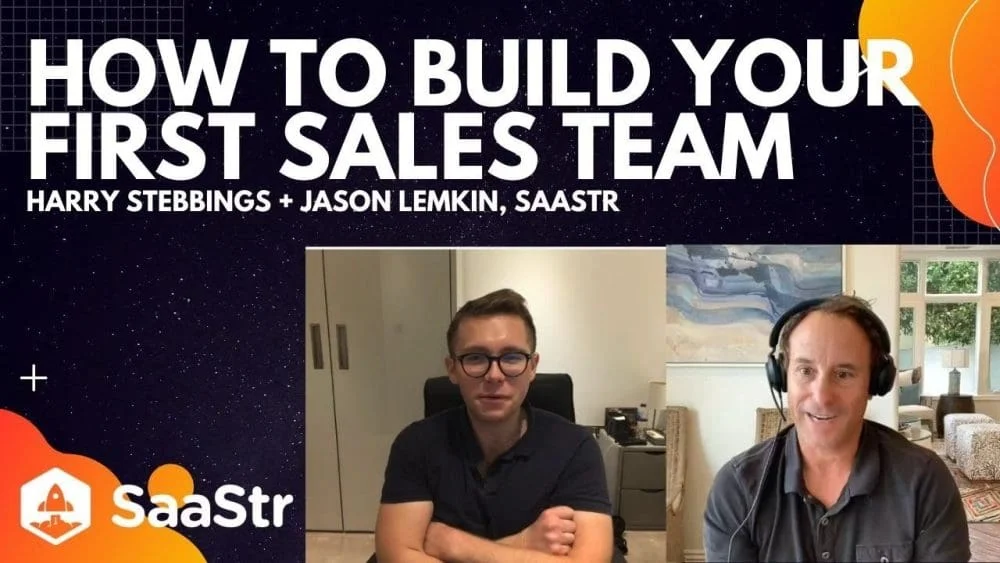
The transition from a founder-led sales model to a structured, high-performing sales organization is arguably the most perilous inflection point for any early-stage SaaS company. It is the moment when "hustle" must be codified into "process," and when the singular vision of the founder must be scaled through the hands of new hires.
According to insights from the SaaStr community, this evolution is not merely a hiring exercise; it is an architectural shift in how a business generates recurring revenue. To succeed, founders must move away from ad-hoc recruiting and toward a methodical, data-driven approach that mitigates the high risks of early-stage turnover.
Main Facts: The Architecture of Early Sales
Building a first sales team requires a delicate balance between aggressive expansion and operational stability. The primary fact remains: Your first few sales hires will define your culture for years to come.
In the early stages, founders often make the mistake of hiring high-cost, "enterprise-ready" veterans who expect a pre-built infrastructure. Conversely, hiring purely inexperienced junior talent without a defined playbook leads to a "sink or swim" scenario that rarely ends in success. The middle ground—hiring hungry, adaptable "player-coaches"—is the sweet spot.
Key pillars for the first team include:
- The "Founding Sales Hire" Profile: Someone who is a generalist, capable of handling everything from lead qualification to contract negotiation.
- The Playbook Mandate: You cannot hire a team until you have a repeatable sales motion. If the founder cannot explain how they are selling, a new hire will not be able to replicate it.
- The Compensation Paradox: Designing an incentive structure that rewards both immediate revenue and long-term customer success.
Chronology: The Evolution of the Sales Organization
The journey to a scalable sales engine typically follows a four-phase trajectory.
Phase 1: The Founder-Led Era (Pre-Hiring)
Before a single dollar is spent on a recruiter, the founder must be the primary salesperson. This phase is dedicated to finding Product-Market Fit (PMF) and establishing a repeatable sales pitch. If you are not closing your own deals, you cannot effectively coach a team on how to close them.
Phase 2: The "First Hire" Inflection (Months 0–6)
This is the transition from "founder-only" to "founder plus one." The focus here is on identifying a sales-minded individual who is comfortable with ambiguity. This hire is not necessarily a "VP of Sales" but a high-performing Account Executive (AE) who is willing to roll up their sleeves and help build the sales stack.
Phase 3: Establishing Process (Months 6–18)
Once the first hire hits their stride, the focus shifts to process documentation. This includes establishing a Customer Relationship Management (CRM) hygiene standard, refining the discovery call framework, and creating collateral that supports the sales cycle.
Phase 4: Scaling the Engine (Months 18+)
With a proven model, the company begins hiring specialized roles: Sales Development Representatives (SDRs) for top-of-funnel prospecting, and eventually, Sales Managers to handle the growing team. This is the transition from a "team" to a "department."
Supporting Data: Why Strategy Matters
Industry data consistently shows that companies that rush the sales-hiring process suffer from higher churn rates and lower Customer Acquisition Cost (CAC) efficiency.
- The Cost of Failure: The average cost to replace an underperforming SaaS salesperson is estimated at 1.5x to 2x their annual salary. This accounts for recruitment fees, training, lost productivity, and potential damage to the brand’s reputation in the market.
- Ramp Time: Research indicates that the average time for a new SaaS AE to reach full productivity is between six and nine months. Founders who fail to account for this "ramp-up" period often run out of runway before the new hire can contribute meaningful revenue.
- Conversion Metrics: Top-tier SaaS organizations maintain a conversion rate from "Qualified Lead" to "Closed-Won" of approximately 15–20%. If your initial sales hires are operating at sub-5% conversion, it is rarely a problem with the salesperson—it is a symptom of a broken lead-generation engine or an unrefined value proposition.
Official Responses and Expert Perspectives
Industry leaders, including the team at SaaStr, emphasize that the biggest mistake is hiring "too much, too soon."
"Many founders view sales as a plug-and-play function," notes one industry veteran. "They believe that if they hire a person with a great Rolodex from a competitor, the revenue will follow. But in early-stage SaaS, the product and the pitch are still evolving. If you haven’t codified your learning, you are essentially asking your new hire to conduct a research project at your expense."
Furthermore, there is a consensus that early sales teams must be compensated with a mix of base salary and variable commission that is highly skewed toward growth. As the company matures, these structures should evolve to incentivize retention and upsell, but in the early days, the focus must be laser-sharp on new logo acquisition.
Implications: The Long-Term Impact
The implications of building your first sales team correctly are profound.
1. Market Perception
A professional, structured sales team provides a signal to the market that your company is here to stay. Prospects are more likely to commit to a long-term enterprise contract when they feel supported by a professional sales organization that manages the relationship with clear communication and consistent follow-through.
2. Capital Efficiency
By avoiding the "spray and pray" approach to hiring, you protect your company’s burn rate. Efficiently scaling your sales team allows you to reach profitability (or the next funding milestone) with less dilution.
3. Culture as a Competitive Advantage
The first five to ten hires in your sales organization will set the culture for the next hundred. If you hire for grit, curiosity, and transparency, you will foster a team that is resilient in the face of rejection—a trait essential for the inevitable "no" that accompanies every high-growth SaaS venture.
Strategic Recommendations for Founders
To ensure success in this critical endeavor, founders should adhere to these actionable guidelines:
- Define Your Ideal Customer Profile (ICP) Before Hiring: Do not expect your sales team to figure out who your customers are. That is a leadership task. Provide them with a target list and a clear value proposition.
- Invest in Sales Enablement Early: Build a "Sales Bible" that includes battle cards, objection handling scripts, and case studies. This reduces ramp time and ensures that the brand voice remains consistent.
- Hire for "Coachability" over Pedigree: In a fast-changing startup, the ability to adapt to new product features and shifting market conditions is more valuable than having five years of experience at a legacy enterprise software firm.
- Stay Involved: Even after you have a team, the founder must remain connected to the sales floor. Join discovery calls, participate in deal reviews, and keep your finger on the pulse of the market’s objections.
Conclusion: The Path Forward
Building your first sales team is a rite of passage. It is the moment the company stops being a project and starts being an institution. By approaching this phase with the discipline of a scientist and the ambition of a visionary, you can avoid the common traps that derail so many promising startups.
Remember: Your goal is not just to close deals today, but to build a repeatable, scalable engine that will power your growth for years to come. Do not rush the process; instead, prioritize the documentation of your sales motion, the careful vetting of your early hires, and the creation of a culture that values both individual performance and collective success.
The bridge between a founder’s vision and global market adoption is built by the sales team. Ensure yours is built on a foundation of data, strategy, and excellence.