
NEW YORK — In the fast-moving landscape of digital marketing and e-commerce, a quiet consensus has emerged among top-tier growth strategists: the strategies that generated record revenues yesterday are rarely the ones that will secure survival tomorrow. As digital channels become increasingly saturated and consumer attention spans fracture, the margin for error in digital campaigns has vanished.
Enter A/B testing—long dismissed by casual operators as a tedious administrative task, but now widely recognized by elite founders and marketers as a non-negotiable operational pillar. Far from being a mere "nice-to-have" tactical luxury, continuous experimentation has evolved into the primary engine of modern enterprise growth, allowing lean startups and established brands alike to extract significantly more value from existing audiences without inflating marketing budgets.
Main Facts: The Anatomy of Continuous Experimentation
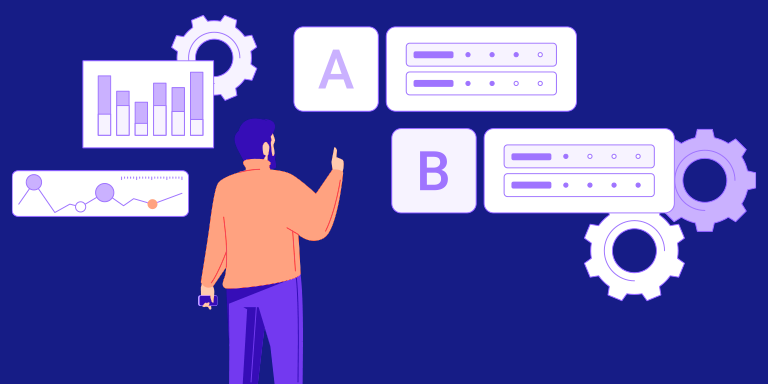
At its core, A/B testing—often referred to as split testing—is the practice of comparing two versions of a digital asset (such as an email, landing page, or advertisement) against a single variable to determine which performs superiorly. While the concept is mathematically straightforward, its execution requires discipline, strategic hypothesis formation, and sophisticated analytics.
Contemporary marketing data underscores the critical nature of this process. Industry benchmarks from platform analytics reveal that baseline consumer engagement is shifting. According to comprehensive data released by omnichannel marketing platform Omnisend, average email open rates across their merchant network rose from 22.9% in 2022 to 25.1% in 2023, while click rates climbed concurrently from 1.2% to 1.5%. Crucially, these incremental gains were not achieved by casting wider nets, but by tightening focus through rigorous testing and precise audience segmentation.
The stakes are highest within automated marketing infrastructure. Omnisend’s aggregate data shows that automated lifecycle emails—such as welcome series and abandoned cart recovery flows—drastic outperform standard batch-and-blast campaigns, generating up to 52% higher open rates, a staggering 332% higher click-through rate, and conversion rates that outpace standard campaigns by over 2,300%. However, marketing scientists emphasize that these automated flows only achieve peak efficiency when subjected to continuous, iterative A/B testing.
Chronology: The Evolution from Guesswork to Systematic Optimization
To understand why systematic testing is now paramount, industry historians point to a distinct evolution in digital strategy over the past two decades.
- The Early 2000s (The Era of Intuition): In the nascent days of digital marketing, strategy was predominantly driven by executive hunches and creative intuition. Founders relied on broad qualitative feedback and static design templates, assuming that a well-designed email or homepage would naturally capture the market’s imagination.
- The Early 2010s (The Introduction of Split Testing): As enterprise software matured, basic split-testing tools entered the mainstream. Companies began testing simple, isolated variables—most notably website button colors and basic email subject lines. However, testing remained largely episodic, deployed only when campaign performance dipped or during major website redesigns.
- The Late 2010s (The Rise of Data-Driven Funnels): Growth hacking culture popularized the concept of rapid experimentation. Startups began building dedicated data science and conversion rate optimization (CRO) teams, recognizing that small, cumulative improvements in funnel metrics yielded exponential revenue growth.
- The 2020s to Present (The Era of Automated, Continuous Optimization): Today, consumer habits fluctuate faster than ever due to macroeconomic pressures, shifting privacy regulations, and digital fatigue. Continuous A/B testing has transformed from a periodic project into an automated, real-time feedback loop. Modern e-commerce platforms now embed native testing frameworks directly into messaging engines, enabling brands to test variables dynamically with minimal friction.
Supporting Data: The Compounding Power of Marginal Gains
The financial justification for continuous testing lies in the mathematical reality of compound growth. In a typical e-commerce funnel, a 5% increase in open rates coupled with a 10% lift in click-through rates may appear negligible in isolation. Yet, when cascaded through an entire customer journey, these marginal gains multiply dramatically.
Data tracked across Omnisend’s customer base indicates that merchants who systematically tested and optimized their abandoned cart recovery flows captured an average of an additional $5,000 per month in recovered revenue—pure margin achieved without increasing ad spend or acquiring new email subscribers.
Consumer behavior studies further highlight the narrow window brands have to capture attention:
- The Subject Line Threshold: Industry research demonstrates that 43% of consumers decide whether to open an email based entirely on the subject line. Conversely, poorly crafted or misleading copy drives approximately 69% of users to flag emails as spam, permanently damaging sender reputation and deliverability.
- Personalization Yields: Utilizing dynamic, personalized subject lines—validated through split testing—has been shown to boost open rates by up to 26%, particularly when integrated with behavioral segmentation data.
High-Leverage Elements Worth Testing
To maximize return on effort, growth experts advise focusing testing protocols on high-impact touchpoints:
- Subject Lines: Test curiosity-driven hooks versus direct benefit-driven statements to maximize immediate visibility.
- Calls-to-Action (CTAs): Experiment with benefit-oriented button copy (e.g., "Claim My 20% Discount") against generic alternatives ("Click Here" or "Learn More") to lift conversion rates.
- Send Times and Frequency: Challenge historical assumptions about when audiences are most active by testing off-peak hours against traditional morning slots.
- Sender Names and Preheaders: Leverage familiar personal names versus corporate brand monikers in the "from" field to build trust and curiosity.
- Audience Micro-Segments: Compare broad messaging against hyper-targeted campaigns tailored to past purchase behavior or browsing history.
Official Responses and Industry Perspectives
Leading voices in the e-commerce and SaaS sectors have increasingly advocated for a cultural shift toward institutionalized experimentation.
"The biggest mistake founders make is treating A/B testing as a reactive emergency measure rather than a proactive discovery engine," notes Greg Mercer, e-commerce strategist and scaling advisor. "Your audience’s preferences are a moving target. If you aren’t running at least one active test at any given moment, your marketing is effectively drifting out of alignment."
Platform developers have responded directly to these market demands by embedding advanced testing capabilities directly into software architecture. Greg Zakowicz, Senior E-Commerce Marketing Expert at Omnisend, emphasizes that modern tools must remove technical hurdles to ensure widespread adoption.
"Brands no longer have the luxury of spending weeks setting up complex, multi-variate trials," Zakowicz states. "The winners in today’s e-commerce ecosystem are those who can form a hypothesis, deploy a clean split test across a statistically significant segment within minutes, and immediately apply those learnings to their automated workflows."
Implications for Founders and Digital Marketers
The broader implications of widespread A/B testing extend far beyond short-term revenue bumps. Organizations that embed experimentation into their daily workflows build a compounding organizational intelligence.
When a brand discovers—through rigorous testing—that its audience responds more favorably to humor-driven value propositions than fear-of-missing-out (FOMO) urgency, that insight ceases to be isolated to a single email campaign. It informs paid advertising creatives, social media content strategies, landing page copywriting, and product positioning. This cross-channel synergy allows lean teams to punch well above their weight class, competing effectively against legacy enterprises with vastly superior financial resources.
Furthermore, disciplined testing protects brands from costly strategic missteps. By relying on empirical reader data rather than internal assumptions, marketing teams avoid subjective debates over creative design and copy, aligning their resources strictly with what drives measurable action.
A Sustainable Framework for Execution
To avoid common pitfalls such as testing fatigue or statistically invalid conclusions, growth experts recommend a disciplined, five-step framework:
- Formulate a Clear Hypothesis: Avoid random changes. Define precisely what you expect to learn (e.g., "We believe shifting our CTA from a generic prompt to a specific benefit will increase click-throughs by 10%").
- Isolate Variables: Test only one element at a time—whether subject line, send time, or CTA copy—to ensure accurate attribution of results.
- Ensure Statistical Significance: Deploy tests across a sufficiently large sample size. Platforms generally recommend a minimum of 1,000 recipients per variant, or utilizing intelligent split-testing distributions (such as a 20/20/60 allocation) for smaller lists.
- Align Metrics with Objectives: Match your success criteria directly to the variable being tested (opens for subject lines; clicks and conversions for CTAs).
- Document and Archive Learnings: Maintain a centralized repository of test results to build an institutional knowledge base that accelerates future campaigns.
As the digital economy grows increasingly competitive, the mandate for continuous optimization remains absolute. For brands utilizing agile ecosystems like Omnisend—which offers specialized integration for high-growth e-commerce ventures—streamlining automated workflows and continuous testing has never been more accessible.
Special Promotion: As part of its ongoing commitment to digital entrepreneurship, Omnisend is currently offering Foundr readers 50% off their first 3 months using the exclusive promo code FOUNDR50, providing an immediate opportunity for scaling brands to upgrade their conversion frameworks and capture compounding revenue growth.