For decades, the path to entrepreneurship was gated by technical complexity. To build a software-based startup, one needed a co-founder with a computer science degree or a substantial budget to outsource development to offshore teams. The narrative was simple: if you couldn’t write code, you couldn’t build the future.
That narrative is officially obsolete.
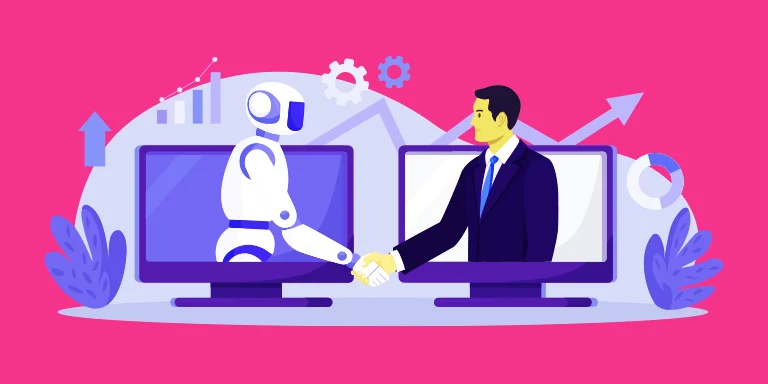
We are currently witnessing a seismic shift in the startup ecosystem. Artificial Intelligence (AI) has democratized the building process, moving technical power from the hands of the few into the laptops of every solopreneur, creative, and business visionary. Today, building a business doesn’t require a background in Python or SQL; it requires a sharp idea, the right strategy, and a willingness to leverage the most powerful "co-founder" ever created.
The Paradigm Shift: From Coder to Architect
For many non-technical founders, the prospect of integrating AI feels daunting. There is a persistent myth that AI is a tool strictly for Silicon Valley engineers in hoodies. However, the reality is that the most successful founders of this new era are not coders—they are architects.
Your role as a founder has evolved. You are no longer expected to build the engine from scratch; you are the strategist who decides where the engine goes and how it performs. By viewing AI as a scalable, tireless team member rather than a complex technical hurdle, founders can bypass the traditional "tech barrier" that once stifled innovation.
The Core Pillars of AI-Enabled Business
The utility of AI in a modern business isn’t just about automation; it’s about expansion. When you apply AI to your operations, you are essentially augmenting your workforce without adding a single line to your payroll.
- Strategic Brainstorming: AI can act as a sounding board. By feeding an LLM (Large Language Model) specific parameters regarding your market, competitors, and target demographics, you can generate detailed consumer personas and value propositions in seconds.
- Creative Production: The barrier to entry for professional-grade design has vanished. Founders can now utilize AI-powered tools to generate brand assets, social media graphics, and even product mockups that would have previously required a multi-thousand-dollar design budget.
- Data Synthesis: Spreadsheets are often the graveyard of good business ideas. AI can ingest raw customer feedback or survey data to identify trends, pain points, and opportunities for growth that the human eye might miss during manual analysis.
Prompt Engineering: The New Executive Skill
If AI is your new, highly capable employee, then "prompt engineering" is the management manual. You don’t need to know how the machine works under the hood; you just need to know how to communicate your intent clearly.
The Anatomy of an Elite Prompt
The difference between a generic, useless output and a game-changing business plan lies in the structure of your request. Professional prompt engineering follows a simple, repeatable formula:
Role + Task + Context + Style + Format
- Role: Define who the AI should be (e.g., "Act as a seasoned CMO with 20 years of experience in fitness tech").
- Task: Clearly state the objective (e.g., "Draft a three-part email sequence for customer onboarding").
- Context: Provide the ‘why’ and ‘who’ (e.g., "Targeting stay-at-home parents who want 15-minute workouts").
- Style: Dictate the voice (e.g., "Professional yet empathetic and high-energy").
- Format: Specify the output (e.g., "Provide in a table format with subject lines and body copy").
By mastering this communication loop, a founder can generate high-quality marketing copy, financial models, and strategic briefs in a fraction of the time it would take to brief a traditional consultant.
Chronology of a Business Build: The AI Advantage
To understand the impact of AI, consider the lifecycle of a modern startup versus its predecessor:
- Phase 1: Validation (Days 1–7): In the past, this took weeks of focus groups and expensive market research. Today, an AI-powered agent can simulate 1,000 potential customer interactions, stress-testing your value proposition against real-world objections.
- Phase 2: MVP Development (Days 8–30): Using no-code platforms paired with AI code-assistants, a founder can deploy a functional landing page, an automated email CRM, and a payment gateway without writing a single line of raw code.
- Phase 3: Scaling (Months 2–6): Once the product is live, AI manages the heavy lifting of customer support, content scheduling, and data analysis. The founder remains the visionary, focusing on product-market fit rather than administrative overhead.
Supporting Data: Efficiency at Scale
The implications for productivity are profound. According to recent internal industry case studies, founders who integrate AI into their daily workflow report a reduction in administrative task time by approximately 60% to 70%.
For instance, tasks that typically consumed an entire morning—such as drafting investor updates, summarizing meeting notes, and creating social media calendars—can now be performed in under 30 minutes. This shift allows the founder to return to their "zone of genius"—the high-level strategic thinking that actually moves the needle on revenue and growth.
The Pitfalls: Where AI Can Go Wrong
Despite the excitement, blind adoption is a recipe for disaster. The most successful founders are those who understand the limitations of AI.
The Illusion of Perfection
AI is often confidently incorrect. Known as "hallucinations," these errors occur when an AI model presents fabricated information as factual. Whether it is citing fake court cases, non-existent books, or inaccurate statistics, the onus of verification lies entirely with the founder.
The Erosion of Human Connection
Automation is a double-edged sword. While AI can draft a customer service response, it cannot replace the empathy required to handle a disgruntled client or the personal touch needed to secure an early-stage investor. The rule of thumb for modern founders: Automate the repetitive; humanize the high-stakes.
The Brand Voice Trap
If you rely solely on AI to write your brand’s content, you risk becoming a commodity. Generic, robotic copy is easily identified by consumers. To win, you must use AI as a collaborator—let it handle the structure and the research, but always inject your unique voice, your story, and your personal philosophy into the final edit.
Official Implications for the Future of Work
The rise of the AI-enabled founder is changing the economic landscape. We are entering an era of "The Lean Giant"—companies with fewer than five employees that generate revenue levels previously reserved for firms with hundreds of staff.
Industry analysts suggest that this shift will lead to:
- Increased Entrepreneurial Participation: Barriers to entry are lower than at any point in history.
- Higher Failure-Tolerance: Because the cost of building an MVP is now negligible, founders can experiment, pivot, and iterate faster than ever before.
- The Premium on Strategy: As the cost of "doing" drops toward zero, the value of "thinking" and "curating" skyrockets.
Final Verdict: Your Competitive Edge
You do not need to be a coder to conquer the market. You simply need to be the most adaptable person in the room. AI is not a replacement for your entrepreneurial spirit; it is a force multiplier for your ambition.
Whether you are a solopreneur building your first prototype or a seasoned founder looking to scale, the tools are already at your disposal. The question is no longer whether you can use AI to build your business—it is whether you are willing to embrace the leverage it provides before your competitors do.
The future of business is not about who can write the most code; it is about who can best harness the machines to bring their vision to life. Start small, verify everything, and stay focused on your vision. The era of the AI-powered founder has arrived—are you ready to lead?
Ready to bridge the gap between idea and execution? Join thousands of other founders who are building, scaling, and succeeding with the help of industry-leading resources. For a limited time, you can access our comprehensive library of AI-powered workflows, no-code tutorials, and expert-led business strategies. Subscribe here to unlock your full potential.