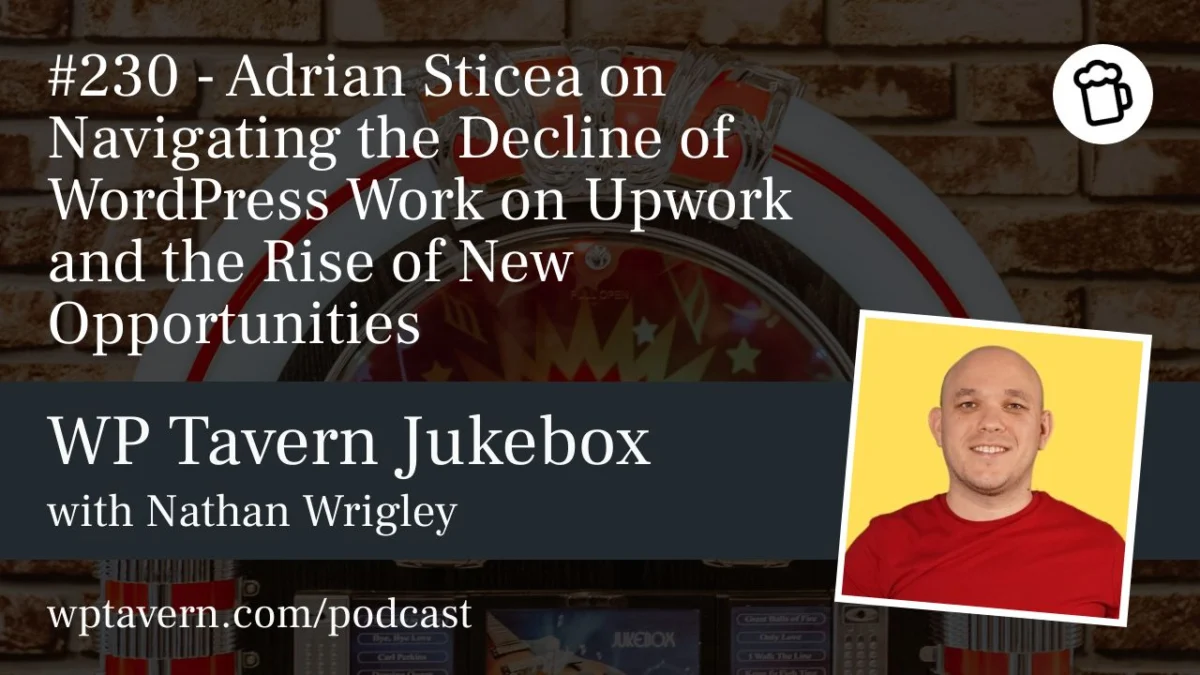
Main Facts
The modern digital freelancing landscape is undergoing a profound structural transformation, driven by an intersection of macroeconomic shifts, the rapid integration of artificial intelligence (AI), and evolving marketplace dynamics. For over a decade, platforms like Upwork served as the primary lifeblood for independent developers, offering a frictionless gateway to global clients. However, recent data-driven insights from seasoned WordPress developer and enterprise engineer Adrian Sticea have brought a stark reality to light: the era of relying solely on gig-economy marketplaces for high-value WordPress engineering work is rapidly drawing to a close.
Sticea, whose recent LinkedIn post detailing his dramatic decline in Upwork-sourced projects went viral, highlights a trend resonating across the tech sector. His experience reveals a steady, linear evaporation of project leads from the platform, culminating in a complete zero-out of Upwork-derived revenue by 2026. Despite this dramatic drop on a single platform, Sticea’s overall business health remains robust—proving that while the marketplace model is failing complex developers, the demand for sophisticated WordPress expertise has simply migrated elsewhere.
This transformation forces a critical re-evaluation of how digital agencies and independent contractors acquire clients, manage project scopes, and position their skills in an AI-accelerated ecosystem.
Chronology: A Decade of Evolution on Marketplace Platforms
To understand the current state of WordPress freelance work, one must trace the trajectory of marketplace dependency over the past decade.
- 2013–2016 (The Foundation): Adrian Sticea began his professional journey in the WordPress ecosystem, working with local companies on customer support and basic web development before transitioning into independent freelancing. During this period, direct outreach and regional networking were common, but digital marketplaces were beginning to cement their dominance.
- 2016–2020 (The Upwork Golden Age): Following a move to the United States in 2016, Sticea leveraged Upwork as a primary, highly reliable fountain of project leads. For several years, spanning his stints at digital marketing agencies and major enterprise projects (including an extensive learning platform build for IBM), Upwork accounted for the vast majority of his part-time and full-time freelance revenue. During these years, the platform offered an frictionless conduit to clients willing to pay for robust WordPress development.
- 2020–2023 (The First Chinks in the Armor): Following his departure from IBM and a subsequent period of full-time freelancing, Sticea noticed a subtle shifting of the tides. By 2022, approximately 20% of his historical Upwork lead volume had disappeared. By 2023, that figure plummeted to a 40% reduction. The platform that was once a predictable revenue engine began to stutter.
- 2024–2026 (The Cliff Edge): The decline accelerated sharply into a complete nosedive. By 2026, Sticea’s Upwork lead generation hit absolute zero. Concurrently, Sticea spent time as a web engineer in the marketing department at StellarWP before returning to independent enterprise freelancing, forcing a wholesale pivot away from marketplace dependency toward direct B2B networking and professional recruitment channels.
Supporting Data and Market Dynamics
The empirical evidence of Sticea’s experience is mapped out in a stark line graph that accompanied his viral LinkedIn post. The chart illustrates a healthy, horizontal plateau of project volume stretching from the mid-2010s to 2020, followed by a steady, agonizing descent, and finally, a sheer drop-off to zero.
According to Sticea and observations from various agency owners echoing his sentiments, several underlying pressures explain this phenomenon:
1. The AI Efficiency Paradox
Artificial intelligence is frequently cited as the primary disruptor in the software development space. However, Sticea argues that blaming AI for a simple "replacement of developers" is a superficial diagnosis. Clients are not bypassing human developers to write complex codebases entirely on their own via AI prompts. Instead, AI has drastically accelerated the efficiency of existing developers.
- Faster Delivery Times: A task that previously took a developer 20 hours can now often be completed in a fraction of that time with AI assistance.
- Reduced Headcount Demand: Because individual engineers can ship features and code much faster, the overall volume of developer hours demanded by the market has contracted. Companies simply need fewer developer bodies to achieve the same output.
2. Macroeconomic Pressures and Tech Sector Layoffs
The post-pandemic economic correction hit the technology sector harder than most. Following the massive digital expansion required during peak remote-work years (2020–2022), major tech companies initiated waves of layoffs. Sticea notes that AI acted as a powerful accelerator in this environment—arriving precisely when companies were already looking to trim operational fat and maximize engineering output with leaner teams.
3. Commoditization and Market Saturation on Upwork
Platforms like Upwork have experienced intense saturation. As the pool of global talent grew, the platform saw an influx of developers competing on price rather than architectural capability. Furthermore, Sticea points out a distinct bifurcation in project types:
- Simple Builds: Basic presentation sites and brochure websites remain active on Upwork, but clients are increasingly utilizing alternative drag-and-drop builders (such as Wix, Squarespace, or Framer) or experimenting with AI-driven site generation.
- Complex Engineering: Advanced work—such as custom plugin architecture, enterprise-level integrations, and legacy code maintenance—has largely migrated away from Upwork entirely.
Official Responses and Industry Sentiment
The viral nature of Sticea’s LinkedIn post proved that his experience was far from an isolated incident. The comment section became a town hall for digital agency owners, solo freelancers, and enterprise contractors sharing parallel frustrations.
Many agency owners reported a similar drying up of quality leads throughout mid-2024 and 2025. A recurring theme in these discussions was price sensitivity. Contractors attempting to maintain or slightly raise their hourly rates to match inflation found themselves met with silence from Upwork prospects. The platform’s client base has increasingly leaned toward low-cost execution, pricing out senior engineers who specialize in long-term technical stability and robust code architecture.
Moreover, industry veterans have pointed out the structural limitations of marketplace ecosystems:
- The Review Ceiling: On platforms like Upwork, successful project completion results in a star rating or a written review. However, because clients are often isolated marketplace users rather than active nodes in a professional network, those interactions rarely translate into downstream referrals. Sticea notes that across more than a decade of freelancing, he received virtually zero secondary client recommendations originating from Upwork relationships.
- The "Handcuffed" Effect: Developers who rely exclusively on a single marketplace effectively outsource their business development to an algorithm. When the algorithm, fee structure, or user demographic shifts, the independent contractor is left with no independent pipeline.
Implications for the Future of WordPress Freelancing
While the death of Upwork-sourced work might sound alarming for junior freelancers, Sticea’s trajectory offers an optimistic and highly strategic blueprint for seasoned professionals. His ability to maintain—and even grow—his overall income despite the loss of a major lead source underscores a vital business lesson: marketplaces are a convenience, not a substitute for real relationships.
Pivoting Toward Sustainable Networks
Faced with the drying up of his primary digital funnel, Sticea executed a successful three-pronged pivot that mirrors traditional, highly resilient business development strategies:
- Content and Thought Leadership on LinkedIn: By sharing transparent, data-backed insights regarding the freelance economy (such as his viral graph), Sticea established authority, attracting direct inquiries from high-value clients and agency partners.
- Direct Agency Partnerships: Rather than hunting for isolated one-off projects, Sticea forged direct relationships with digital agency owners who possess recurring needs for specialized, complex WordPress and plugin development that exceed their in-house capabilities.
- Recruitment and Temp Agencies: By partnering with established technical staffing agencies (such as Robert Half and other major tech recruiters), Sticea positioned himself within ecosystems where candidates are pre-vetted. This workflow commands higher trust and significantly better compensation than open-bidding marketplaces.
The Value of Human Touch and Long-Term Value
Ultimately, the decline of WordPress work on platforms like Upwork signals a maturation of the digital economy. The era of faceless, purely transactional, keyboard-to-keyboard messaging is giving way to a renewed appreciation for human trust, architectural foresight, and long-term technical stewardship.
For WordPress developers navigating these changing waters, the message is clear: while AI and automated platforms will continue to commoditize basic web assembly, the demand for senior-level engineering, strategic problem-solving, and genuine human relationships has never been more valuable. Those willing to step away from the convenience of the algorithm and invest in building a resilient, diversified professional network will not only survive the marketplace shift—they will thrive in it.