The digital commerce landscape is undergoing a profound structural shift. As artificial intelligence evolves from a passive analytical tool into an active, decision-making participant, the industry is entering the era of "Agentic Commerce." This week’s product releases and funding announcements highlight a definitive trend: the transition from human-managed workflows to automated, AI-orchestrated ecosystems. From payment infrastructure and logistical freight to creative content generation and marketplace management, the following updates represent the new foundation upon which modern merchants are building their businesses.
The Rise of Agentic Commerce: Main Facts
The primary narrative driving this week’s industry news is the integration of AI agents—autonomous systems capable of executing complex tasks—directly into the commerce stack.
Significant movement has been observed in the following sectors:

- Agentic Infrastructure: Visa and OpenAI have formed a strategic partnership to embed payment primitives and fraud monitoring into AI-initiated transactions.
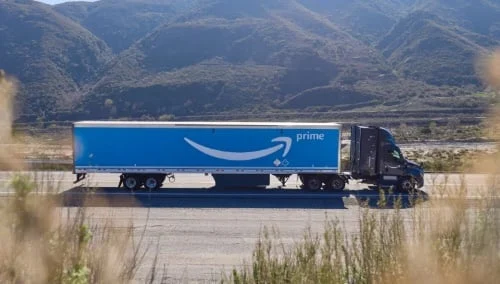
- Logistics and Fulfillment: Amazon is expanding its Less-Than-Load (LTL) freight services, allowing businesses to optimize supply chains by sharing trailer space.
- Operational Orchestration: Companies like Kyndryl, ShopAgentic, and Merchantee are raising capital and launching platforms specifically designed to automate catalog management, pricing, and fulfillment via natural language commands.
- Payment Evolution: ACI Worldwide is integrating the Wero digital wallet into European markets, while Shopware has rolled out native payment acceptance powered by PayPal.
Chronology of Recent Innovations
The pace of development in the ecommerce sector remains relentless. Below is the sequence of key developments that have redefined operational capabilities this week:
- Monday: Amazon Supply Chain Services announced the expansion of its LTL freight offering, providing businesses with more flexible, pallet-based shipping solutions across the U.S.
- Tuesday: Kinsta introduced robust bot protection for WordPress users, addressing the rising threat of malicious automated traffic. Simultaneously, Visa and OpenAI unveiled their collaboration to enable agent-driven payment flows.
- Wednesday: ACI Worldwide announced its partnership with the European Payments Initiative to deploy the Wero wallet. On the same day, Shopware debuted its native payment integration, and Triple Whale launched "Moby Automations" to streamline media buying.
- Thursday: A flurry of AI-centric tools hit the market, including Pollo AI’s Commerce Studio for visual assets, Fast Simon’s AI personalization suite, and Subotiz’s AI Agent Suite for subscription management.
- Friday: LinkedIn expanded its B2B outreach capabilities with the launch of Creator Marketplace and BrandWorks, while Merchantee secured €1.8 million in funding to scale its agentic marketplace platform.
Supporting Data: Investment and Adoption
The financial commitment to agentic technology signals that investors view these tools as the next logical step in ecommerce maturity. ShopAgentic recently closed a €1.9 million pre-seed round, while Merchantee secured €1.8 million. These investments follow a pattern of "infrastructure-first" funding, where the focus is not merely on front-end consumer apps, but on the back-end "plumbing"—the data agents, API servers, and orchestration frameworks that allow businesses to scale without linear growth in headcount.
Furthermore, the integration of generative AI into creative workflows is showing measurable adoption. Pollo AI’s release of Commerce Studio is a direct response to the demand for high-velocity content production, allowing merchants to generate product videos and lifestyle imagery that would traditionally take days to produce, now in mere minutes.

Official Responses and Strategic Perspectives
Industry leaders are framing these technological shifts as a necessary evolution to keep pace with the "always-on" consumer.
Regarding the Visa and OpenAI collaboration, Visa emphasized the intent to build a secure environment for AI-initiated transactions. By embedding "trusted agent identity signals," Visa aims to solve the core hurdle of agentic commerce: trust. If an AI agent initiates a purchase, the merchant must be certain of the transaction’s legitimacy.
Similarly, Amazon’s expansion of LTL freight underscores a strategic focus on efficiency. By allowing third-party sellers to share trailer space, Amazon is democratizing access to logistics networks that were previously cost-prohibitive for smaller enterprises.
Kyndryl’s launch of AI Orchestration for Business reflects the enterprise-level demand for "role-based operational orchestration." By leveraging an Agentic AI Framework, businesses can now manage supply chain disruptions in real-time, effectively automating the role of a traditional operations manager.
Implications for the Modern Merchant
The cumulative effect of these releases is a significant change in the day-to-day operations of an ecommerce merchant. Here are the three primary implications for businesses navigating this new landscape:
1. The Shift from "Click-to-Buy" to "Prompt-to-Buy"
With tools like Ask DoorDash and Subotiz’s natural language agent suite, the search and subscription experience is becoming conversational. Merchants must now optimize their product data not just for SEO, but for "Answer Engine Optimization" (AEO). If an AI agent is tasked with finding a specific product based on a photo or a vague description, the merchant’s catalog metadata must be precise and context-rich to ensure their items are "visible" to these digital intermediaries.

2. The Democratization of Advanced Logistics
The expansion of Amazon’s LTL freight service means that small and medium-sized businesses (SMBs) can now compete on shipping speeds and distribution reach that were once the exclusive domain of large retail conglomerates. For the merchant, this means the focus shifts from "how do I move this inventory?" to "where should this inventory be placed to maximize profit?"—a question that platforms like Fractal’s Cogentiq are specifically designed to answer.
3. The Automation of the "Creative Gap"
The "Creative Gap"—the lag time between product launch and the availability of high-quality marketing assets—is effectively closing. With AI-native tools like Pollo AI and Fast Simon’s personalization suite, merchants can run A/B tests on product visuals and storefront layouts in real-time. This agility allows for a hyper-personalized shopping experience where the brand’s presentation adapts to the individual shopper’s preferences automatically.
Navigating the Challenges
While the promise of agentic commerce is immense, it is not without risks. The rise of sophisticated bot traffic, addressed by Kinsta’s new protection tools, highlights the ongoing "arms race" between security systems and malicious AI. Merchants must ensure that their infrastructure is not only capable of interacting with helpful AI agents but is also robust enough to filter out the noise and potential fraud that can arise from unchecked automation.

Furthermore, the reliance on third-party platforms for payment and discovery—such as the new Pinterest/Amazon linking capability—creates a new paradigm of dependency. Merchants must balance the convenience of these integrations with the necessity of maintaining their own direct-to-consumer (DTC) channels and customer relationships.
Conclusion: The Path Forward
The developments of the past week serve as a microcosm for the next decade of ecommerce. We are moving away from manual, spreadsheet-driven management toward a future defined by "intent-based" operations. In this future, the merchant’s role shifts from executing tasks to defining the rules, strategies, and constraints within which AI agents operate.
For those looking to stay competitive, the mandate is clear: embrace the infrastructure of agentic commerce, prioritize the quality of your product data, and adopt the tools that allow your business to respond to market signals in seconds rather than days. The era of the automated, intelligent storefront has arrived, and it is rewarding those who move quickly to integrate these powerful new capabilities into their existing stack.