For nearly two decades, Amazon’s Mechanical Turk (MTurk) has functioned as the invisible backbone of the internet’s "artificial" intelligence. It was the platform where human beings were reduced to digital cogs, performing micro-tasks for pennies—identifying images, transcribing audio, and moderating content—all to train the machines that would eventually threaten to replace them. Now, that era is coming to a quiet, definitive close.
Amazon has officially announced that, effective July 30, 2026, the Mechanical Turk marketplace will cease accepting new customers. While existing clients will be permitted to continue their operations for the time being, the platform is effectively being placed on permanent life support. AWS has pledged to maintain basic security and availability, but the days of innovation and growth are over. The service that once promised to "democratize access to human intelligence" is now a legacy relic, destined for the digital scrapheap.
A Chronology of a Crowdsourced Experiment
Launched in 2005, Mechanical Turk was a product of the early Web 2.0 boom. It took its name from an 18th-century hoax: a famous "chess-playing automaton" that was actually a human grandmaster hidden inside a cabinet, moving the pieces. Amazon’s digital iteration followed a similar, albeit more modern, irony. It was designed to solve the "human intelligence task" (HIT) problem—work that was too complex for early algorithms but too tedious for well-paid employees.
- 2005: Amazon launches Mechanical Turk, creating a global marketplace for micro-labor. It becomes the go-to resource for researchers and tech startups looking to scale data annotation.
- 2010s: The platform becomes a lightning rod for labor rights activists, who characterize the service as a "digital sweatshop" where workers in developing nations are paid sub-minimum wages with no benefits or labor protections.
- 2018: As the AI gold rush accelerates, Amazon shifts its strategy, integrating MTurk into its SageMaker suite. It becomes a critical infrastructure piece for companies building neural networks, requiring vast amounts of human-labeled data.
- 2023: The "snake-eating-its-own-tail" crisis arrives. Studies reveal that nearly half of the MTurk workforce is using generative AI to complete their tasks, turning the platform into a feedback loop of machine-generated data labeled by other machines.
- July 2026: Amazon announces the freeze on new customer acquisition, signaling the beginning of the end for the platform.
The "Potemkin AI" Phenomenon and the Myth of Automation
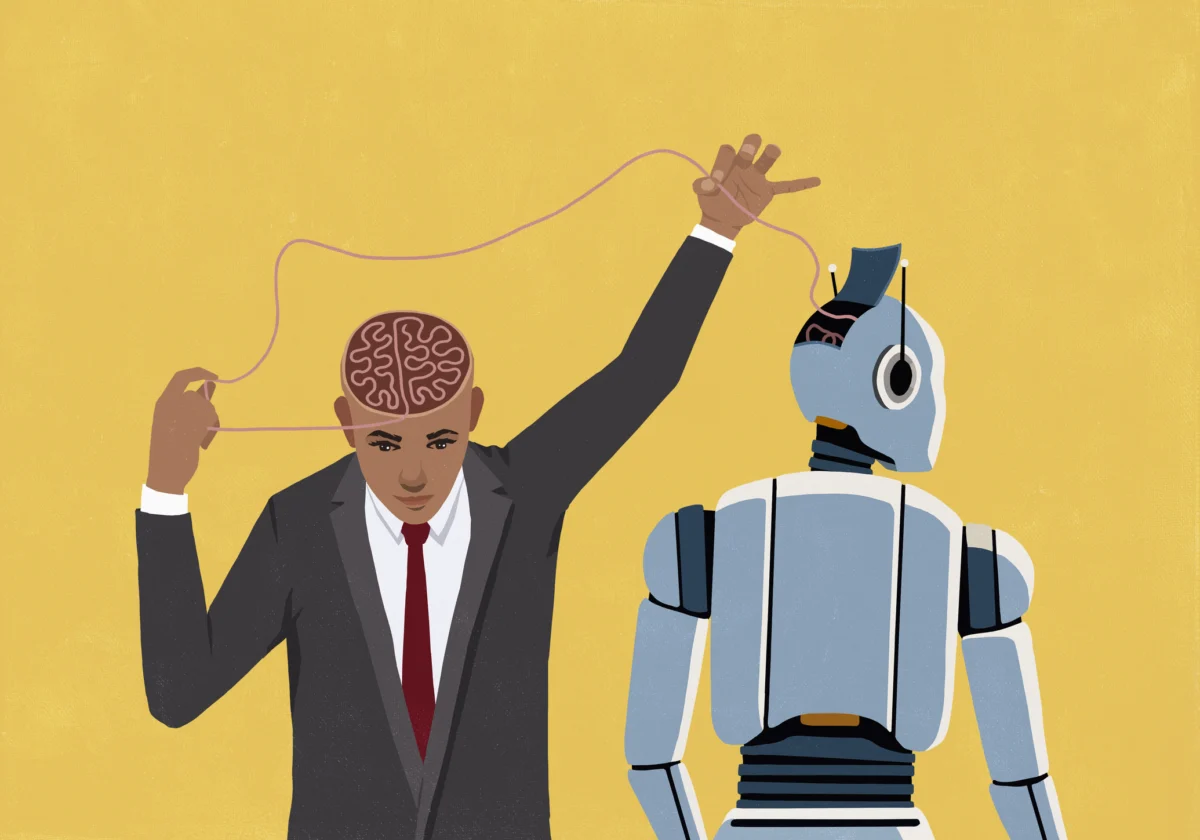
For years, the tech industry has relied on a narrative of seamless, autonomous AI. Yet, behind the curtain of many high-profile "AI" startups, there was often a Mechanical Turk worker. This phenomenon, dubbed "Potemkin AI," refers to companies that market themselves as fully automated, while relying on a hidden human workforce to perform the actual heavy lifting.
This strategy allowed founders to "fake it until they make it," securing venture capital funding by demonstrating results that, in reality, were powered by low-wage labor. When an AI app seemingly "magically" categorized a receipt or wrote a creative email, it was frequently an MTurk worker in the background, racing against a timer to ensure the software appeared smarter than it actually was.
This reliance on human labor was never sustainable, but it served a vital purpose during the formative years of deep learning. As machine learning models required increasingly massive datasets to achieve accuracy, the demand for human annotation exploded. MTurk provided the scale, but it also masked the immense human cost associated with the development of modern AI.
The Paradox of the "Human in the Loop"
The decline of Mechanical Turk is as much a story of technological obsolescence as it is a story of economic transformation. As Large Language Models (LLMs) became more sophisticated, the need for human input—or so it was thought—would decrease. However, the opposite occurred: the more powerful the AI, the more human feedback was required to "align" it.
Yet, the nature of this feedback has shifted. With the rise of Reinforcement Learning from Human Feedback (RLHF), the industry moved away from the simple micro-tasks of the early 2000s toward more complex evaluative work.
The turning point, however, was the 2023 revelation that the "human in the loop" was often just another AI. When workers began using LLMs to complete their MTurk tasks, the reliability of the training data plummeted. Researchers found that the quality of data on the platform had degraded significantly, as the internet became flooded with synthetic content. When AI trains on AI-generated data, it leads to "model collapse," a phenomenon where the machine’s output becomes increasingly distorted and nonsensical.
Official Responses and the Corporate View
Amazon’s official stance on the closure is characteristically measured. In a statement released through AWS, the company noted that the decision followed "careful consideration."
"Existing customers can continue to use the service as normal," the company stated. "AWS continues to invest in security and availability improvements for Mechanical Turk, but we do not plan to introduce new features."
For many observers, this language confirms that MTurk has transitioned from a strategic asset to a legacy liability. Amazon, which has pivoted its AI ambitions toward its proprietary Bedrock and Q services, no longer needs the fragmented, volatile marketplace of MTurk. The industry has largely moved toward specialized data labeling firms—such as Scale AI or Labelbox—that offer higher quality control, better security, and a more professionalized workforce than the "wild west" environment of the open MTurk marketplace.
The Human Cost: A Legacy of Exploitation
It is impossible to discuss the end of Mechanical Turk without addressing the human element. For nearly two decades, the platform was a lifeline for individuals in countries with limited economic opportunity, as well as a source of supplementary income for people in the U.S. and Europe.
However, it was also a system that operated in a legal gray area. Because MTurk workers were classified as independent contractors, they lacked access to health insurance, collective bargaining, or a guaranteed minimum wage. Reports of "wage theft" via rejected work, platform bugs that locked workers out of their earnings, and the psychological toll of moderating violent or disturbing content became common complaints in the community.
The decline of the platform has been met with a mixture of relief and resignation. On forums like Reddit, the consensus among long-time workers is that the platform had already died "years ago." The influx of bots, the stagnation of pay rates that remained unchanged for over a decade, and the increasing difficulty of navigating the platform’s interface led to a mass exodus of the most experienced workers.
The Implications: What Happens Next?
The death of Mechanical Turk signals a broader shift in the digital economy. We are moving away from the era of "human-as-software" toward a model where AI training is becoming a specialized, professional industry.
- The Professionalization of Data Labeling: The work once performed by anonymous crowds is now being shifted to curated, often in-house teams or specialized firms that offer more stability and higher accuracy.
- The Crisis of Data Quality: As the web becomes saturated with AI-generated text and images, the challenge of finding "authentic" human data for training will only intensify. The loss of MTurk removes a centralized hub for this data, forcing companies to look elsewhere.
- The Automation of the Workforce: The irony remains that the people who spent years training the machines are now seeing those same machines perform their jobs more efficiently—or at least, more cheaply. The "crowd" is being rendered redundant.
Conclusion: The Final Curtain
The story of Mechanical Turk is the story of the internet’s adolescence—a time of unbridled experimentation, moral ambiguity, and the naive belief that technology could solve any problem if we simply threw enough human labor at it.
As July 30, 2026, approaches, the platform will slowly fade into the background. It will likely remain as a "zombie" service for some time, running in the shadows of the AWS ecosystem, serving a dwindling number of legacy clients. But its relevance is gone.
The original Mechanical Turk was a trick designed to make people believe a machine could think. Amazon’s version was a trick designed to make us believe that the machines were ready to think on their own. As we enter the next phase of the AI revolution, we are finally realizing that the "intelligence" we were chasing was, and always has been, entirely human. We are simply changing how we pay for it.