
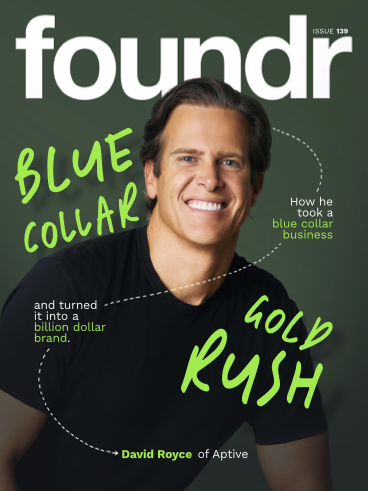
In the glitzy world of Silicon Valley venture capital, success is often measured by seed rounds, disruptive software, and the promise of a digital future. Yet, David Royce, the founder and chairman of Aptive Environmental, has built a massive, multi-billion-dollar empire in an industry that most business school graduates wouldn’t touch with a ten-foot pole: residential pest control.
Royce’s journey is a masterclass in the power of "unsexy" business models. By eschewing the prestige of investment banking for the gritty, high-stakes world of door-to-door sales and recurring service contracts, Royce has proven that true wealth is often found where others fear to tread.
The Genesis: A Struggle for Focus
Before he was a titan of industry, David Royce was a child who struggled to find his place. Academic environments were a constant challenge, leaving him with a lingering sense that he wasn’t "smart." It wasn’t until the sixth grade that a teacher named Mrs. Luft saw his potential, offering the validation he needed to begin believing in his own capabilities.
Looking back, Royce realizes that his struggles stemmed from undiagnosed ADHD. While the condition was a hindrance in rigid, uninspiring settings, it became a "superpower" in the high-octane world of entrepreneurship. "In boring environments, it’s brutal," Royce explains. "In environments I care about, it’s a superpower."

Chronology of an Empire
Royce’s path to the top began not in a boardroom, but on the doorsteps of suburban homes. During four consecutive college summers, he worked in door-to-door sales. His start was far from auspicious; he spent his first week in Sacramento failing to land a single sale. While his peers were closing deals, Royce was doing "free cardio."
Instead of quitting, Royce retreated to a bookstore, devouring sales literature and committing to 90 minutes of daily study. By the end of that summer, he was the top sales rookie in a company of 200. This experience solidified his core philosophy: "Persistence is genius in disguise."
From Salesman to Founder
After college, Royce stood at a crossroads. With a finance degree in hand, he was prepared for a career in investment banking. However, a mentor who had recently sold his own pest control startup for $10 million challenged him: "Why would you go work 80 to 100-hour weeks for someone else when you could start your own?"
Royce took his $300,000 in savings—earmarked for an MBA—and invested it into his first venture. He didn’t look for a "sexy" industry; he looked for a problem-solving business with high margins and recurring revenue. He chose pest control, not because it was glamorous, but because it was essential.
The Growth Machine: Strategic Data and Execution
Royce’s success wasn’t merely the result of hard work; it was the result of building a repeatable, data-driven machine. He identified three pillars that fueled his 7x–10x growth rate compared to industry competitors:
- A Codified Sales Program: Royce developed a training system that turned thousands of recruits into high-performing professionals. Sales reps who defected from competitors often saw a 70% increase in productivity after adopting his methods.
- Customer-Centric Innovation: Having knocked on over 60,000 doors, Royce possessed a "PhD" in homeowner pain points. He used this on-the-ground knowledge to build service features that directly addressed those frustrations.
- Technological Integration: Long before it was standard for blue-collar businesses, Royce invested in software. His sales app, which gamified performance through nationwide tournaments, boosted productivity by up to 30% on competition days.
The Cash Flow Crisis
In his first year, Royce learned a brutal lesson: growth can be as dangerous as stagnation. After booking 7,500 new customers—significantly more than the 5,000 he’d planned for—he faced a cash-flow crunch. Because he paid his salespeople’s commissions upfront, he didn’t have the liquidity to sustain the rapid expansion.
"Revenues are vanity. Profits are sanity. But cash flow is reality," Royce notes. He successfully navigated this by renegotiating payment terms with his sales leaders, offering them interest on their delayed bonuses. This incident led him to restructure his business model, ensuring that growth was always fueled by sustainable liquidity.
The "Stealthy Wealthy" and the Blue-Collar Revolution
Royce’s trajectory highlights a significant trend in the American economy. According to data, roughly 43% of the top 0.1% of income earners—those making over $2.3 million annually—are involved in "boring" blue-collar industries.

While AI and automation are transforming white-collar sectors, they are effectively powerless against the realities of home maintenance. "AI can write code… but it’s not unclogging your toilet," says Royce. As millions of baby boomers prepare to retire and exit their businesses, there is a massive, untapped opportunity for the next generation of entrepreneurs to take over these essential service models.
Building Culture: Perks vs. Purpose
Royce is famous for the extravagant perks at Aptive’s headquarters, including an NCAA-standard basketball court and company retreats in Thailand. However, he is quick to clarify that perks are merely the "sugar," not the "protein."
The true foundation of his culture is ownership. By distributing 25% of the company to employees, he ensured that everyone had a vested interest in the firm’s success. When the company hit $500 million in revenue, this equity distribution resulted in life-changing payouts for his team, many of whom were able to pay off mortgages and student loans. "Ownership is a far better retention tool than ping-pong tables," he reflects.
Lessons in Leadership: Becoming the Architect
The transition from being the "hero" to the "architect" was the hardest hurdle in Royce’s career. When he launched Aptive, he stepped aside as CEO, handing the reins to a protégé he had mentored for a decade. This move forced him to confront whether he had built a company or a dependency.
He also learned the hard way about executive hiring. When he brought in a CFO from a massive tech firm, the lack of cultural fit and misalignment on business operations nearly derailed a $1.6 billion exit. The experience served as a permanent reminder: "Resumes don’t run companies. People do."
Implications for Future Entrepreneurs
David Royce’s story serves as a profound challenge to the modern definition of success. He argues that the obsession with "the big exit" often blinds founders to the value of the journey itself.
Key Takeaways for Builders:
- Don’t Chase the Image: Choose the opportunity, not the prestige. Unsexy industries often yield the most sustainable, high-margin results.
- Master the Fundamentals: Whether it’s sales techniques or cash-flow management, codify your processes so they can be scaled.
- Develop Leaders, Not Just Followers: A business’s true legacy isn’t its valuation; it’s the caliber of leaders it produces.
- The "Just a Little More" Mindset: Entrepreneurship is not about reaching a specific number or destination. It is about the discipline, character, and expertise you gain while climbing.
As Royce puts it, "If you don’t enjoy the climb, the summit is going to disappoint you." For those willing to do the work that others avoid, the opportunity to build a generational legacy isn’t just possible—it’s waiting behind the next door.