By Sharon Atefi
PR, Talent, and Partnerships Professional
Main Facts: The Anatomy of a Neglected Growth Channel
Somewhere deep within your current email subscriber list, a loyal customer is actively singing your praises. They have purchased your product multiple times, left glowing five-star reviews, and would gladly recommend your brand to a friend. More importantly, their social circle likely mirrors your ideal target demographic.
Yet, there is a glaring oversight: you have likely never asked them to make that introduction.
For most modern founders and business owners, a referral program exists in theory, much like a neglected gym membership. It technically exists, but nobody has utilized it since January. There is a faded hyperlink tucked away in the website footer, and that constitutes the entirety of the brand’s referral strategy.
This passive approach represents a massive missed opportunity. The economic reality of referrals is staggering. When a trusted friend says, "You’re going to love this product," the heavy lifting of the sales process is instantly completed. No costly paid advertising platform can buy that level of authenticity, and no algorithmic targeting can replicate the organic trust of a personal recommendation.
So, why do the vast majority of referral programs yield virtually zero results? The root cause is structural: businesses build referral programs as static web pages rather than dynamic, strategic communication systems.
Chronology: The Evolution from Word-of-Mouth to Infrastructure
To understand why modern referral engines are taking center stage in digital marketing, it is helpful to look at how customer acquisition has evolved over the past decade.
- Phase 1: The Wild West of Paid Ads (Early 2010s). For years, direct-to-consumer (DTC) brands and e-commerce startups scaled almost exclusively through aggressive paid acquisition on social media channels. Customer Acquisition Costs (CAC) were low, and algorithms rewarded high ad spend.
- Phase 2: The Privacy Crackdown and Ad Fatigue (2021–2023). Regulatory shifts, privacy updates (such as Apple’s App Tracking Transparency), and market saturation sent ad costs skyrocketing. Brands realized that relying solely on rented media was a fragile growth model.
- Phase 3: The Return to Organic and Community (2024–Present). Smart brands began pivoting back to foundational marketing principles—word-of-mouth and retention. However, instead of hoping customers would talk about them organically, forward-thinking founders started building automated "infrastructure" around word-of-mouth.
This evolution has transformed the referral program from a passive website widget into an active, automated email marketing sequence.
Supporting Data: Why Referrals Outperform Every Paid Channel
To appreciate the power of an automated referral engine, one must examine consumer psychology and conversion metrics.
Think back to the last time a trusted friend recommended a restaurant, a television series, or a specific brand of shoes. Did you stop to read dozens of online reviews? Did you open a spreadsheet to compare price points and alternative features?
Of course not. You simply tried it, because someone whose judgment you trust had already done the rigorous vetting for you.
Referrals leverage years of built-up relational equity and apply it directly to a brand via a single text message or email forward. Statistically, referred customers consistently outperform traffic from paid acquisition channels across every major metric:
- Higher Conversion Rates: Referred leads convert at a significantly higher percentage than cold traffic because the trust barrier is already dissolved.
- Lower Acquisition Costs: Aside from a modest incentive (which is only paid out upon a successful conversion), the marginal cost of acquiring a referred customer is near zero.
- Superior Customer Lifetime Value (LTV): Referred customers tend to hang around longer, churn less frequently, and frequently turn into referrers themselves.
Furthermore, your existing customers excel at targeting on your behalf. They actually know the person on the receiving end of the recommendation, ensuring that the leads entering your sales funnel are uniquely qualified.
Official Strategies: How to Build a High-Performing Referral Engine
Transitioning from a dead referral link to an active revenue engine requires implementing four foundational pillars.
1. Ask at the "Moment of Delight"
The single biggest mistake brands make is not the reward structure or the copywriting—it is timing.
Dropping a generic referral request into a random Tuesday afternoon promotional newsletter is background noise. That exact same request, however, hits with psychological force when sent immediately after a customer leaves a glowing five-star review, places their third repeat order, or receives a successful resolution from your customer support team.
These windows represent peaks of customer goodwill. Asking, "Know someone who would love this too?" during these moments feels natural and conversational rather than like an aggressive extraction attempt. Because manual tracking is impossible at scale, modern automation tools allow brands to trigger these requests seamlessly based on behavioral milestones.
2. Implement Double-Sided Rewards (Or Don’t Bother)
One-sided referral rewards are fundamentally flawed.
- If only the referrer receives a financial payout, the arrangement feels transactional and grubby—effectively monetizing personal friendships.
- If only the incoming friend gets a discount, the existing customer has zero financial or motivational incentive to lift a finger.
The solution is the double-sided reward model: "Give $10, Get $10." This simple formula transforms a commercial pitch into a mutual favor. The referrer genuinely helps a friend and gets rewarded for it, while the newcomer arrives with a discount that minimizes purchase friction. Crucially, the incentive does not need to be extravagant; free shipping, modest dollar amounts, or exclusive early access to new product drops work exceptionally well.
3. Ruthlessly Eliminate Friction
Referral programs typically leak in two specific places: the moment a customer has to think about what to write, and the moment they have to figure out how to share it.
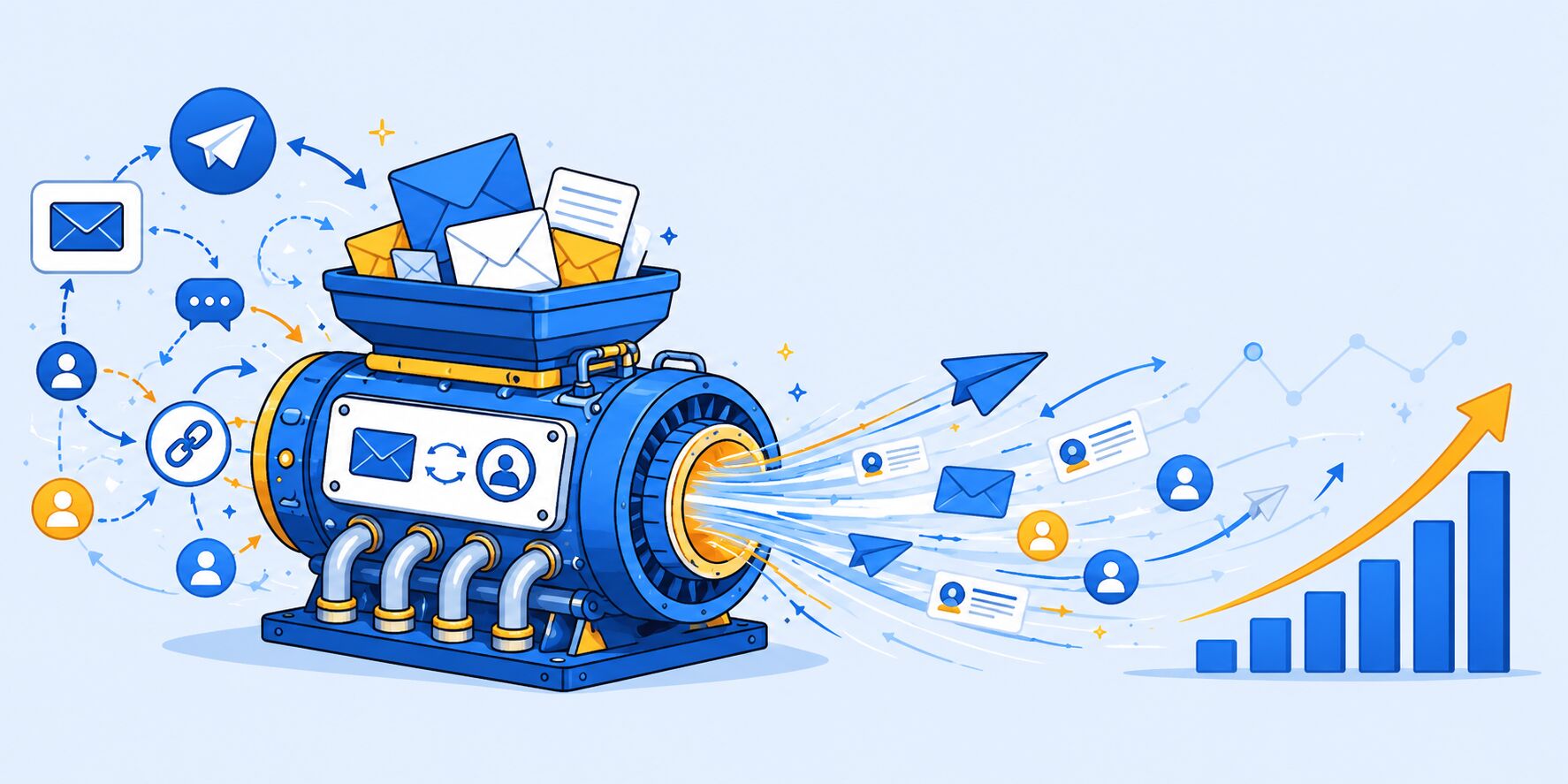
To solve this, assign every customer a unique tracking link automatically. Provide a pre-written, human-sounding message that they can either send as-is or tweak in seconds. Finally, place share buttons where modern consumers actually spend their time—SMS, WhatsApp, and email—accessible with a single tap.
As a rule of thumb: if referring a friend takes more than fifteen seconds from the moment they open your email, the process is too complex. While your top 2% of "superfans" might push through a clunky user flow, the quietly satisfied majority—where the actual volume of revenue lives—will simply abandon the process.
4. Segment Your Audience: Stop Asking Strangers
Would you walk up to a complete stranger at a bus stop and ask them to pitch your business to their network?
That is precisely what a brand does when it blasts a referral request to its entire email database, including unengaged subscribers who made a single purchase eight months ago and haven’t opened an email since. Doing so only trains your audience to ignore your messages.
Instead, build micro-segments for your referral campaigns. Target repeat buyers, active reviewers, highly engaged readers, and anyone who has previously replied to your brand emails with warm feedback. This targeted group should hear about your referral program consistently, as they are the only segment genuinely positioned to act.
Platforms like Omnisend streamline this process by isolating your happiest customers through advanced segmentation. By integrating with loyalty platforms like Smile and Yotpo, brands can automate points, tiers, and tracking, ensuring the right email fires precisely when a customer earns a reward or completes a referral.
Implications: Tapping into Existing Generosity
The most encouraging aspect of optimizing a referral engine is realizing that word-of-mouth marketing is already happening around your brand, right now, whether you have a formal program in place or not. People naturally talk about the products, services, and experiences they love.
The only variable is whether you have established the infrastructure to make those mentions easy to travel and whether you properly thank your advocates when they do.
A modern referral engine is simply the digital infrastructure for generosity that already exists within your customer base. By combining smart timing, frictionless sharing, double-sided incentives, and precise segmentation via tools like Omnisend, businesses can stop renting attention through expensive ad networks and start empowering their community to grow the brand organically—just louder.