Google Expands Limited Ad Serving Policy on Search: A Major Shift Toward Trust-Based Impression Caps
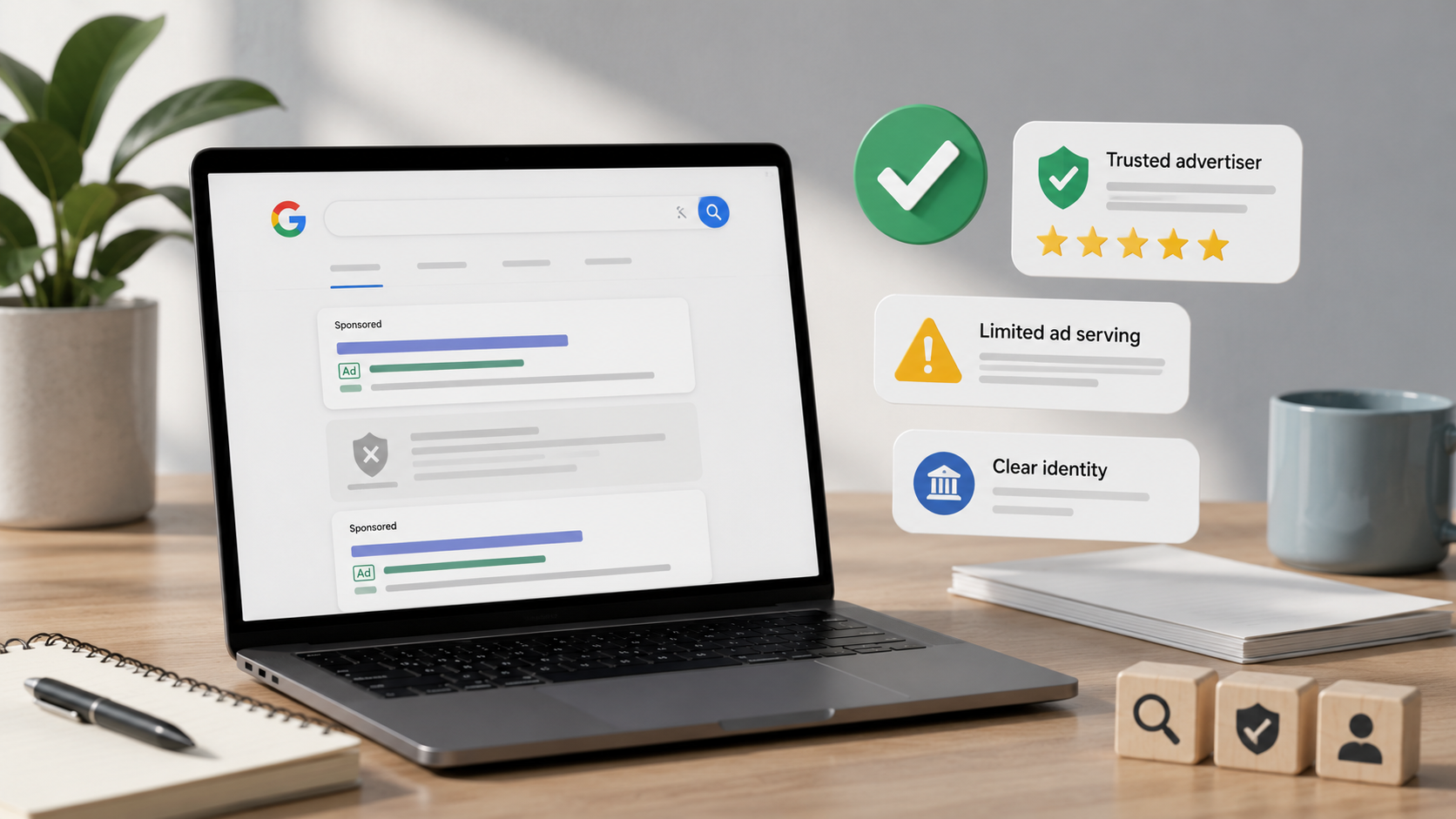
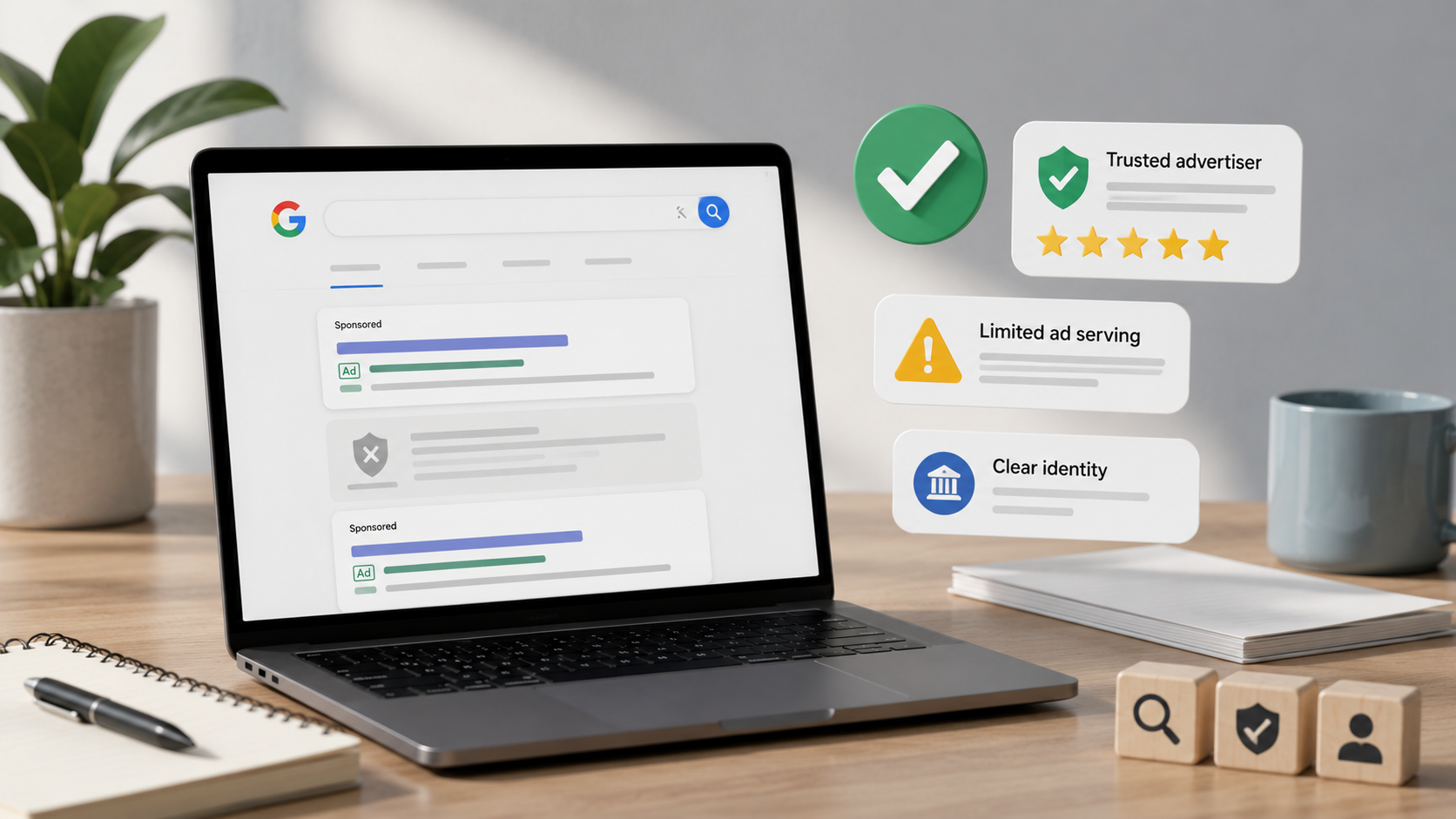
Google is significantly broadening its Limited Ad Serving (LAS) policy on Search, granting itself unprecedented authority to restrict ad impressions for advertisers it deems unqualified, unverified, or potentially confusing to users.
This policy expansion marks a fundamental shift in how Google regulates its advertising auction. Rather than simply checking for technical policy compliance, the search giant is increasingly relying on subjective trust signals, advertiser history, and user feedback to determine how often—or even if—an ad should be shown to searchers.
The gradual rollout of this expanded policy is set to reshape the landscape of paid search. It introduces new hurdles for emerging brands, local businesses, and digital marketing agencies, while raising critical questions about auction fairness and the growing power of automated policy enforcement.
1. Main Facts: Understanding the Expanded Limited Ad Serving Policy
At its core, the Limited Ad Serving policy acts as a "probationary period" or "impression throttle" for Google Ads accounts. Instead of outright banning an advertiser or disapproving their ads, Google limits the number of impressions an ad can receive in specific search scenarios.
Under the newly expanded guidelines, Google will restrict ad visibility based on three primary risk factors:
Advertiser Identity and Clarity: Ads that obscure or fail to clearly communicate the advertiser’s true brand identity, parent company, or affiliation will face heavy impression limits. Generic ad copy that could mislead users into thinking they are clicking on an official brand channel is a primary target.
User Feedback and Reputation: Google is integrating consumer feedback directly into its ad-serving algorithms. Advertisers who receive persistent, disproportionate reports of misleading content, poor business practices, or deceptive product listings will see their search reach restricted.
Account Maturity and Track Record: Newer advertisers who have not yet established a baseline of trust or verified their identities will face strict impression caps, particularly on highly competitive searches or queries associated with brand names.
The Mechanics of "Limiting" vs. "Banning"
Unlike traditional policy violations that trigger account suspensions or ad disapprovals, Limited Ad Serving operates quietly. An advertiser’s campaigns may remain active, but their impressions will be severely capped. Google limits these impressions on searches where it believes there is a "higher risk of creating negative user experiences."
This means that even if an advertiser bids competitively and maintains a high Quality Score, Google’s trust algorithms can override the standard auction mechanics to keep the ad hidden from the vast majority of users.
2. Chronology: The Evolution of Google’s Trust-Based Ad Policies
Google’s journey toward trust-based ad filtering has been developing for years, driven by escalating sophisticated ad fraud, phishing campaigns, and brand impersonation.
+-----------------------------------------------------------------+
|                          TIMELINE                               |
+-----------------------------------------------------------------+
|                                                                 |
|  [August 2023]                                                  |
|  Google launches initial Limited Ad Serving Policy.             |
|  Focus: Brand impersonation & unverified new advertisers.      |
|                                                                 |
|  [Present / Mid-2026]                                           |
|  Policy expands to broader Search scenarios.                   |
|  Integration of user feedback & generic copy penalties.         |
|                                                                 |
|  [2026 - 2028]                                                  |
|  Gradual global implementation.                                 |
|  AI classifiers scale across all search verticals.              |
|                                                                 |
+-----------------------------------------------------------------+
August 2023 – The Genesis: Google officially introduced the Limited Ad Serving policy. The initial scope was narrow, primarily targeting newly created advertiser accounts that targeted high-profile brand keywords. The goal was to protect consumers from "scam ads" that mimicked well-known financial institutions, airlines, and tech support companies.
The Mid-Phase – Expansion of Advertiser Verification: Parallel to this policy, Google aggressively rolled out its Advertiser Verification Program, requiring businesses to submit legal documentation, government IDs, and business registrations to prove their legitimacy.
The Current Phase (Present Rollout): Google has officially expanded the policy to cover additional, everyday Search scenarios. The policy is no longer restricted to brand-name targeting; it now applies broadly to generic search queries where user confusion is deemed likely.
Through 2028 – Full Global Implementation: Google has announced that this expanded policy will roll out gradually, with full system integration and scaling expected to continue through 2028. This multi-year horizon suggests that Google is continuously training its machine learning models to identify "untrustworthy" ad patterns without causing widespread disruption to legitimate advertisers.
3. Supporting Data: The Drivers Behind Google’s Policy Shift
Google’s decision to implement a highly discretionary, trust-based filter is rooted in the sheer volume of malicious and low-quality ads attempting to bypass its automated systems.
According to Google’s annual Ads Safety Report, the company blocks or removes billions of ads each year. However, bad actors have adapted, using sophisticated cloaking techniques and AI-generated landing pages to bypass static policy checks.
Metric / Indicator
Impact on Policy Strategy
Traditional Policy Checks
Static, binary (approved/disapproved). Vulnerable to cloaking and automated evasion.
Limited Ad Serving (LAS)
Dynamic, behavioral. Restricts reach proactively while verification and trust signals accumulate.
Primary Risk Signals
Account age, domain history, user complaints, generic copy vs. verified brand names.
By transitioning from a binary system of "Approved vs. Disapproved" to a nuanced system of "Trusted vs. Limited," Google can mitigate risk without having to definitively prove a policy violation.
The Role of User Feedback
A critical change in this update is the weight given to user feedback. Google is utilizing user-initiated ad reports and post-click satisfaction signals as direct inputs for its ad-serving decisions. If a specific advertiser receives a spike in "Report this Ad" submissions or exhibits high bounce rates paired with poor business bureau ratings, Google’s automated classifiers will throttle that advertiser’s impression share.
4. Official Responses and Industry Backlash
While Google frames this update as a necessary measure to protect consumers and improve search quality, the digital marketing community has reacted with significant concern and skepticism.
The Expert Perspective
The expansion of the policy was first highlighted by Anthony Higman, Founder of the digital advertising agency Adsquire. Sharing his thoughts on LinkedIn, Higman expressed strong frustration with the update, calling the policy shift "actually insane."
Higman and other search marketing experts argue that the policy gives Google far too much unilateral control over who is allowed to compete in the ad auction. The primary concern is that Google’s automated algorithms frequently misidentify legitimate businesses—particularly small-to-medium enterprises (SMEs) and local service providers—as "untrustworthy" or "confusing."
"This is actually insane. We have shared-account scenarios, niche brands, and local businesses that are completely legitimate but don’t have the massive digital footprint of a national corporation. Under these rules, Google can simply decide they are ‘unqualified’ and shut down their impression share without a clear path to appeal."
— Anthony Higman, Founder of Adsquire
The Core Criticisms from the PPC Community
The "Guilty Until Proven Innocent" Paradigm: New advertisers are automatically penalized with restricted reach simply because they are new. This increases the barrier to entry for startups and favors entrenched market leaders.
The Black Box of Appeal: Advertisers flagged under Limited Ad Serving often receive vague notifications, leaving them in the dark about whether their limited reach is due to low bids, poor Quality Score, or an active LAS restriction.
Algorithmic Bias: Automated systems struggle with nuance. A local plumber using generic ad copy like "Emergency Plumber Near Me" could easily be flagged as "confusing" or "unclear brand identity" because they lack a highly recognizable national brand name.
5. Strategic Implications: How Advertisers Can Navigate the New Era
The expansion of the Limited Ad Serving policy means that "technical compliance" is no longer enough to succeed on Google Ads. Advertisers must actively manage their brand trust signals and transparency metrics.
To prevent impression throttling and build a resilient Google Ads account, agencies and brands should adopt the following strategies:
A. Establish Absolute Brand Transparency
Google’s algorithms flag ads that leave users guessing who is behind the service.
Avoid Overly Generic Copy: While keywords like "Best Insurance Rates" or "Affordable Moving Company" are highly searched, using them as your primary headline without your actual brand name can trigger a limited serving status.
Pin Domain Headlines in RSAs: Google actively recommends pinning a headline containing your official domain name or verified brand name in the first position of your Responsive Search Ads (RSAs). This ensures that users immediately see who is advertising.
[ Headline 1: Official Brand Name / Domain ]  <-- PINNED (Builds Trust)
[ Headline 2: Main Call to Action (CTA)     ]
[ Headline 3: Supporting Benefit/Feature    ]
B. Complete All Verification Protocols Immediately
Do not treat advertiser verification as an optional task. Complete the Business Operations Verification, Identity Verification, and any industry-specific verifications (such as LegitScript for healthcare or financial services certifications) as soon as they become available in your account.
C. Align Ad Copy, Landing Pages, and Legal Entities
Ensure there is a seamless, logical thread running from your ad copy to your landing page.
Your landing page must clearly display your legal business name, physical address, contact information, and privacy policy.
If you are an authorized distributor or affiliate of another brand, clearly state your affiliation on both the landing page and within the ad copy to avoid being flagged for brand impersonation.
D. Proactively Monitor and Manage Reputation
Because user feedback now influences ad-serving limits, brands must actively monitor customer satisfaction. High volumes of negative Google reviews, Better Business Bureau complaints, or direct ad reports can directly degrade your ad delivery. Focus on post-click customer experience to ensure your brand’s digital reputation remains clean.
Conclusion: The New Cost of Doing Business on Google
Google’s expanded Limited Ad Serving policy signals a new era in search engine marketing—one where brand equity and transparency are directly tied to ad distribution.
While the policy will undoubtedly help clean up search results by limiting the reach of fly-by-night operations, dropshippers, and bad actors, it introduces operational friction for legitimate advertisers. Success in this new environment will require digital marketers to move away from generic, high-volume ad setups and invest heavily in clear, verified, and brand-first advertising structures.