For years, the promise of artificial intelligence in the business world has been hampered by a single, stubborn barrier: the "last mile" of execution. While tools like ChatGPT have revolutionized brainstorming, copywriting, and data analysis, the actual integration of these outputs into a company’s existing tech stack—moving from a drafted document to an executed workflow—has historically required a developer, an API, or complex middleware like Zapier or Make.
That era is coming to a definitive close with the introduction of OpenAI’s Codex. Contrary to the common misconception that this tool is reserved for software engineers, Codex is a transformative platform designed for business owners, marketers, and operators. By utilizing natural language, users can now build proactive agents that do not just chat, but actively manage files, navigate legacy software, and execute multi-step business tasks.
Understanding the Architecture of Codex
To grasp the power of Codex, one must first demystify its architecture. OpenAI’s ecosystem currently revolves around various models—such as 5.5, Instant, or Thinking—which serve as the "brains" of the operation. Codex functions as the "harness" or the operational platform.
While the standard ChatGPT web interface is a reactive environment, the dedicated Codex desktop app—available for both Windows and macOS—is designed to be an agentic workspace. It doesn’t just process text; it interfaces with your local file system, your cloud-based tools, and your browser. Because the learning curve involves speaking or typing in plain English rather than writing code, the barrier to entry for non-technical staff is virtually non-existent.

The Chronology of Deployment
For those looking to transition from reactive prompting to proactive automation, the implementation process follows a logical, phased sequence.
Phase 1: Installation and Scoping
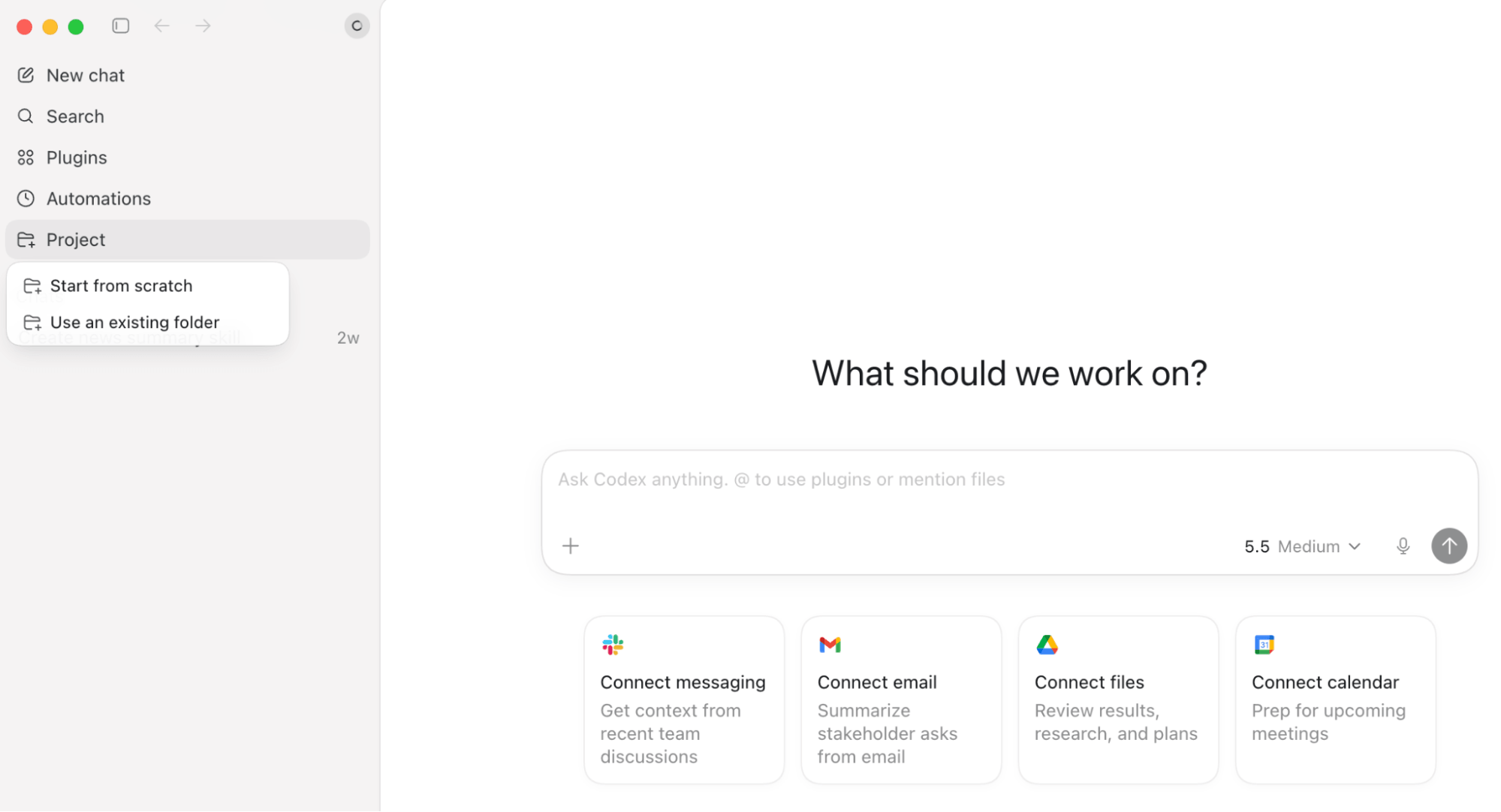
The first step is downloading the dedicated Codex desktop application. Once installed, users are greeted with an interface that mimics the familiar ChatGPT sidebar, augmented with dedicated tabs for Plugins and Automations.
The primary point of integration is the "Folder Connection." Upon starting a session, you grant Codex access to a specific directory on your computer or local network. This is the foundation of its business utility. Codex can read, modify, create, and delete files within these designated paths. For security, industry experts like Karl Yeh strongly advise against connecting to a root directory. Instead, users should create a "sandbox" folder for Codex to prevent it from having unauthorized access to sensitive company data.
Phase 2: Defining Permissions and Security
As Codex gains access to your files, managing its permission levels is critical. The application offers three distinct tiers of access:
- Read-Only: For analysis and summary tasks.
- Read-Write: Allowing the agent to create and modify documents.
- Full System Access: Required for complex automation involving third-party apps, but requiring strict oversight.
Security best practices dictate that users should start with default, limited permissions. Furthermore, users must be wary of "Prompt Injection." As AI becomes more prevalent, some websites are embedding hidden instructions designed to override your agent’s directives. A robust defense involves a "Separation of Concerns" strategy: use one agent to gather raw data from the web, a second agent to verify the integrity of that data, and a third—the internal workflow agent—to act only on the vetted information.
Leveraging Skills and Plugins for Recurring Processes
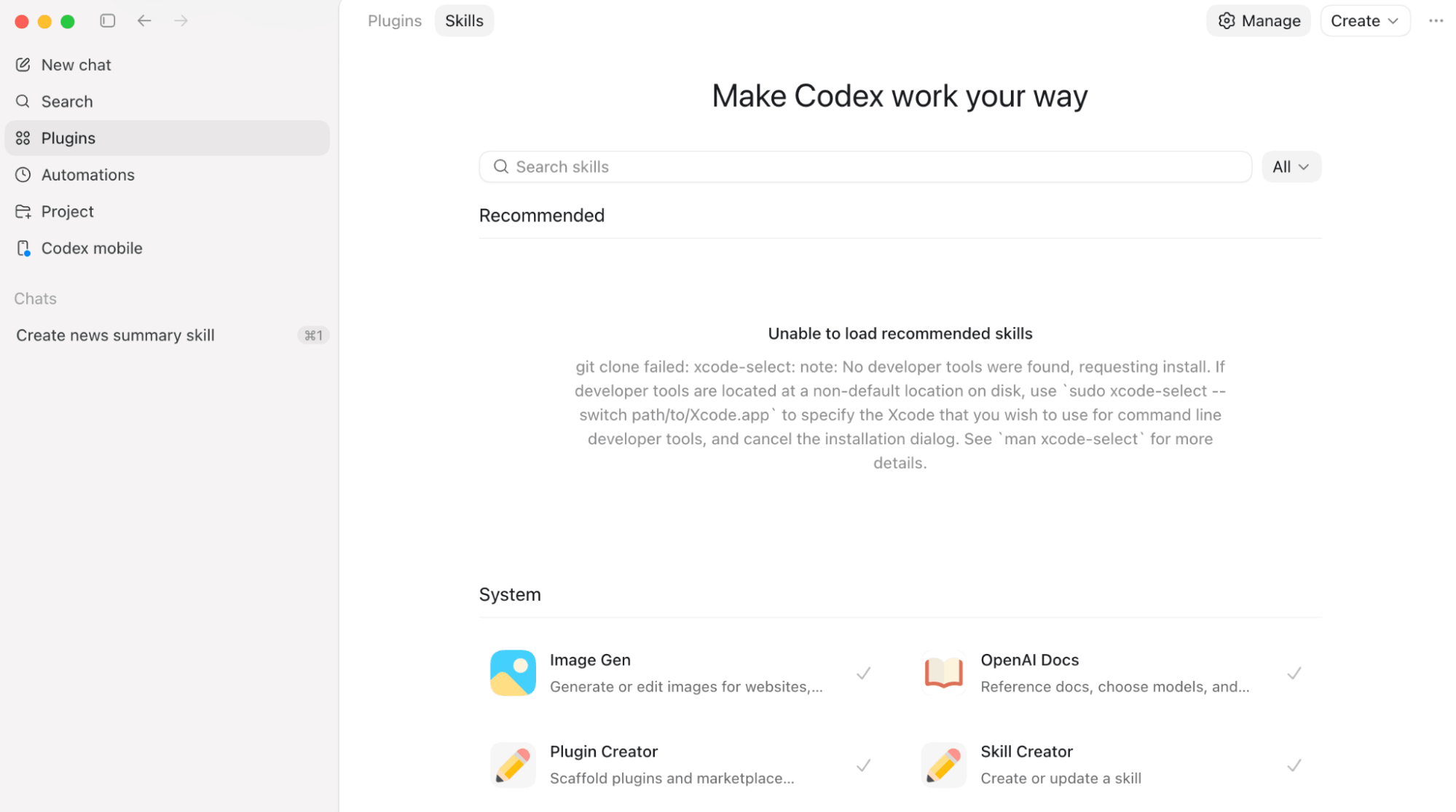
The true power of Codex lies in its ability to standardize workflows through "Skills" and "Plugins."
The Role of Skills
A "Skill" is essentially a codified set of instructions that teaches Codex how to perform a specific task. Rather than asking an AI to "write a blog post" every morning—resulting in inconsistent brand voice—a manager can build a "Brand Voice Skill." Once established, this skill is deployed across the organization. Whenever a team member generates a document, they simply invoke the skill, and the output is automatically aligned with the company’s stylistic and strategic requirements.
The Power of Plugins
Plugins bridge the gap between Codex and the outside world. The most impactful is the Chrome Plugin, which allows the agent to control your web browser directly. It can click buttons, fill out forms, and navigate legacy software that lacks a formal API.

Other plugins, such as "Computer Use," allow for deep desktop integration, enabling the agent to open applications, review documents, and send summaries to messaging apps like iMessage or Slack. For example, a morning routine might involve an agent waking up at 6:30 AM, checking Notion for the day’s agenda, and sending a concise briefing to the user’s mobile device.
Automations, Goals, and Heartbeats
Codex moves beyond simple chat through three core operational features: Goals, Automations, and Heartbeats.
- The /goal Command: By typing
/goalfollowed by a specific instruction, you initiate an autonomous workflow. Codex will work for hours, navigating obstacles until the task is complete. The specificity of the prompt is paramount; for instance, "Monitor LinkedIn brand mentions every four hours" provides the necessary boundaries for the agent to function effectively. - Thread-Based Automations: These are ideal for discrete tasks, such as generating a weekly report. Each run is recorded as a separate thread, providing a clean audit trail.
- Heartbeat Automations: These are the gold standard for long-term, iterative tasks. A Heartbeat allows Codex to retain context across sessions. It periodically "wakes up," checks the status of a project, and continues from where it left off, making it perfect for monitoring long-running research or managing ongoing communication tasks.
Real-World Applications: Case Studies
The practical implications of these features are best illustrated through actual business use cases.
Case Study: Invoice Reconciliation
A construction firm was previously bogged down by a manual reconciliation process that occupied two to three full days of staff time every month. By transitioning to a Codex-based system, the process was fully automated.
- The Setup: Invoices are dropped into vendor-specific folders.
- The Execution: A Sunday night automation spawns five subagents—one for each vendor folder.
- The Result: The agents reconcile the invoices against a master spreadsheet simultaneously. By Monday morning, the master report is ready. The entire process has been reduced from days to under 20 minutes.
Case Study: Field Log Management
Foremen at the same firm were spending nearly ten minutes per log navigating a slow-loading, legacy project management system. By using a three-subagent Chrome Plugin workflow, the system now navigates the site, exports the logs, performs the necessary calculations, and updates the reference database automatically overnight.
Strategic Implications for Modern Business
The rise of Codex signals a fundamental shift in the labor economy of the digital office. For decades, the "digital divide" in business was defined by one’s ability to write code. As we move toward a natural-language-driven automation model, that divide is being replaced by a "strategic divide."
The competitive advantage no longer belongs to the firm with the best developers, but to the firm with the best process architects—those capable of defining clear goals and orchestrating agents to achieve them.
Official Responses and Future Outlook
OpenAI has framed the rollout of Codex as a significant step toward "agentic AI." While the current iteration focuses on desktop and file-system integration, the industry expects future updates to include more robust, enterprise-grade governance tools, allowing IT departments to manage agent permissions at scale.

However, the rapid adoption of these tools brings a responsibility. As businesses hand over more control to autonomous agents, the need for rigorous auditing and human-in-the-loop validation increases. Companies that implement these tools successfully are not just automating tasks; they are rethinking the structure of their organizations to allow humans to focus on high-level decision-making while agents manage the high-volume, low-complexity labor.
Conclusion
The transition to Codex is not merely an upgrade in software; it is an upgrade in operational philosophy. By moving away from the manual execution of repetitive tasks, businesses can reclaim the time and mental energy required for innovation. Whether it is through the deployment of custom skills, the strategic use of Heartbeat-based automations, or the integration of legacy tools via browser-based agents, Codex provides a pathway to a more efficient, proactive, and resilient business model.
For those ready to embrace the future, the starting point is simple: identify the most repetitive, time-consuming process in your daily workflow and start building your first agent today. The future of business is not just about having the right data; it is about having the right agents to act on it.