The integration of Artificial Intelligence (AI) into the WordPress ecosystem is no longer a futuristic speculation—it is a present-day operational reality. As agencies grapple with the rapid evolution of large language models (LLMs) and autonomous agents, the challenge has shifted from "if" to "how" to integrate these tools effectively without compromising security, quality, or the foundational spirit of the WordPress community.
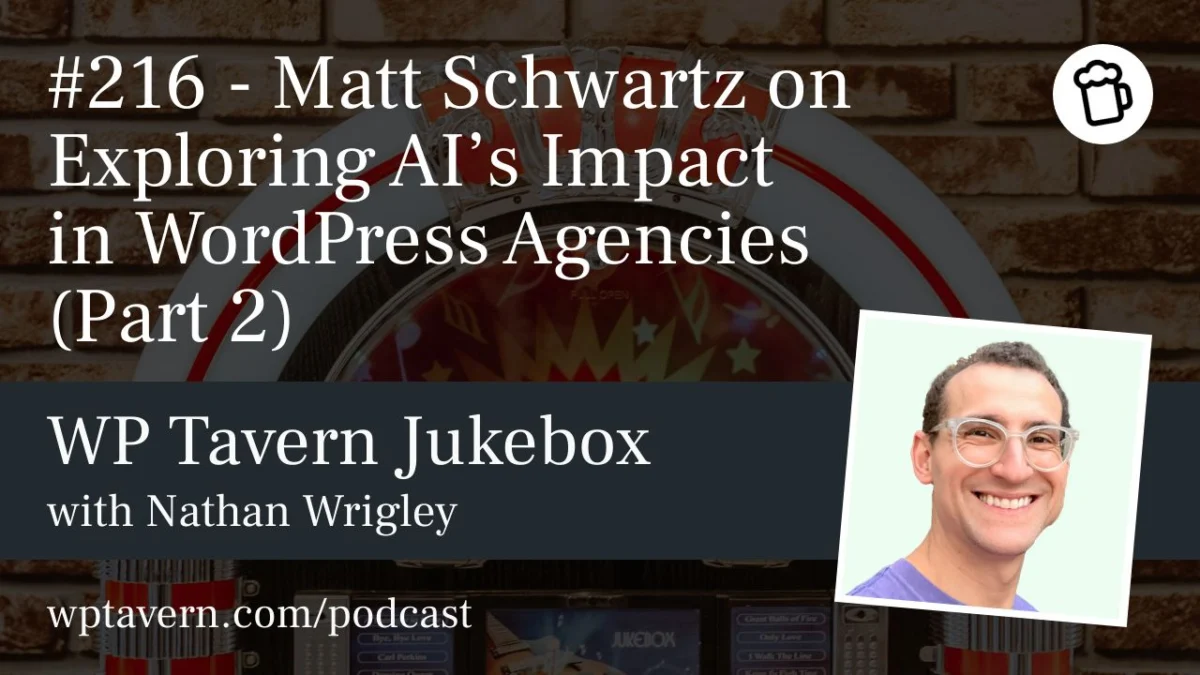
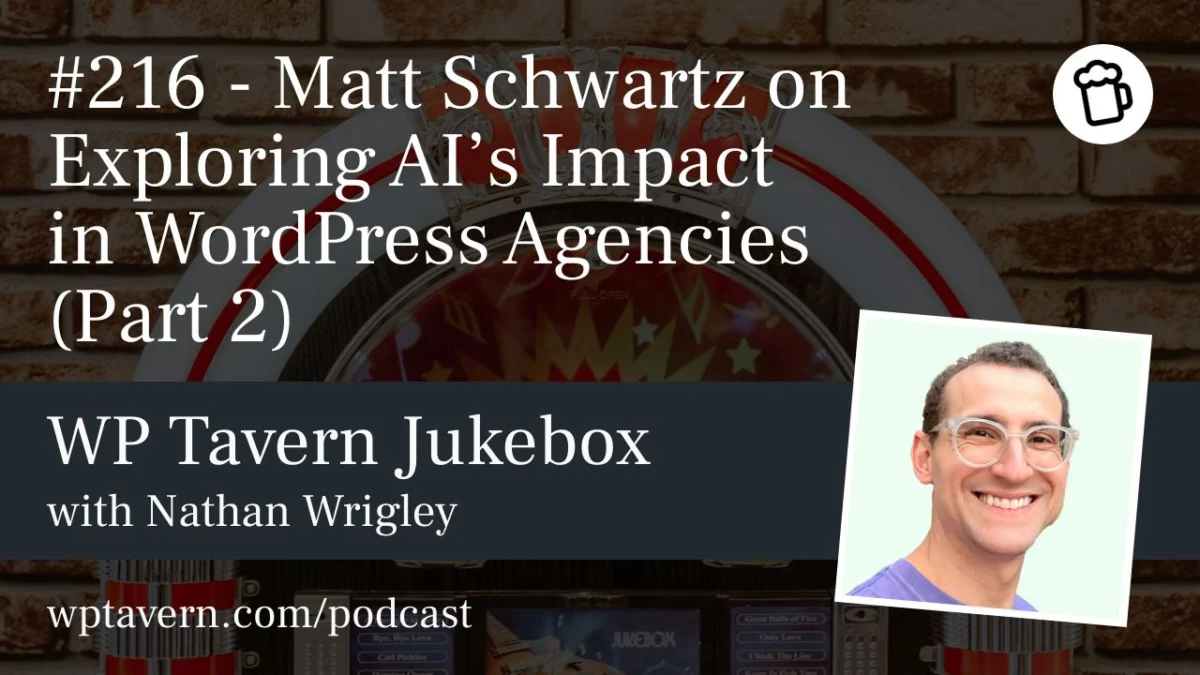
In a comprehensive two-part series on the WP Tavern Jukebox podcast, Nathan Wrigley and agency owner Matt Schwartz conducted an exhaustive analysis of AI adoption. The following report synthesizes their expert insights, detailing the strategies, risks, and long-term implications for the WordPress agency landscape.
The Strategic Imperative: Giving AI Access to the "Agency Brain"
For many agencies, the initial foray into AI is often chaotic, characterized by fragmented, ad-hoc usage. To transition from novelty to utility, agencies are beginning to treat AI as a central repository for institutional knowledge.
Connecting the Silos
The most effective strategy for immediate operational gain is linking AI chatbots directly to existing internal documentation, wikis, and project management tools like ClickUp or Asana. By feeding an AI agent an agency’s Standard Operating Procedures (SOPs) and project histories, the tool evolves from a generic assistant into a specialized consultant that understands the agency’s specific workflows.
This approach significantly mitigates the risk of "hallucinations"—the AI’s tendency to invent facts—by grounding the model in verified internal data. When an employee asks the AI about an agency protocol, the system can cross-reference the actual documentation, providing answers accompanied by direct citations or links to the source material.
Technical Infrastructure: The Role of Model Context Protocol (MCP)
As agencies move toward more sophisticated automation, they encounter the complexity of managing API keys and disparate software connections. This is where the Model Context Protocol (MCP) emerges as a potential game-changer.
Simplifying the Bridge
MCP is an open-source standard designed to securely connect AI agents to external systems. Instead of forcing every team member to manage individual API connections to WordPress sites, help desks, or CRMs, an agency can build a centralized MCP "bridge."
- Security: By acting as a secure proxy, the MCP allows employees to query systems without needing direct access to sensitive credentials or administrative keys.
- Efficiency: It streamlines the interaction between the AI and the company’s tech stack, ensuring that the model has the appropriate "guardrails" to prevent unauthorized actions—such as accidentally deleting a production database or misconfiguring a live site.
While this remains an advanced implementation, the emergence of SaaS providers looking to commoditize MCP creation suggests that this will soon become a standard operational requirement for agencies aiming to scale their AI capabilities securely.
Vibe-Coding and the Rise of Disposable Tools
One of the most provocative shifts in agency culture is the emergence of "vibe-coded" internal tools—applications built rapidly using AI assistance.
The Low-Risk Internal Advantage
Agencies are increasingly using AI to write custom code for internal reporting, financial dashboards, and time-tracking analysis. Because these tools are internal and non-public-facing, the risk profile is lower. If a dashboard breaks, the agency can fix it without affecting client deliverables.
However, a critical distinction must be drawn between internal utility tools and client-facing infrastructure. The experts warn against using AI to replace mission-critical SaaS products (like site management dashboards) purely to save on subscription costs. The "maintenance debt" created by an AI-generated tool often far outweighs the monthly fee of a professional, vetted service.
Quality Assurance: Automating the Binary, Humanizing the Complex
Quality Assurance (QA) remains the most labor-intensive aspect of agency operations. AI, however, excels at binary verification—the "yes/no" checklist items that often consume hours of manual labor during a site launch.
The Hybrid QA Model
Agencies are successfully using AI to automate:
- Launch Checklists: Ensuring no-index tags are off, forms are submitting correctly, and broken links are absent.
- Process Teaching: Using "Claude Skills" or similar agentic features to teach the AI a specific, repeatable launch process.
The consensus is clear: AI should handle the monotonous, repetitive verification tasks, thereby freeing up human engineers to focus on deeper, architectural reviews that require nuanced judgment. The human-in-the-loop remains the final arbiter of quality, particularly for tasks where the cost of failure is high.
The Impact on the Plugin Market and Community Spirit
Perhaps the most significant long-term concern is the potential erosion of the WordPress ecosystem’s collaborative foundation.
The "Disposable" Plugin Effect
The ease with which AI can generate small, functional code snippets is already impacting the plugin market. Sales for utility-based, single-function plugins are declining as users opt to generate their own solutions. While this democratizes development, it poses two threats:
- Economic Sustainability: Smaller plugin developers, who often act as the backbone of the community, are finding it harder to justify the maintenance of their products.
- Community Attrition: The "WordPress spirit"—the networking, events, and shared learning that result from plugin development and open-source contribution—is at risk if the barrier to entry (and the incentive to share) is diminished by AI-generated "disposable" code.
Risks, Cautions, and the Future of Agency Economics
The path to AI-driven agency growth is not without significant pitfalls.
Data Security and Privacy
Agencies hold vast amounts of sensitive client data. A recurring, often overlooked risk is the accidental leakage of this information into public AI training sets. Agencies must adopt a "zero-trust" approach to what they input into chat interfaces, treating all conversational data as potentially accessible to the model providers.
The Cost of Over-Dependence
Agencies are currently enjoying the benefits of heavily subsidized AI tools. As these companies shift their business models to turn a profit, costs will inevitably rise. A strategic agency must:
- Maintain the ability to function without total reliance on a single AI vendor.
- Build independent monitoring and logging systems to ensure they are not tethered to a model that could hike prices tenfold overnight.
The Evolving Workforce
The role of the agency employee is shifting from "executor" to "manager of AI." While this reduces the need for large teams of junior developers focused solely on execution, it increases the need for high-level strategists who can audit AI outputs and maintain complex architectures.
Conclusion: A Marathon, Not a Sprint
The integration of AI into WordPress agencies is a long-term strategic marathon. The most successful agencies will be those that embrace these tools with "eyes wide open," prioritizing security, maintaining a human-centric approach to quality assurance, and staying committed to the community that makes WordPress unique.
As the industry moves toward 2026, the competitive advantage will not belong to the agency that uses the most AI, but to the agency that best understands how to leverage AI to deliver deeper, more strategic value to their clients while maintaining the stability and reliability that the WordPress brand was built upon.