The rapid emergence of artificial intelligence has left many in the digital agency space feeling overwhelmed by fragmented advice, over-promised capabilities, and a constant, dizzying pace of change. However, for agency owners, the conversation is shifting away from simple content generation and toward a more profound transformation: the integration of AI into the very fabric of agency operations, workflows, and client value propositions.
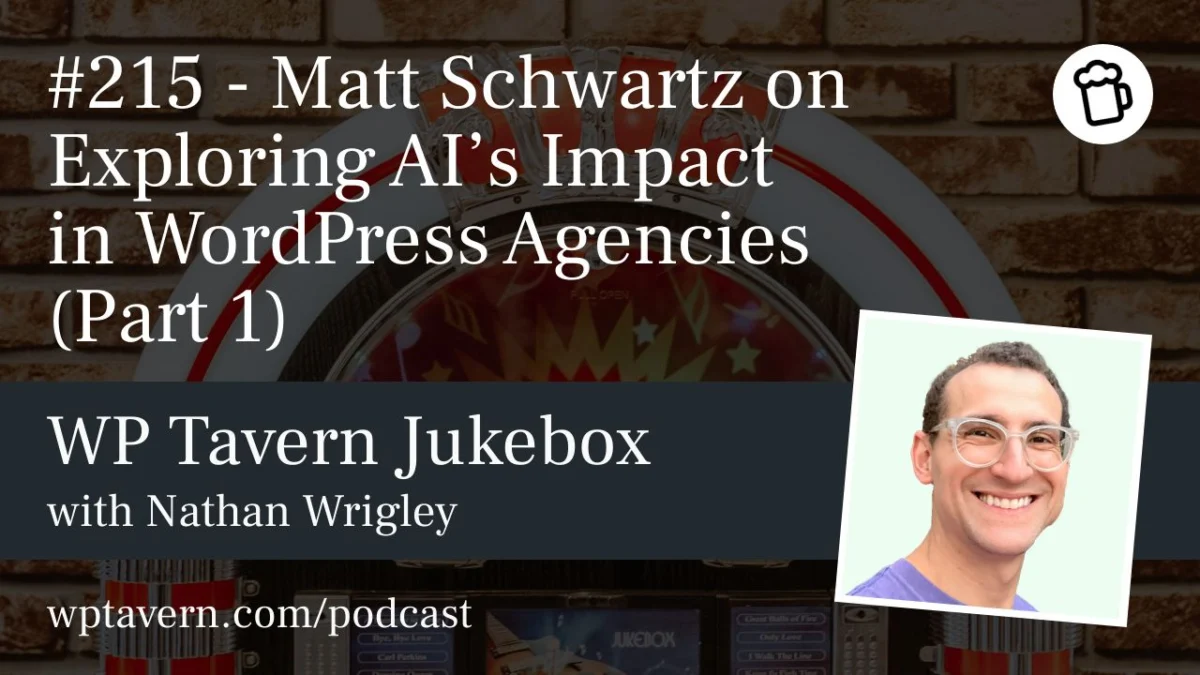
In a recent episode of the Jukebox podcast from WP Tavern, host Nathan Wrigley sat down with Matt Schwartz, founder of the Atlanta-based WordPress and WooCommerce agency Inspry. Schwartz, who has been operating in the WordPress ecosystem since 2011, offers a refreshing, grounded perspective on how agencies can move past the "AI fatigue" to find meaningful, sustainable ways to leverage these tools to enhance internal processes and deliver superior client results.
The Evolution of the Web Agency: From Stumbling to Strategy
Matt Schwartz’s journey into the agency world is a classic narrative of the early digital age. Like many of his peers, his entry into web design was not a calculated career move but a childhood obsession with HTML tables and early content management systems.
"I stumbled into it when I was a kid, but I definitely chose to stay in it after that," Schwartz reflects. After graduating with a degree in Information Systems, he eschewed the traditional consulting route, instead doubling down on the hands-on craft of building websites.
For many freelancers and small agency owners, the growth process is organic and often chaotic. You aren’t handed a set of Standard Operating Procedures (SOPs); you write them yourself, often through trial and error. This reality is central to why AI is proving to be such a disruptive force. For years, agencies operated on incremental improvements. Today, that model has been shattered. The shift from manual, bespoke processes to automated, AI-augmented workflows is no longer an option—it is a necessity for survival in a market where "execution" is increasingly treated as a commodity.
The "AI Vision Document": Setting Guardrails for Growth
One of the most actionable insights Schwartz shares is the concept of an "AI Vision Document." Rather than haphazardly implementing tools every time a new model drops, he advocates for a methodical, top-down approach to AI adoption.
Why You Need a Vision
An AI Vision Document serves as a strategic roadmap for your agency. It forces owners to audit their current processes—from sales and proposal writing to debugging and support—and categorize them based on where AI can provide genuine value versus where human judgment is non-negotiable.
The Role of Pattern Recognition
Schwartz suggests using AI to analyze internal data. By connecting AI models to time-tracking software (like Everhour) or project management tools, agencies can identify bottlenecks. "AI is pretty good at pattern recognition," Schwartz notes. "If you need a high-level idea, it can help you see who is working on what, what tasks are taking the longest, and where you might actually benefit from automation."
Establishing Ethical Guardrails
Crucially, the vision document isn’t just about what can be done; it’s about what should be done. It sets the ethical guidelines for when a human must remain in the loop, ensuring that the agency maintains its reputation and protects its clients from the risks of "hallucinations" or unchecked automated code.
Redefining Value: AI as a New Core Service Offering
As brochure websites become easier to produce, the value of simple execution continues to drop. To remain profitable, agencies must pivot. Schwartz argues that AI provides a unique opportunity to transition from "website builder" to "business process consultant."
Moving Beyond the "Brochure Site"
The traditional $5,000 brochure site is increasingly difficult to sell as clients become aware that AI can produce similar results in a fraction of the time. However, by leveraging AI to solve complex business problems—such as internal workflow automation or custom data analysis—agencies can command higher fees.
The Power of Automation
By utilizing tools like n8n or Make, agencies can build custom automation sequences for clients. This isn’t just about selling a website; it’s about selling the efficiency that the website enables. "They don’t want to hear the word AI," Schwartz observes. "What they want to hear is: ‘I can fix your business workflow and I can save you thousands of dollars.’"
Operational Efficiency: The Low-Hanging Fruit
For agencies hesitant to jump into deep technical integration, there are several "low-hanging fruit" areas where AI can immediately improve daily operations.
Meeting Summaries and Discovery
The days of manually transcribing meeting notes or spending hours drafting proposals for clients who may never convert are numbered. Modern AI tools can now join meetings, provide accurate transcriptions, identify key stakeholders, and assign action items. This allows agency owners to focus their limited time on the final review and strategic planning rather than administrative grunt work.
Support Workflows
Support is perhaps the most sensitive area of an agency. While many companies are rushing to implement customer-facing chatbots, Schwartz warns that this is a "fraught" area. The goal, he suggests, should be internal support augmentation. By feeding help tickets into an AI agent that has context regarding the client’s project, previous issues, and error logs, support teams can arrive at a resolution much faster, without subjecting the client to a frustrating, bot-only experience.
Debugging and the Future of WordPress Development
Perhaps the most significant shift is in the realm of technical maintenance. WordPress itself is evolving into a more "AI-ready" platform, positioning itself as the foundational infrastructure for future digital experiences.
The "Scaffolding" Paradigm
Schwartz notes that WordPress is increasingly acting as the backend scaffolding. Developers and site managers are finding that they can communicate with their sites through AI agents rather than manually navigating the WordPress dashboard. Whether it’s tweaking block syntax or debugging PHP errors, AI agents are becoming the primary interface for site management.
The Human-in-the-Loop Requirement
Despite the efficiency gains, the consensus remains clear: human review is mandatory. Schwartz uses a poignant analogy: "You hire a developer, they lie to you twice, you’re probably going to fire them. But with AI, we just keep giving them a second chance." The only way to mitigate the risk of automated errors is to treat AI as an intern—a very fast, very capable intern that requires constant supervision.
Implications for the Future of Agencies
The conversation between Nathan Wrigley and Matt Schwartz highlights a critical juncture for the WordPress industry. The "AI movement" is not a temporary trend; it is a fundamental shift in how digital value is created.
- Commoditization of Execution: The mechanical act of building a website is losing its premium status. Agencies must focus on the strategy, the process, and the specific business outcomes their clients need.
- The Rise of the "Consultant-Agency": The agencies that will thrive are those that use AI to deepen their relationship with the client’s business, helping them automate their own internal operations.
- The Trust Economy: As AI-generated content and code proliferate, the value of "human-verified" work will rise. The ability to guarantee quality, ethics, and security will become a major competitive advantage.
As agencies move forward, the advice is simple: be intentional. Don’t let the fear of being left behind drive you to adopt tools you don’t understand. Instead, build your own vision, set your own guardrails, and focus on the human expertise that AI can augment but never truly replace.
This article is the first of a two-part series. Tune in next week for the conclusion of Matt Schwartz’s insights on the future of the WordPress agency.