In the evolving landscape of WordPress development, a central tension persists: the conflict between the rapid, simplified growth of the Core Gutenberg editor and the rigorous, pixel-perfect requirements of professional digital agencies. While WordPress continues to pivot toward a full-site editing paradigm, many developers feel that the out-of-the-box experience leaves a void that only custom engineering can fill.
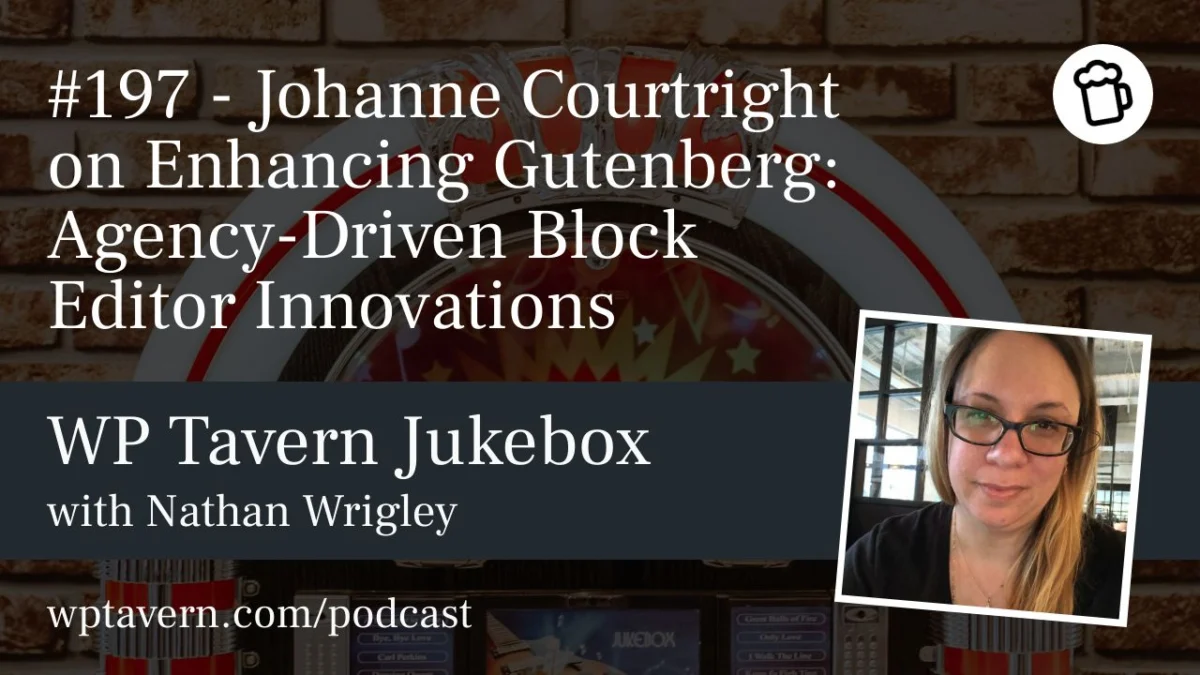
Enter Johanne Courtright, a seasoned developer whose work with the open-source project Groundworx represents a strategic attempt to harmonize modern web standards with the practical realities of high-stakes client work. In a recent episode of the WP Tavern Jukebox podcast, Courtright detailed the challenges of transitioning from the "classic" era of WordPress to a future dominated by React, custom blocks, and the Interactivity API.
The Evolution of a Developer: From Static HTML to React
Courtright’s journey into the WordPress ecosystem began in 2011, a period when the CMS was primarily viewed as a robust alternative to static HTML and Dreamweaver-based workflows. For an agency-focused developer, WordPress was the engine that powered everything from custom queries to complex API integrations.
"I started Gutenberg pretty much around the time it came out," Courtright recalls. "I had a bit of a struggle because I had to learn React for it. I didn’t want to be left behind."
This transition was not merely a change in syntax; it was a shift in philosophy. While many developers remained tethered to legacy tools like Advanced Custom Fields (ACF) to maintain control over their layouts, Courtright made the conscious decision to go "100% Gutenberg." By embracing the Interactivity API and minimizing reliance on jQuery, she sought to align her development practices with the future direction of the WordPress Core project.
Filling the Void: The Philosophy of Groundworx
The Groundworx project serves as a bridge between the "good enough" baseline of WordPress Core and the specialized requirements of agency-grade websites. According to Courtright, while Core WordPress is excellent for beginners, it often falls short for professionals who demand precise control over breakpoints, responsive behavior, and design system consistency.
The Problem with "Core" Limitations
For agencies, the primary objective is delivering "pixel-perfect" designs. However, the native block editor lacks granular control over responsive design—a feature set that Courtright argues is essential for modern web standards.
Key areas of concern include:
- Breakpoint Management: The ability to define specific behaviors for tablets and mobile devices beyond what is currently offered.
- Design Tokens: A more robust implementation of color palettes and typography scales that can be managed globally via
theme.json. - Component Flexibility: The need for blocks that can adapt their structure (e.g., a tab interface that gracefully degrades into an accordion on smaller viewports).
Groundworx addresses these gaps by extending native blocks rather than replacing them entirely. By keeping the foundation native, Courtright ensures that her enhancements do not create unnecessary bloat or conflict with future Core updates.
Chronology of the Gutenberg Shift
The WordPress project has seen a long, sometimes turbulent transition from classic themes to Full Site Editing (FSE). While the roadmap initially suggested a swift move toward block-based themes, the reality has been more nuanced.
- 2018: The introduction of the Gutenberg editor, causing significant disruption to established developer workflows.
- 2021–2022: The emergence of block-based themes and the promise of a truly visual site-building experience.
- 2023–2025: A period of "limbo" where developers like Courtright have stepped in to build modular systems that allow for the flexibility agencies require.
Courtright notes that the "80/20 rule" is the primary driver behind Core development—if a feature is needed by 80% of users, it belongs in Core. The remaining 20% of functionality, which includes the complex layouts and specific responsive needs of agencies, is precisely where the plugin ecosystem must thrive.
Supporting Data: Enhancing the User Experience
The Groundworx suite introduces several sophisticated features designed to reduce the friction of client work. These include:
- Stack Reversal: A utility to flip elements (like images and text) for responsive layout management.
- Full-Height Sticky Groups: Advanced container settings that allow for persistent design elements.
- Responsive Headings: Multi-breakpoint typography settings that prevent font size issues across different screen sizes.
- The Interactivity API: Leveraging modern WordPress infrastructure to create highly performant, dynamic navigation menus and interactive components.
"My goal is to set up enough blocks and provide a theme.json that I want to share," Courtright explains. "I’m planning to release that for free because there’s a lot to be done, and providing documentation is the real challenge."
The Ecosystem Struggle: Discovery and Visibility
A significant portion of the discussion centered on the current state of the WordPress Plugin Directory. Courtright argues that the current discovery mechanisms are fundamentally flawed.
"It’s not usable at the moment. It doesn’t leave room for new development, new plugins to be seen," she notes. She compares the current directory to outdated software repositories, suggesting that WordPress needs a curated, community-driven "App Store" experience similar to Apple’s.
The lack of effective filtering—such as identifying whether a plugin is built with modern standards like React, Gutenberg-native architecture, or if it avoids legacy dependencies like jQuery—makes it difficult for high-quality, modern projects to gain visibility. For developers, this creates a "visibility ceiling" where their work remains hidden behind legacy, keyword-stuffed plugins that have dominated the charts for years.
Implications for the Future of WordPress Businesses
Can a sustainable business model be built on top of blocks alone? This question has sparked intense debate within the WordPress community. While established businesses like Gravity Forms have flourished for years, the block-based economy is still searching for its "killer app" success story.
Courtright’s approach is notably pragmatic. She does not view her work as a "fountain of cash" but as an essential toolkit for her own agency work, which she shares with the wider community. This "dogfooding" method—building a solution because you need it for your own projects—is a hallmark of the most resilient WordPress products.
However, the broader implication is clear: the future of WordPress lies in modularity. By moving away from "all-in-one" themes that lock users into specific design patterns, and toward a system of interchangeable, performant blocks, developers can empower clients to make their own edits without fear of breaking the site.
Conclusion: Embracing the New Paradigm
The transition to a block-first world is, by all accounts, an uphill battle. It requires unlearning years of classic WordPress habits and embracing a complex, React-heavy environment. Yet, for those who take the leap, the payoff is significant.
As Courtright highlights, when clients are properly trained on a well-built Gutenberg system, they are rarely overwhelmed; they are empowered. By providing foundations that are flexible, performant, and agency-focused, projects like Groundworx are helping to ensure that the next generation of WordPress websites is as robust as the community that builds them. The challenge remains for the Core project to improve discovery and for the community to continue pushing the boundaries of what the block editor can achieve.