In the modern C-suite, the traditional path to the corner office—typically paved by finance or operational experience—is undergoing a profound disruption. Today, Chief Marketing Officers (CMOs) are increasingly being labeled the industry’s new "unicorns." Yet, as the business landscape shifts toward brand-led growth and consumer-centric innovation, this transition is proving to be less of a mythical rarity and more of a strategic necessity.
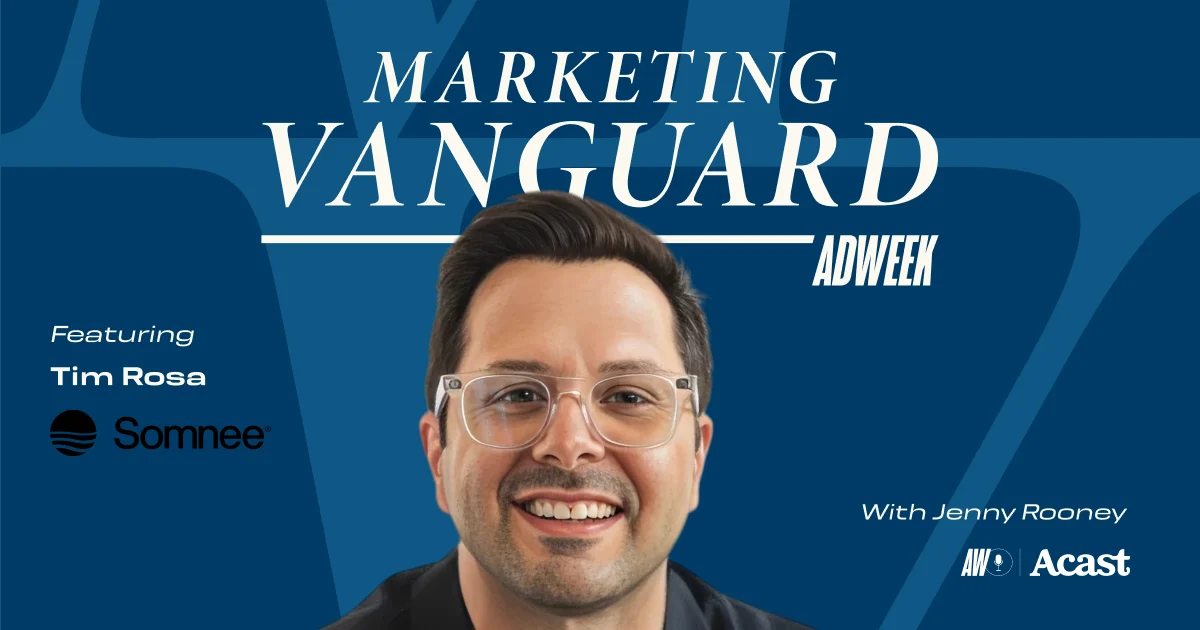
In a recent episode of Marketing Vanguard, host Jenny Rooney sat down with Tim Rosa, the CEO of Somnee, to dissect this evolution. Rosa, a veteran of the tech and wellness sectors, offers a masterclass in how marketing DNA can be the ultimate competitive advantage for a CEO. His trajectory from a seven-year tenure as CMO at Fitbit to his current role leading a clinical-grade sleep technology company provides a roadmap for the next generation of business leaders.
The CMO-to-CEO Pipeline: A New Strategic Paradigm
The skepticism surrounding marketers moving into the CEO seat is rooted in a dated perception of the CMO role as merely "the creative department." However, in the high-stakes world of consumer health and wellness—a massive $585 billion industry—the ability to distill complex, scientific data into a relatable consumer narrative is not just a marketing task; it is an existential business requirement.
Rosa argues that when a CMO makes the leap to CEO, they bring an "operational acumen" that is often overlooked. It is the ability to bridge the gap between technical complexity and consumer trust. At Somnee, this skill set has allowed the company to disrupt a stagnant sleep-tech market by positioning their product not as a gadget, but as a lifestyle-integrated clinical necessity.
The Chronology of Transformation: From Fitbit to Somnee
To understand the shift, one must look at the foundation of Rosa’s career. His time at Fitbit was formative, occurring during the meteoric rise of the wearable health movement. During those seven years, he learned that brand building is not a superficial layer applied at the end of the product development cycle; it is the blueprint upon which the product is built.
- The Agency Foundation: Rosa’s early days in agency work and sports marketing taught him the mechanics of "narrative architecture."
- The Fitbit Era: As CMO, he navigated the transition of wearables from niche fitness tools to essential health-monitoring devices. This required translating granular heart-rate data into health insights that the average person could understand—and value.
- The CEO Pivot: Moving to Somnee, Rosa applied these lessons to neuroscience. He realized that for a company to scale in the health sector, the "story" and the "science" must be perfectly synchronized.
Supporting Data: The "Brand-as-Strategy" Model
The central thesis of Rosa’s leadership style is the dissolution of the wall between brand and operations. For many organizations, marketing is a downstream function: the engineers build, the finance team budgets, and the marketing team "sells" the finished product. Rosa flips this model.
Brand as an Operational Lever
At Somnee, the brand informs every decision, from supply chain sourcing to hardware ergonomics. If the brand promise is "clinical-grade sleep optimization," every component—down to the material of the headband—must communicate that promise. This is a shift from marketing as "promotion" to marketing as "operational strategy."
The Multi-Channel Media Experiment
One of the most compelling insights shared by Rosa is his rejection of the "walled garden" approach to digital advertising. While many companies pour their entire budgets into Google and Meta, driving up Customer Acquisition Costs (CAC) to unsustainable levels, Rosa employs a diversified strategy. By running parallel experiments across Connected TV (CTV), radio, print magazines, and streaming platforms, he is effectively side-stepping the seasonal bidding wars that plague digital-only brands.
- The 10-15% Rule: Rosa suggests that CMOs at larger, more established companies should dedicate 10–15% of their media budget to "continuous testing" outside of their primary channels. This allows for agility and de-risks the brand from sudden changes in algorithmic environments.
The Critical Guardrail: AI and Clinical Rigor
Perhaps the most stark warning Rosa offers concerns the current gold rush toward Artificial Intelligence. As a leader in a tech-driven wellness company, he views the unchecked implementation of AI as a major brand liability.
"If your underlying datasets are inaccurate, no algorithm sophistication will save you," Rosa notes. For a CMO—or a CEO—the danger of "AI-washing" is real. When marketing claims about AI capabilities fail to manifest in real-world performance, the long-term damage to brand equity is often irreparable.
The CMO’s Responsibility
Rosa advocates for a "validation-first" approach. Before any marketing message regarding AI capabilities is approved, the CMO must insist on third-party validation of the data infrastructure. This is not just a technical requirement; it is a brand-protection strategy. In an era of skepticism, transparency regarding data provenance is the new currency of trust.
The CEO’s Toolkit: Self-Awareness and Compensatory Talent
Perhaps the most profound takeaway for marketing leaders aspiring to the C-suite is the necessity of radical self-awareness. Rosa points out that many CMOs make the mistake of believing they must become experts in finance, law, and supply chain management overnight to succeed as CEO.
This, he argues, is a fallacy.
Building the "Compensatory Team"
The CEO role is not about being the smartest person in the room on every technical detail; it is about being the ultimate decision-maker. Success, therefore, lies in the ability to identify one’s own weaknesses and "hire over" them.
- The Shift in Question: Instead of asking, "Am I ready to run everything?" the prospective CEO should ask, "Can I build a team that compensates for my gaps?"
- The CMO Advantage: Because CMOs are accustomed to cross-functional collaboration—often acting as the glue between product, sales, and customer service—they are uniquely qualified to lead this collaborative style of executive management.
Implications for the Future of Marketing Leadership
The transition of the CMO to the CEO chair is not just a career trend; it is a response to the "commoditization of everything." In a market where product features are easily copied, the only defensible moat is the brand.
For aspiring leaders, the implications are clear:
- Stop Siloing Marketing: Start viewing your role through the lens of operations and P&L. If you cannot explain how your marketing strategy impacts the supply chain or the product roadmap, you are not ready for the CEO role.
- Demand Data Rigor: In the age of AI, the CMO is the primary guardian of the brand’s truth. Do not outsource your understanding of the technology to the IT department.
- Diversify Your Playbook: Stop relying on the same digital channels as your competitors. If you want to scale, you must master the art of omnichannel experimentation.
Conclusion: The "Magical" Journey
Is the journey from CMO to CEO as magical as it sounds? Perhaps not "magical" in the sense of an easy path, but certainly transformative. It is a transition that requires shedding the skin of the "promoter" to become the architect of the entire organization.
As Tim Rosa’s success with Somnee demonstrates, the modern CEO needs the heart of a storyteller and the mind of an operator. For those CMOs currently in the trenches of brand management, the path to the top is wide open—provided they are willing to look beyond the marketing department and embrace the fundamental complexities of the business they seek to lead.
Join the industry’s top marketers at Brandweek 2026 for more insights on the future of brand-led leadership. Get your ticket here.