In an era defined by information overload, the digital inbox has become a paradoxical space: it is both a vital communication hub and a digital graveyard for thousands of forgotten newsletters, expired coupons, and obsolete notifications. Recognizing the burden this places on its millions of users, Czech internet giant Seznam has introduced a landmark feature in its email service. As of June 2026, Seznam Email now allows users to implement automated, age-based deletion rules for specific folders, effectively handing the power of "digital housekeeping" back to the inbox owner.
This development marks a significant shift in how email providers view mailbox management. Rather than merely acting as a repository for all incoming data, the Seznam mailbox is evolving into an active, managed ecosystem. While the feature itself is a practical tool for decluttering, it sits at the center of a larger, industry-wide conversation regarding the lifecycle of electronic communication.
The Mechanics of Automatic Cleanup: How it Works
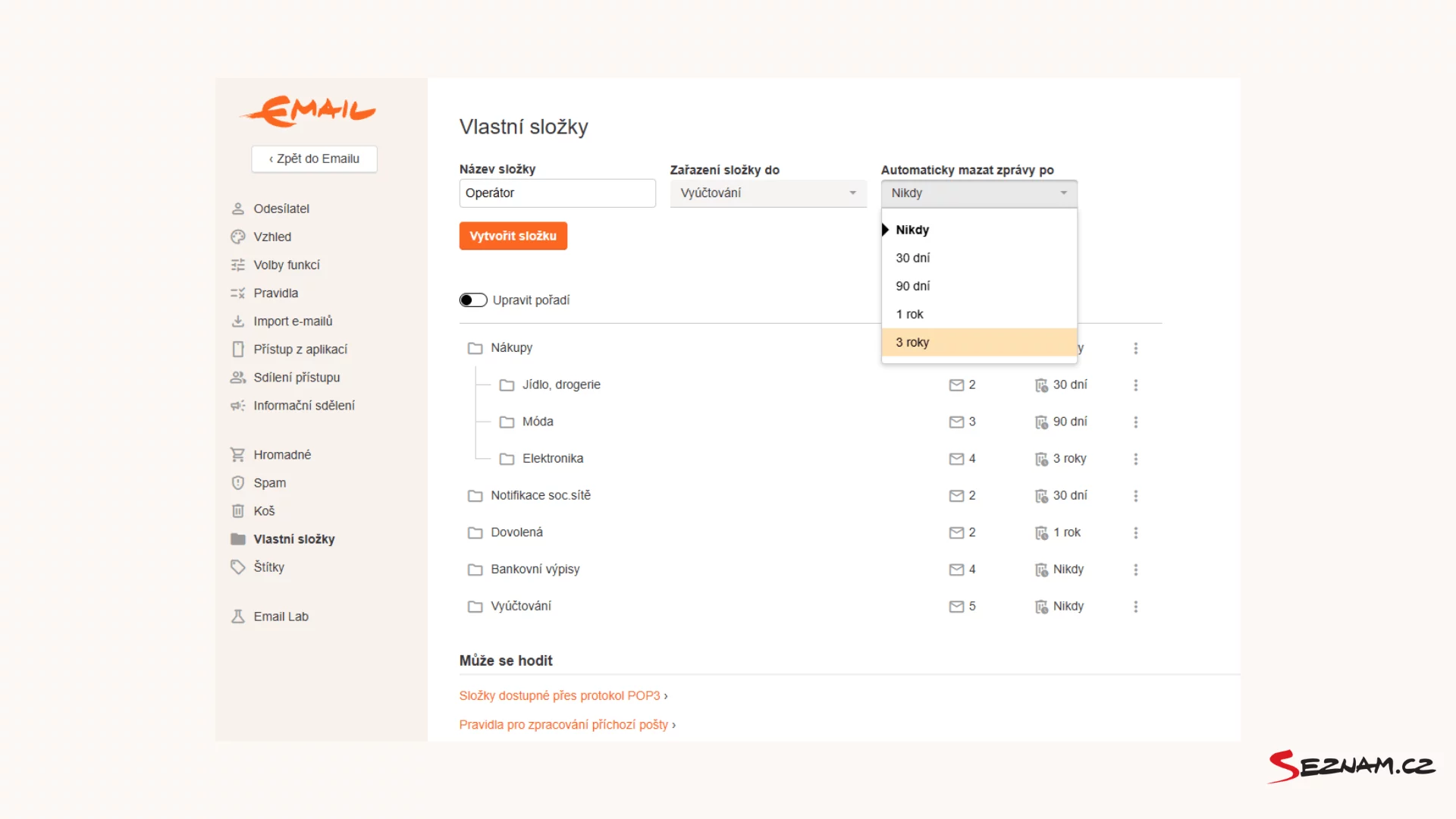
The new functionality introduced by Seznam is designed with simplicity and user agency at its core. Users are not subjected to a "one size fits all" deletion policy; instead, they are granted granular control over their data retention.
Within the account settings, users can designate specific folders—such as "Promotions," "Social," or "Newsletters"—and assign a retention duration. Once a message reaches the age threshold defined by the user (e.g., 30, 60, or 90 days), the system triggers an automatic removal. This eliminates the tedious, manual process of scrubbing an inbox of thousands of messages that have long since lost their utility.
Seznam’s implementation is strictly user-controlled. It does not automatically purge mail from the primary inbox unless explicitly instructed by the user, ensuring that vital, long-term correspondence remains safe. By automating the cleanup of transient data, Seznam is effectively helping its users combat the psychological and practical weight of "inbox zero" fatigue.
A Chronology of Inbox Management
To understand the significance of this update, one must look at the evolution of email storage.
- The Early 2000s (The Era of Scarcity): During the early days of webmail, storage was at a premium. Users were forced to delete emails frequently simply because they lacked the space to store them.
- The Mid-2000s to 2010s (The Era of Abundance): With the introduction of services like Gmail, which offered "gigabytes" of storage, the pressure to delete evaporated. This led to the "save everything" phenomenon. Users stopped deleting entirely, leading to the massive, cluttered inboxes that define the current era.
- 2020–2025 (The Era of Digital Minimalism): As users became more conscious of their digital footprints and the environmental impact of data storage, the demand for "decluttering" tools grew. Privacy concerns and the desire for efficiency prompted a return to intentional data management.
- June 2026 (The Seznam Milestone): Seznam formalizes this shift by integrating automated, policy-based retention directly into the consumer email experience.
The Context of Global Email Standards: The IETF Connection
While Seznam is focusing on the user’s ability to clean their own house, a parallel movement is occurring at the institutional level. The Internet Engineering Task Force (IETF) is currently evaluating a draft that proposes extending the classic "Expires" header to ordinary email traffic.
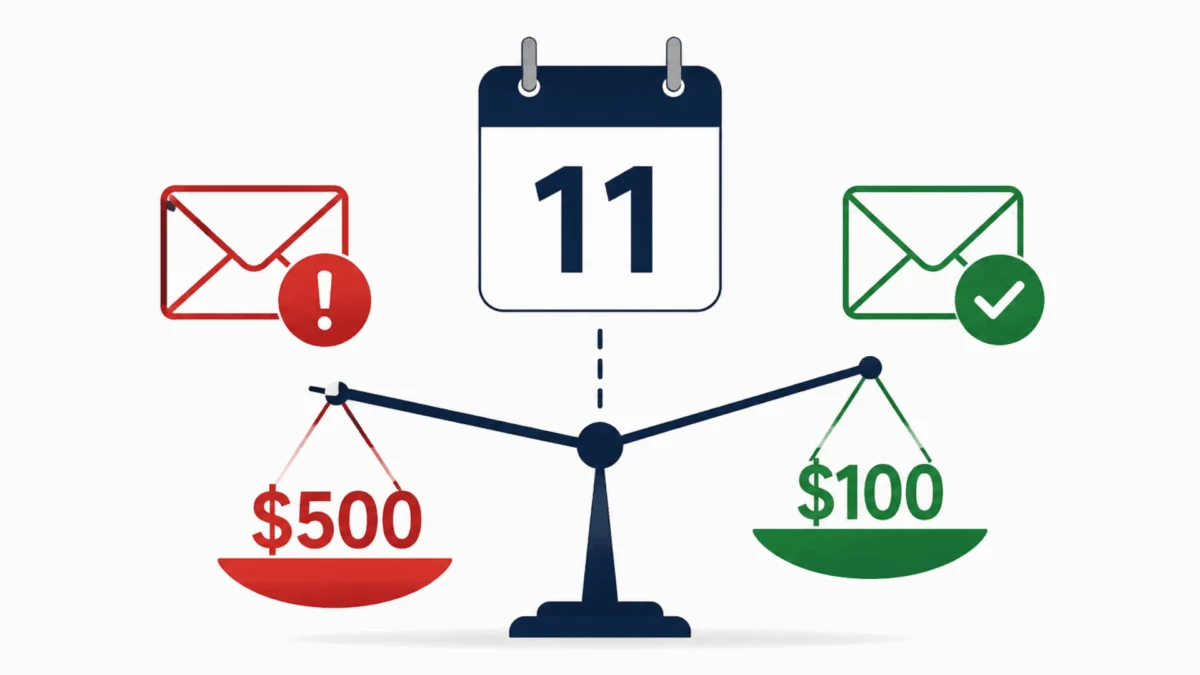
This is not a command for servers to delete mail, but rather a "signal" from the sender. Under this proposal, an organization sending an event invitation or a time-sensitive promotional code could attach an expiration timestamp. The receiving mailbox provider could then use this signal to de-emphasize, hide, or—if the user has enabled automatic cleanup—flag the message for deletion.
This synergy between Seznam’s user-driven policies and the IETF’s sender-driven standards suggests a future where the inbox is a dynamic, self-purging environment. It is a fundamental shift in the philosophy of email: moving from a permanent archive to a transitory communication medium.
Implications for Email Senders and Marketers
For the marketing and communications industry, Seznam’s announcement acts as a clear signal that the "long tail" of email engagement is shrinking. Traditionally, marketers have benefited from the fact that an email sent in January might still be opened in August.
However, as users adopt automated deletion policies, the window for engagement is narrowing. If a newsletter or a promotional offer is not opened within the user’s designated retention period, it will vanish. This has several implications:
- Increased Urgency: Marketers will likely pivot toward more time-sensitive, high-impact content that encourages immediate interaction.
- Performance Metrics: The "long-tail" metrics—where clicks continue to trickle in weeks after a campaign—will inevitably decline. This will force analysts to redefine what constitutes a "successful" email campaign.
- Content Quality: There is a heightened pressure to provide immediate value. If an email is perceived as "clutter" that will be purged by a system rule in 30 days, the user is more likely to delete it manually or, worse, unsubscribe.
Privacy, Security, and Data Hygiene
From a security standpoint, the move toward automated retention is a net positive. Storing thousands of old, forgotten emails is a latent risk; if a user’s account is compromised, the attacker gains access to years of personal history. By facilitating regular "purging," Seznam is effectively encouraging better data hygiene.
Furthermore, there is a growing global movement regarding the environmental impact of data centers. Storing billions of emails that will never be read again requires massive amounts of electricity and cooling. While the impact of one user’s inbox is negligible, the collective impact of millions of users automating the deletion of redundant data is a step toward a more sustainable digital infrastructure.
Official Stance and User Reception
Seznam has maintained a measured, user-centric tone regarding the rollout. In their announcement, they emphasized that the feature was a direct response to user feedback. "Our users told us that they were overwhelmed by the sheer volume of newsletters and notifications that they no longer needed, yet they lacked the time to manage them manually," a spokesperson for the platform noted.
The initial reception among the tech community has been largely positive, with privacy advocates praising the platform for prioritizing the user’s control over their personal data. Critics, however, have raised questions about whether less tech-savvy users might accidentally delete important receipts or legal documents if they configure their retention rules too aggressively. To mitigate this, Seznam has implemented safety overrides, ensuring that users can easily restore deleted items from a trash folder for a limited period before permanent erasure.
The Future: Toward a Smart Inbox
As we look toward the latter half of the decade, the concept of the "static inbox" is becoming obsolete. The future of email lies in the balance between the user’s desire for control and the sender’s desire for relevance.
Seznam’s new feature is an acknowledgment that the inbox is not merely a storage locker—it is a workspace. By providing the tools to maintain that space, Seznam is setting a precedent that other global providers will likely follow. The days of hoarding digital correspondence are coming to an end. We are entering an age where email is treated as it was perhaps always intended to be: a fluid, temporary, and highly manageable stream of information.
As this trend matures, we can expect to see more sophisticated, AI-driven retention tools. Imagine an inbox that suggests, "You haven’t opened these newsletters in six months—would you like to set a rule to delete them automatically?" This proactive layer of management will be the next frontier in the evolution of digital communication.
Conclusion
Seznam’s decision to allow automatic, folder-based deletion is more than just a software update; it is a cultural statement about our relationship with digital information. By empowering users to define the lifespan of their messages, Seznam is acknowledging that the value of an email is not infinite.
As the industry converges toward the standards being discussed by the IETF and the practical tools deployed by providers like Seznam, the email experience will become faster, safer, and more efficient. For the user, it means a cleaner inbox and less cognitive load. For the sender, it means a new reality where relevance is measured in the here and now, not the distant past. The era of the "unlimited, permanent inbox" is over; the era of the "curated, intentional inbox" has arrived.