In the rapidly evolving landscape of global digital commerce, few infrastructure stories are as compelling as India’s Unified Payments Interface (UPI). Launched in 2016 by the National Payments Corporation of India (NPCI), this government-backed, real-time payment system has fundamentally rewired the way an entire nation handles money. However, a significant disconnect persists: while India has transitioned into a digital-first, near-cashless economy, many foreign ecommerce brands entering the market continue to rely on legacy card-based checkout flows.
For these international players, this mismatch is not merely a technical oversight; it is a critical barrier to entry that suppresses conversion rates and erodes brand trust from day one.
The Chronology: From Demonetization to Global Dominance
To understand the ubiquity of UPI, one must look at the timeline of its adoption. The infrastructure was conceptualized as a way to simplify peer-to-peer and peer-to-merchant payments by creating a single, interoperable layer across India’s fragmented banking sector.
- 2016: The NPCI launches UPI, allowing users to link multiple bank accounts into a single mobile application.
- 2016 (November): The government announces the demonetization of high-denomination currency notes. This sudden liquidity crunch acted as a massive catalyst for digital adoption, forcing consumers to seek alternatives to physical cash.
- 2018–2020: The rise of third-party apps—Google Pay, PhonePe, and Paytm—democratized access. These apps provided intuitive, gamified user interfaces that made digital payments accessible to even the most tech-hesitant demographics.
- 2021–2023: The integration of QR code payments at small-scale roadside vendors, street food stalls, and public transit terminals completed the ecosystem.
- Present Day: UPI now powers approximately 85% of India’s digital transaction volume, processing billions of transactions monthly and serving over 900 million mobile internet users.
The User Experience: A Case Study in Frictionless Commerce
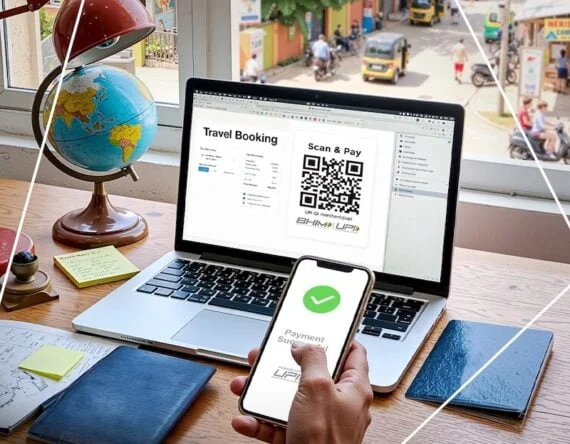
For the average Indian consumer, the physical wallet is rapidly becoming a relic of the past. Consider the experience of a resident in a mid-sized city like Chandigarh. Whether paying for morning groceries, fueling a vehicle, or settling school tuition fees, the process is identical: a quick scan of a QR code or a selection of a "Pay via UPI" button on a smartphone.
When an ecommerce transaction occurs, the user does not need to fumble for a physical debit card, nor do they need to worry about the security risks associated with sharing 16-digit card numbers or CVVs on unfamiliar sites. Instead, they simply enter a secure UPI PIN. The transaction is near-instantaneous, bank-to-bank, and free of cost for the consumer.
For foreign brands, this creates a "trust gap." If a customer arrives at a checkout page that only offers credit card options—a payment method that is still relatively uncommon for everyday small-ticket items in India—the shopper is likely to perceive the site as foreign, cumbersome, or potentially insecure.
Supporting Data: The Cost of Ignoring Local Preferences
The data supporting the necessity of UPI integration is stark. India’s ecommerce market is currently among the top five globally, fueled by a demographic shift toward mobile-first consumption.
- Transaction Volume: UPI processes over 12 billion transactions per month, a figure that continues to grow as the system expands into international corridors.
- The Conversion Trap: Studies consistently show that checkout abandonment rates for sites lacking UPI options are significantly higher than those that offer it. When a customer reaches the final step of a purchase and realizes their primary method of payment is unsupported, the bounce rate spikes.
- Trust Indicators: Because UPI is backed by the Reserve Bank of India (RBI) and the NPCI, it carries an inherent stamp of institutional trust. In a market where digital fraud is a concern for new online shoppers, the presence of the UPI logo acts as a signal that the merchant is legitimate and localized.
Navigating Regulatory and Banking Complexities
The barrier for international merchants is not just technical; it is regulatory. India boasts roughly 130 commercial banks, each operating with distinct UPI configurations and fraud-prevention protocols. For a U.S.-based or European company, navigating these intricacies is a formidable challenge.
Furthermore, the Reserve Bank of India enforces strict compliance regarding data residency and payment processing. Foreign brands that attempt to route payments through international gateways often encounter high failure rates due to:

- Two-Factor Authentication (2FA) hurdles: Indian regulations require stringent 2FA for all online transactions. International gateways that are not optimized for these local mandates frequently trigger transaction failures.
- Lack of Local Integration: Major global gateways like Stripe or PayPal offer robust support for cards, but they often lack the "direct-to-bank" rails that allow for native UPI integration. This is why local payment service providers (PSPs) like Razorpay, PayU, and Cashfree have become the backbone of the Indian ecommerce ecosystem.
Implications for Global Ecommerce Strategy
For multinational companies looking to capture the Indian market, the strategy must pivot from "global-standard" to "local-native."
1. Integration is Non-Negotiable
If you are selling in India, UPI is not an "optional" payment method; it is the primary payment method. Brands that fail to integrate UPI are effectively operating with one hand tied behind their back. This requires moving away from pure-play global payment gateways and partnering with local PSPs that have the necessary licensing to bridge the gap between global accounts and the local banking network.
2. Beyond Payments: The "Buy Now, Pay Later" Ecosystem
The advantage of working with local PSPs extends beyond just UPI. These providers offer sophisticated financial tools that are highly popular in India, such as Buy Now, Pay Later (BNPL) schemes and Equated Monthly Installments (EMI). For high-ticket items, offering a simple monthly installment plan can be the difference between a completed sale and a cart abandonment.
3. Currency and Localization
A frequently overlooked aspect of the Indian checkout experience is currency transparency. Foreign brands often display prices in USD or EUR, relying on the user’s bank to perform the conversion. This is a mistake. Consumers in India are wary of hidden foreign exchange markups and bank conversion fees. Displaying prices in Indian Rupees (INR) and providing a "final cost" at the point of checkout builds significant brand loyalty and reduces friction.
4. Designing for the Mobile Screen
Given that India is a mobile-first country, the entire user journey must be optimized for mobile screens. The checkout flow should be designed for a vertical display, minimizing the need for horizontal scrolling or complex form-filling. When a user clicks "Pay," the browser should seamlessly trigger the UPI app on the phone, allowing the user to complete the payment in two taps without ever leaving the context of the shopping experience.
Conclusion: The Path Forward
The "UPI-first" approach is the new baseline for success in the Indian market. As the country moves toward a more mature digital economy, the tolerance for clunky, card-heavy checkout flows will only decrease.
International brands have a choice: they can continue to view India through the lens of traditional Western payment systems and accept the inevitable loss in market share, or they can embrace the local ecosystem. By leveraging the power of UPI, prioritizing local partnerships, and focusing on the nuances of the Indian consumer experience, global brands can unlock the immense potential of one of the world’s most dynamic and rapidly growing markets.
In the digital age, commerce is about more than just the product—it is about the seamlessness of the transaction. In India, the transaction is synonymous with UPI. Ignoring that reality is a luxury no global brand can afford.