The digital landscape is currently undergoing its most significant transformation since the dawn of the commercial internet. At the center of this shift—navigating the intersection of open-source philosophy, the rise of artificial intelligence, and the intense competition of the SaaS (Software as a Service) market—is WooCommerce. As the engine powering a substantial portion of the world’s online stores, WooCommerce is no longer just a WordPress plugin; it is an evolving ecosystem.
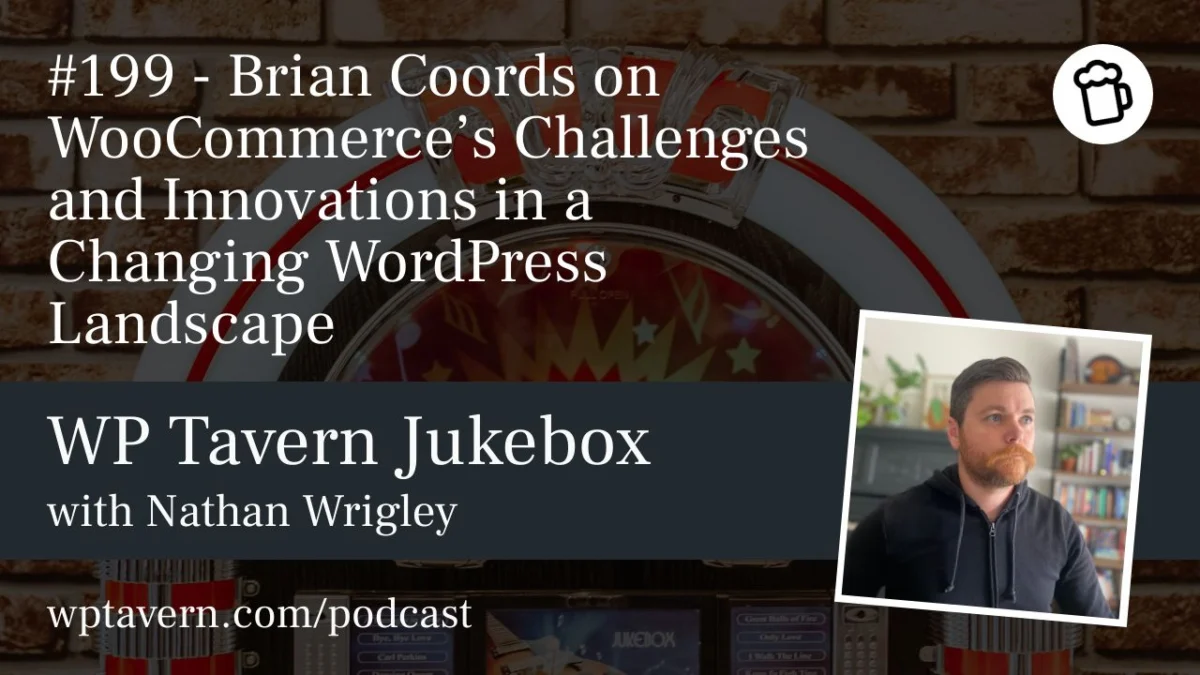
In a recent deep dive on the WP Tavern Jukebox podcast, Nathan Wrigley sat down with Brian Coords, a veteran of the WordPress space and current Developer Advocate at Automattic, to discuss the strategic direction of WooCommerce. Coords, whose career spans from public education to agency leadership, provides a unique perspective on how the platform is scaling to meet the demands of a global, rapidly changing tech environment.
The Strategic Evolution of WooCommerce
A New Identity in a Crowded Market
For years, WooCommerce was viewed primarily as a convenient add-on for WordPress users. However, the last 18 months have marked a deliberate pivot in branding and positioning. Coords notes that the recent massive rebrand—encompassing new visual identities and a sharper, more professional market presence—is intended to move the conversation from "a WordPress plugin" to "a comprehensive e-commerce solution."
This shift is not merely cosmetic. It represents a maturation of the product to compete directly with SaaS giants like Shopify and BigCommerce. By repositioning itself, WooCommerce aims to ensure that when mid-to-large-sized businesses evaluate their e-commerce infrastructure, they perceive WooCommerce as a primary, robust contender, rather than a secondary choice.
Centralization within Automattic
One of the most significant internal changes at Automattic, the parent company of WooCommerce, has been the move toward centralization. Coords explains that historically, various arms of the WordPress ecosystem—including WordPress Core, WordPress.com, and WooCommerce—operated in relative silos.
Under recent strategic realignments, the company is prioritizing consistency. This has led to a more collaborative environment where WooCommerce engineers contribute directly to WordPress Core, ensuring that improvements made for the store-management experience benefit the entire ecosystem. This "one-company" approach is designed to streamline development and reduce the fragmentation that often plagues large-scale open-source projects.
Chronology: From Agency Life to Developer Advocacy
The Journey to Automattic
Brian Coords’ path to his current role was anything but linear. A former high school teacher and nonprofit worker, Coords spent over a decade in the WordPress agency world. This background is critical to his current role as a Developer Advocate. Having lived through the rise of early page builders and the subsequent transition to the block editor, he possesses the "boots on the ground" experience necessary to bridge the gap between internal engineers and the community.
Since joining Automattic roughly a year ago, Coords has navigated the complex, often turbulent internal shifts of the company. His role—which he describes as a bridge between the community and the internal technical teams—is essential in maintaining the feedback loops that keep the open-source project viable.
Supporting the Ecosystem: Data and Community
The Global Reach of WooCommerce
The scope of WooCommerce is truly global. With over 30,000 members in its community Slack channel alone, the platform is used in virtually every jurisdiction, language, and currency. Coords highlights that e-commerce is inherently local; payment gateways, tax regulations, and shipping requirements vary wildly by region.
Unlike SaaS platforms that offer a "one-size-fits-all" solution, WooCommerce succeeds precisely because it allows for the integration of obscure, localized banking and shipping providers that large SaaS companies may not support. This flexibility is the bedrock of its global success, but it also creates a complex support burden.
The Dynamics of Open Source Support
A unique challenge for the WooCommerce team is the lack of a formal financial relationship with a large portion of its user base. Because the core plugin is free, many users operate stores without paying Automattic directly. Despite this, the company provides support, documentation, and development resources to the community.
Coords acknowledges this "Wild West" nature of open source, noting that while it is occasionally messy, the trade-off is the immense innovation driven by community contributions, pull requests, and the diverse ecosystem of third-party extensions.
Official Perspectives on the AI Frontier
The "Slower Pace" Philosophy
A recurring theme in the discussion is the role of pacing. While the tech industry often moves at a breakneck speed, Coords and Wrigley both agree that the deliberate, often slower pace of WordPress development is a strength. By resisting the urge to jump on every passing trend, the project maintains a stable foundation that allows third-party developers to build successful businesses on top of it.
AI: The New Paradigm
The conversation inevitably turned to the "tsunami" of AI. Coords outlines two primary areas where AI is impacting WooCommerce:
- Store Management Efficiency: WooCommerce is currently beta-testing an MCP (Model Context Protocol) server that allows AI models like ChatGPT or Claude to interact directly with a store. This allows owners to perform complex tasks—such as updating product descriptions, changing imagery, or managing sales—using natural language commands.
- Changing Shopping Behaviors: The future of e-commerce may be "invisible." Coords anticipates a world where users interact with AI assistants to fulfill recurring orders or find niche products, potentially bypassing the traditional "checkout" interface entirely.
Implications: The Future Landscape
The Death of Traditional SEO?
As AI assistants begin to synthesize information rather than just providing search results, the traditional model of SEO is being fundamentally challenged. Coords notes that for WooCommerce, the challenge lies in ensuring that these products are "discoverable" by AI. The symbiotic relationship that once existed between WordPress and Google is now expanding to include a new class of AI intermediaries.
Trust and the Human Element
Despite the promise of AI, Coords remains grounded. He notes that the "weird, unique" nature of the products sold on WooCommerce stores is what prevents them from being fully commoditized by AI. While a user might trust an AI to reorder toothpaste, they will likely still want a visual, human-centric experience when purchasing specialty goods.
The challenge for Automattic in the coming years will be to integrate these AI tools while maintaining the core value proposition of WooCommerce: ownership. Users choose WooCommerce because they own their store, their data, and their future. As long as the platform continues to provide the tools for that autonomy, its position in the market remains secure.
Conclusion: A Bright Horizon for 2026
As we look toward the mid-decade, the trajectory for WooCommerce appears to be one of consolidation and strategic innovation. By deepening its integration with WordPress Core, investing in AI-driven management tools, and continuing to embrace the complex, global community that supports it, WooCommerce is positioning itself to be more than just a piece of software.
It is becoming a foundational layer for the future of the decentralized web. As Brian Coords aptly puts it, while the day-to-day decisions in such a massive project can sometimes feel confusing, the long-term view remains clear: WooCommerce is a thriving, essential part of the internet that is built to endure, evolve, and empower.
For developers and store owners looking to stay ahead of the curve, the message is simple: stay connected. Whether through the official developer blog at developer.woo.com or active participation in the community Slack, the feedback loop is the lifeblood of this ongoing, massive experiment in open-source commerce.