In an unprecedented move that has reverberated across the global technology landscape, the Indian government recently implemented a week-long nationwide restriction on the messaging platform Telegram. The directive, aimed at curbing the spread of fraudulent content and protecting the integrity of high-stakes national examinations, has triggered a massive, unintended consequence: a nationwide scramble for digital privacy tools and alternative communication channels.
As millions of users found their access to the popular messaging service curtailed, the country witnessed a historic spike in Virtual Private Network (VPN) downloads and a swift migration toward alternative encrypted messaging services. The incident has reignited a fierce national debate regarding the proportionality of government digital interventions versus the fundamental rights of users in a democratic society.
A Chronology of the Restriction
The timeline of the crisis began in mid-June 2026, when authorities identified Telegram as a primary vector for the distribution of illicit materials related to the National Eligibility cum Entrance Test (NEET), the country’s most significant undergraduate medical entrance examination. Citing an urgent need to prevent the proliferation of leaked exam papers and organized scams that threatened the future of thousands of students, the government issued a temporary, event-linked order to restrict access to the platform.
The restriction, which took effect on Tuesday, June 16, was initially slated to last until June 22. Telegram, caught in the crosshairs of this regulatory action, promptly challenged the order in the Delhi High Court. The company’s legal counsel argued that the government’s approach was draconian, suggesting that authorities should focus on removing specific illicit content rather than imposing a blanket ban on a platform serving over 150 million users in India.
Despite these arguments, the Delhi High Court upheld the restriction on Friday, June 19. The court ruled that the government had followed the necessary legal procedures, particularly given the "emergency nature" of the threat to the integrity of the national examination system.
Supporting Data: The Anatomy of a Digital Surge
The fallout from the ban was immediate and measurable. According to data provided to TechCrunch by Appfigures, an app intelligence firm, the Tuesday of the announcement marked the most significant day for VPN app downloads in India since the beginning of 2025.

The VPN Boom
The statistics reveal a populace actively seeking ways to circumvent the restriction. Downloads of major VPN services rose by an staggering 49% on June 16, surging from a recent daily average of 139,000 to over 208,000.
- Proton VPN: Emerged as a clear frontrunner, with downloads on Apple’s App Store in India jumping by 113% and Google Play downloads climbing 64%. Its market position saw a dramatic ascent, moving from 18th to 5th in the Apple Utilities category.
- Turbo VPN: Followed closely with an 85% increase on the App Store and a 35% rise on the Google Play Store.
- Market-wide impact: NordVPN and ExpressVPN also recorded significant growth, with 41% and 31% increases respectively.
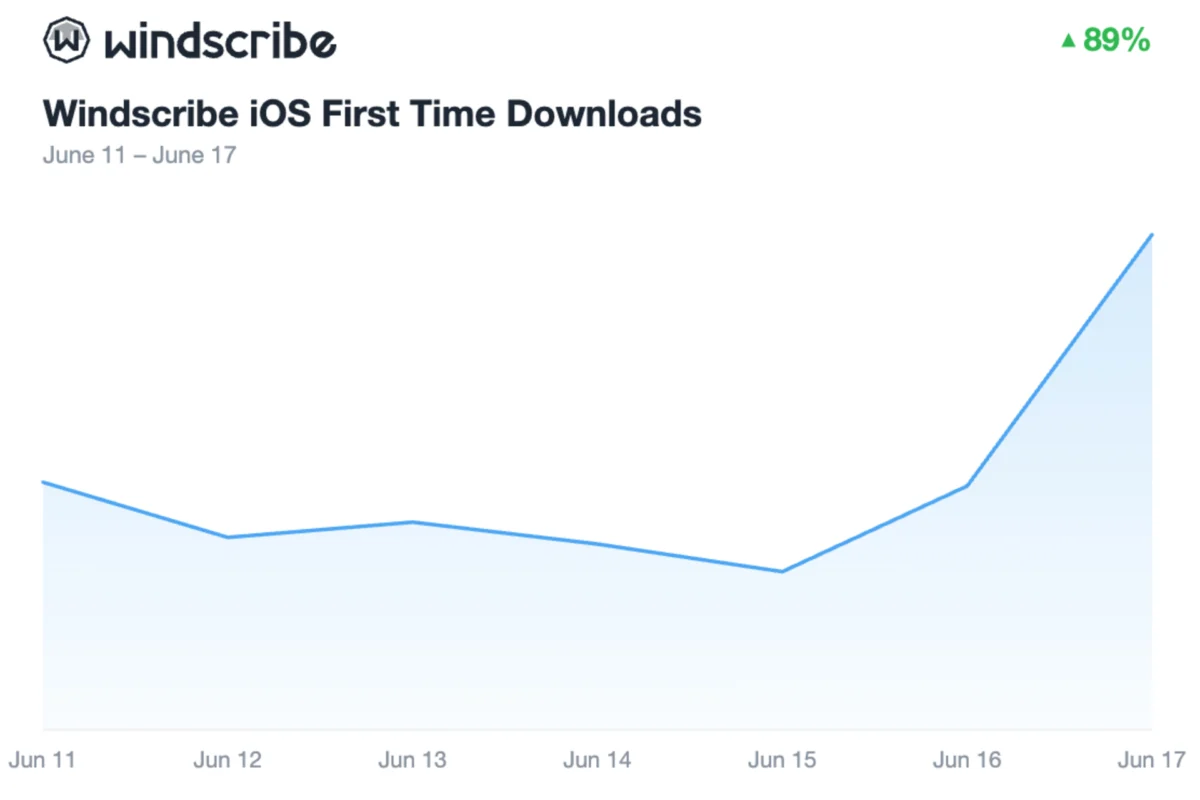
Windscribe, a Canadian-based provider, reported that its Indian user base grew by 100% over baseline levels, while first-time iOS downloads rose by 89%. Rebecca Rosenberg, growth operations manager at Windscribe, noted that the trend in India mirrors global patterns observed in regions where governments introduce age-gating, content bans, or general internet restrictions.
Migration to Alternatives
The restriction also drove a massive shift in user behavior toward alternative messaging platforms. Signal experienced a 72% increase in downloads on the App Store and a massive 322% surge on Google Play. Viber also saw a substantial uptick, with its App Store downloads rising by 216%. Perhaps most notably, the Telegram-linked messaging app "iMe" saw its daily Google Play downloads skyrocket from roughly 800 to over 50,000 in a single day.
Continued Persistence
Paradoxically, the restriction did not lead to a total cessation of Telegram usage. Sensor Tower reported that Telegram’s daily active users actually rose by 17% on the day the measure was announced, the largest day-over-day increase since the 2021 global Meta outage. This suggests that while some users migrated, a significant portion of the base remained committed to the platform, likely utilizing VPNs or other technical workarounds. This is corroborated by Cloudflare, which observed a massive spike in DNS requests for Telegram domains, indicating that thousands of users were persistently attempting to re-establish connections to the service.
Official Responses and Legal Arguments
The government’s stance was articulated by Solicitor General Tushar Mehta during the Delhi High Court proceedings. He defended the restriction as a temporary, "event-linked" measure that held a "logical nexus" to the objective of securing the NEET examination. While acknowledging that a permanent, indefinite ban could raise questions of proportionality, the government maintained that the current situation constituted an emergency that warranted extraordinary measures.
Telegram, for its part, maintained a stance of cooperation. In its filings, the company emphasized that it had already removed specific channels identified by authorities as problematic. Telegram’s legal team argued that the government’s broad-brush approach punished millions of innocent users who utilized the platform for legitimate personal, educational, and professional communication.

The Broader Implications
The events in India raise profound questions about the future of internet governance. As governments worldwide increasingly resort to blocking or restricting major platforms to manage perceived societal harms, they inadvertently accelerate the "technological literacy" of their populations. The rapid adoption of VPNs in India demonstrates that when a digital space is closed, users will almost immediately seek the tools required to bypass those barriers.
A Pattern of Digital Resistance
This incident is not isolated. Global trends indicate that whenever a major platform is restricted—such as the brief removal of TikTok from U.S. app stores in 2025 or ongoing restrictions in regions like Iran and Russia—the immediate public response is an surge in privacy-protecting tools.
The Cost of Restriction
The "collateral damage" of such bans is often the loss of trust in digital infrastructure. When a platform used for legitimate discourse is suddenly rendered inaccessible, it creates a vacuum that can lead to further instability or, at the very least, a shift toward less transparent or less secure alternatives.
Furthermore, the economic impact on the platform itself—and the broader digital economy—cannot be ignored. For a company like Telegram, which relies on a massive, active user base to sustain its operations, such interruptions represent a significant risk to its long-term viability in key emerging markets.
Future Governance
As the dust settles on this week-long restriction, the case serves as a critical case study for policymakers. It underscores the difficulty of modern content moderation in an era where encryption and VPNs are ubiquitous. The "logical nexus" argument used by the Indian government provides a temporary framework for action, but it does little to address the long-term reality: in an interconnected, digital-first world, total control over information flows is becoming an increasingly elusive, and perhaps impossible, goal for the state.
Ultimately, the Indian experience suggests that while governments may win the battle of a temporary blackout, they may be losing the war for the digital habits of their citizens, as more users than ever before are now equipped with the tools to bypass state-imposed boundaries. The long-term consequence of this week of tension may not be a cleaner digital environment, but rather a more shielded, private, and perhaps less regulated, online experience for the millions of Indians who refused to be cut off from their digital lives.