In an era where the internet is increasingly centralized, the stability of a handful of infrastructure giants determines the heartbeat of the global digital economy. Recently, a significant outage rippled across the internet, knocking major platforms, news organizations, and countless WordPress-powered websites offline. The incident served as a stark reminder of how interconnected—and potentially fragile—the modern web has become.
At the center of this digital infrastructure is Cloudflare, a company that provides security, content delivery network (CDN) services, and performance optimization to millions of domains. Following the recent disruption, questions regarding the inevitability of such outages and the future of high-performance hosting have taken center stage.
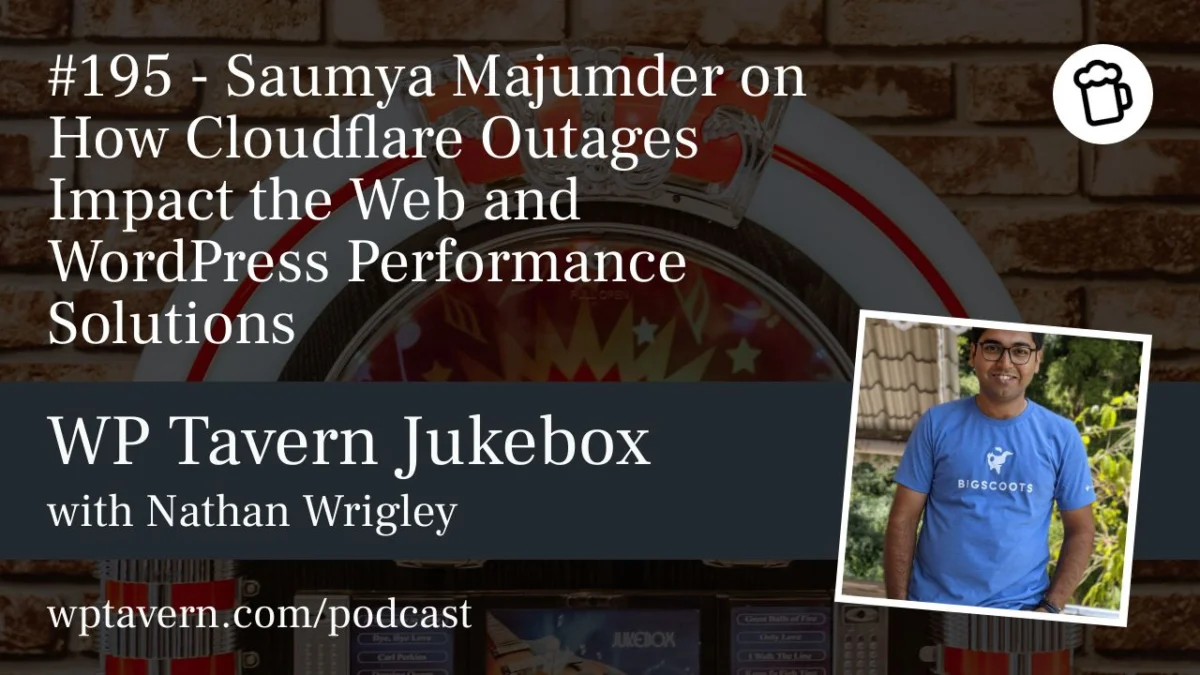
To understand the mechanics of these global failures and the innovations being built to mitigate them, we spoke with Saumya Majumder, Lead Software Engineer at BigScoots and a specialist in high-performance WordPress engineering and advanced Cloudflare-powered architectures.
Chronology of a Digital Collapse
The outage, which impacted users globally, was not a singular event but a cascading failure. For many, the disruption began with an inability to access core web services. By the time engineers began diagnosing the issue, the impact had already reached critical proportions.
According to technical analysis, the problem originated within Cloudflare’s complex internal configuration systems. The incident involved an unexpected behavioral change in a configuration file, which, upon propagation, triggered an unintended ripple effect. For a window of time, the automated security systems designed to protect against Distributed Denial of Service (DDoS) attacks perceived the influx of legitimate traffic as a malicious threat, further exacerbating the downtime.
"The internet works by magic, but behind the scenes, it’s a series of deeply critical dependencies," Majumder explains. "When you have a system as massive as Cloudflare, there are layers upon layers of configuration. If one fundamental piece of that architecture experiences a hiccup, everything built on top of it struggles to maintain stability."
The recovery process itself was a marathon rather than a sprint. Once the root cause was identified, the fix had to be propagated across Cloudflare’s global network of Points of Presence (PoPs). This propagation is not instantaneous; it requires careful orchestration to ensure the "reboot" of the global edge doesn’t create further traffic congestion.
Supporting Data: The Cost of Centralization
The economic impact of such outages is profound. For enterprise-level clients, these incidents trigger Service Level Agreement (SLA) clauses, requiring infrastructure providers to issue financial credits for downtime. However, for the average WordPress site owner, the cost is measured in lost revenue, broken user experiences, and damaged brand reputation.
The reliance on "the one brick holding up the wall"—a common analogy used to describe the concentration of traffic on providers like Cloudflare, AWS, or Google Cloud—is a subject of ongoing debate in the engineering community.
"People often think of Cloudflare merely as a CDN," Majumder notes. "In reality, it is a massive, complex ecosystem. When a company relies on Cloudflare for their WAF (Web Application Firewall), their Turnstile authentication, and their edge compute, they are essentially plugging their entire business into a single high-voltage circuit. When that circuit flickers, the impact is felt instantly."
Official Responses and Transparency
One of the defining characteristics of modern infrastructure giants is their shift toward radical transparency. In the aftermath of the incident, Cloudflare released a detailed post-mortem. Rather than shielding the company from criticism, the report took full ownership of the failure.
"What I admire about Cloudflare is their commitment to transparency," says Majumder. "They didn’t engage in a blame game. They walked the industry through exactly how the file size doubled, how the error propagated, and why their initial mitigation steps were misdirected. By sharing this, they aren’t just apologizing; they are updating the collective knowledge base of the internet to ensure the same edge-case scenario doesn’t happen again."
Innovations in WordPress Performance
While global outages are inevitable in a complex system, engineers like Majumder are working to build "fail-safe" architectures that keep sites running even when the primary edge network falters. At BigScoots, the focus has shifted toward deep integration with Cloudflare Enterprise to create a more resilient hosting model.
The Rise of CDN-Level Page Caching
Traditionally, WordPress caching occurred on the server level. A plugin would store an HTML copy of a page locally, and when a request arrived, the server would serve that file. This, however, still requires the request to travel all the way to the server’s data center, creating latency for users on the other side of the globe.
Majumder and his team were among the pioneers of "CDN-level page caching." By pushing the HTML itself to the edge, a user in Sydney can access a page cached in a Sydney PoP, rather than waiting for a round-trip to a server in North America.
"We invented the ability to serve the page HTML directly from the CDN," Majumder explains. "If the request is cached, it’s coming from your neighborhood. This reduces latency to sub-100ms levels regardless of where the user is located."
Tiered Caching Architectures
To solve the problem of "cache misses"—where a PoP doesn’t have the requested data—BigScoots utilizes Cloudflare’s tiered caching. In this architecture, if a local PoP lacks the data, it doesn’t immediately ping the origin server. Instead, it queries an "upper tier" PoP within Cloudflare’s private internal network. This "intranet" allows data to move between Cloudflare nodes at lightning speed without ever touching the open, congested internet.
Implications: The Future of Managed Hosting
The technical bridge between hosting providers and CDNs is becoming increasingly sophisticated. BigScoots has implemented a direct physical connection (CNI) between their data centers and Cloudflare. This creates a private "express lane" for data, bypassing the unpredictability of public internet routing.
Empowerment for the End User
For the average WordPress user, these innovations translate into more than just raw speed. They provide tools for granular control. Through proprietary plugins like BigScoots Cache, users can:
- Intelligently Purge Cache: Automatically clear relevant taxonomy and author pages when a new post is published, preventing outdated content from lingering.
- Hardening and Security: Toggle sophisticated bot management and DDoS protection without needing a degree in network security.
- API-Driven Control: For developers, the ability to interact with caching via REST APIs allows for seamless integration with headless architectures and complex e-commerce platforms.
The "All-Hands-On-Deck" Failover
Perhaps the most significant implication for site owners is the ability to mitigate outages in real-time. During the recent Cloudflare disruption, the BigScoots team was able to leverage their API-level control to switch proxying modes, allowing traffic to bypass the failing edge network and reach the origin server directly.
"We saw the outage as a code-red scenario," Majumder says. "By using our infrastructure’s capability to toggle proxy status, we kept our clients’ sites online while the rest of the web struggled to load. It is this level of control that agencies and enterprise customers are increasingly demanding."
Conclusion: Engineering for Resilience
The internet is a miracle of modern engineering, but it is not a static or infallible one. As businesses move more of their operations to the cloud, the distinction between a "web host" and a "network architect" is blurring.
The recent Cloudflare incident was a wake-up call, but it also highlighted the importance of redundancy and proactive engineering. By moving toward deeper, private-network integrations and empowering users with granular, edge-level control, companies like BigScoots are demonstrating that while total immunity from downtime may be an impossible goal, resilience is an achievable one.
For the WordPress ecosystem, the path forward is clear: success will belong to those who build not just for speed, but for the inevitability of the next major infrastructure shift. As Majumder concludes, "Everything in the world of technology can break. The mark of a true engineer is not in the absence of failure, but in the speed and intelligence with which you recover."