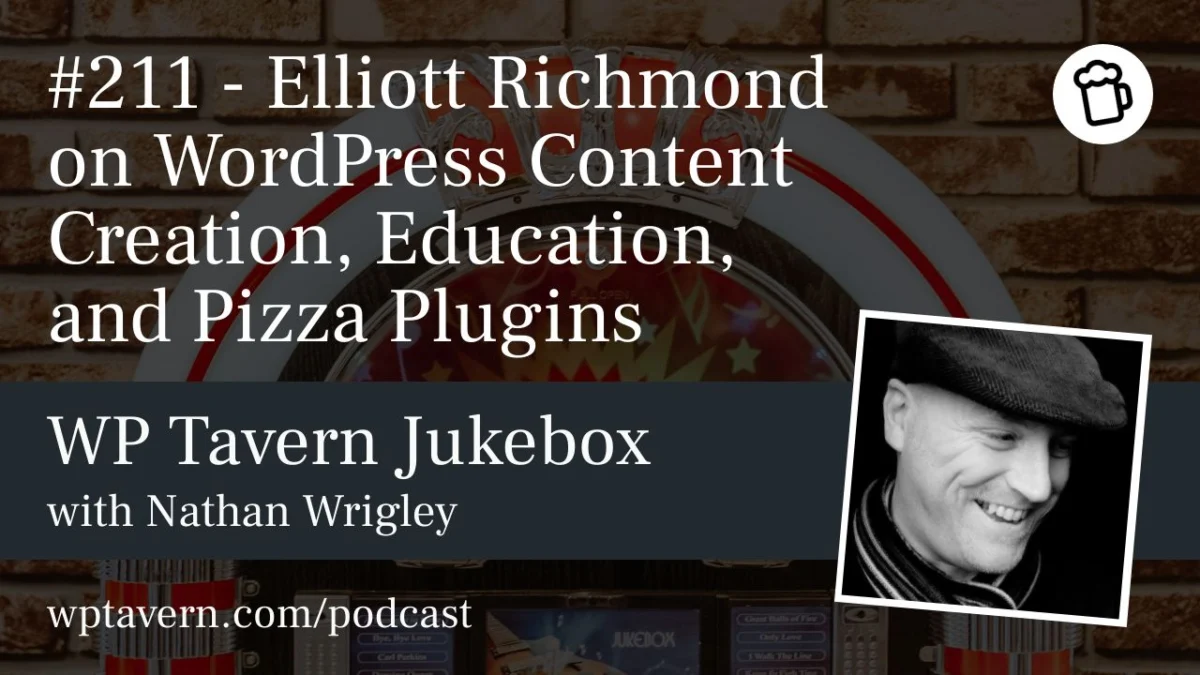
In the vast, evolving landscape of the WordPress ecosystem, few figures bridge the gap between "OG" developer status and modern digital content creation as effectively as Elliott Richmond. A developer who cut his teeth on the platform long before it became the behemoth powering nearly half the internet, Richmond represents a new breed of influencer: one who is deeply technical, relentlessly entrepreneurial, and uniquely capable of translating complex code into digestible, high-quality video education.
As the WordPress ecosystem undergoes a period of significant technological flux—marked by the shift toward full-site editing, the integration of generative AI, and the ongoing evolution of the Gutenberg block editor—the role of the educator has become more critical than ever. Richmond’s recent collaboration with Automattic, the company behind WordPress.com, marks a strategic pivot in how the community consumes technical knowledge.
The Evolution of a WordPress Veteran
Richmond’s journey with WordPress is a testament to the platform’s longevity. Having been a developer for over 20 years, he was active in the community during the transition from the "b2" blogging software to the WordPress we recognize today. His early contributions, including a notable WordPress-powered advent calendar in 2013, highlighted a community ethos of collaboration and creative "code-hacking"—manipulating tags and categories to build portfolios and databases before custom post types were the industry standard.
For Richmond, WordPress has never been just a CMS; it has been a "glue." This philosophy was put to the ultimate test during the global pandemic, when he and his wife launched a local pizza delivery business. While the venture began as a lockdown experiment, it rapidly scaled into a professional operation. Today, Richmond runs a thriving business that leverages WordPress, WooCommerce, and Jetpack to manage everything from sophisticated slot-based ordering systems to distance-radius delivery restrictions.
Chronology: From Local Pizzaiolo to Global Creator
The trajectory of Richmond’s career highlights a unique intersection of serendipity and technical expertise.
- The Early Years (2000s): Richmond begins his self-taught journey, working through the complexities of early CMS platforms like Joomla and Drupal before finding his home in the nascent WordPress community.
- The Community Anchor (2013): He gains recognition within the WordPress ecosystem by organizing community-driven projects like the developer-focused advent calendar.
- The Lockdown Pivot (2020-2021): Faced with the challenges of the pandemic, Richmond applies his development skills to build a high-functioning, WordPress-driven ordering platform for his local pizza business.
- The Creator Awakening (2023-2025): Inspired by peers like Jamie Marsland, Richmond begins producing technical content on YouTube, focusing on simplifying complex WordPress concepts.
- The Automattic Partnership (2026): Through connections made at events like WordCamp Europe, Richmond enters a formal partnership with Automattic to produce educational content centered on the WordPress.com experience.
Supporting Data: The Power of the Feedback Loop
What sets Richmond apart from traditional corporate trainers is his reliance on the "feedback loop." Unlike static documentation, which often struggles to keep pace with the rapid release cycle of WordPress Core, Richmond’s content is alive. By utilizing YouTube, he treats every video as a two-way conversation.
"The feedback loop is super important," Richmond explains. "Without it, potentially, it’s not going to be a thing that anyone will use anyway." His process involves releasing content, monitoring the granular engagement in the comments, and using that data to inform his next production. This approach transforms his videos from "disposable" tutorials into evolving resources.
His technical setup is notably "low-tech," defying the industry expectation that high-quality content requires a professional studio. He relies on a simple iPhone camera, DIY lighting (often involving household objects like food packaging to diffuse light), and a disciplined approach to scripting. This accessibility is a core tenet of his brand: if he can demystify complex engineering with a basic kit, the audience can too.
The Official Shift: A New Era for Automattic
The partnership between Richmond and Automattic is emblematic of a broader strategic shift within the company. For years, the WordPress community relied on fragmented, often inconsistent documentation. Today, Automattic is clearly investing in human-centric, video-first education.
According to Richmond, the partnership is defined by "leeway." There is no micromanagement; rather, there is an alignment of vision. Automattic provides early access to new features—such as upcoming tools within the Studio app—and Richmond provides the "translation" services, turning those features into tutorials that resonate with both casual users and developers.
This isn’t merely promotional content. Richmond maintains the right to critique and refine, noting that "if there is something that is created and developed that I don’t necessarily agree with, I can still put it out there, say whether I like it or don’t like it, and then ask for feedback." This level of transparency is rare in corporate-sponsored influencer relationships and serves to maintain the creator’s credibility with the broader WordPress community.
Implications for the WordPress Ecosystem
The implications of this collaboration are significant for the future of the platform:
- Democratizing Development: By focusing on topics like Xdebug integration or complex template parts, Richmond is helping lower the barrier to entry for developers who are intimidated by the shift toward block-based theming.
- Bridging the .org vs. .com Gap: There has historically been a divide between the self-hosted (.org) community and the managed (.com) users. By showcasing how the same powerful, flexible WordPress software runs behind both, Richmond helps unify the user base.
- The Rise of the "Trusted Creator": Automattic’s decision to tap established community members rather than internal marketing teams suggests a move toward authentic peer-to-peer education. It acknowledges that users trust fellow developers more than they trust official brand messaging.
Conclusion: The Path Forward
As we look toward the remainder of 2026 and beyond, the role of creators like Elliott Richmond will only grow in importance. WordPress is becoming an increasingly complex piece of software, incorporating AI, advanced templating, and sophisticated hosting environments.
For the average user, this complexity can be daunting. But for someone like Richmond—who views every new technical challenge as a musician views a new fretboard—the evolution of WordPress is an opportunity to refine, teach, and connect. Whether he is building a plugin for his pizza business or breaking down the latest Gutenberg update, Richmond’s approach remains rooted in the same fundamental principle: the best way to understand a tool is to build with it, break it, and share the solution.
As he prepares his next series of videos, the message is clear: the future of WordPress education isn’t in a sterile classroom or a static manual. It’s in the hands of creators who are willing to "get their hands dirty," invite the community into the process, and above all, keep the conversation going in the comments.
"I’m the sort of person that thinks it’s good to learn something new every day," Richmond says. "And if I can just impart that on somebody, that’s a bonus to me." In a community as vast and dispersed as WordPress, that bonus is precisely what keeps the ecosystem thriving.