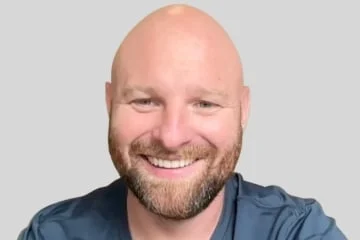
After a decade of building Beardbrand into a household name in the men’s grooming industry, founder Eric Bandholz is facing a moment of profound professional and personal reckoning. Following the turbulent years that followed the COVID-19 pandemic, the direct-to-consumer (DTC) brand is navigating a complex landscape of rising operational costs, shifting consumer habits, and the founder’s own evolving philosophy on what it means to be successful.
In a candid departure from his usual podcast format—which typically features industry experts and fellow entrepreneurs—Bandholz recently dedicated an entire episode to a raw, transparent look at the current state of his business and his conscious decision to prioritize personal life over the relentless pursuit of nine-figure revenue.
The Business Landscape: Navigating Headwinds
For many DTC brands, the post-pandemic era has been defined by a "new normal" characterized by thin margins and aggressive competition. Beardbrand is no exception. While the company is currently seeing a return to revenue growth, that top-line improvement is being cannibalized by a rapid surge in operational expenses.
The Cost of Doing Business
Bandholz identifies three primary pressure points that have made the current economic climate particularly challenging:
- Advertising Inflation: The cost of customer acquisition (CAC) on Meta’s platforms continues to climb. With paid social media becoming increasingly expensive, the ROI for traditional direct-response advertising is under constant scrutiny.
- Manufacturing Instability: Perhaps the most critical challenge is the impending closure of a key manufacturing partner. Finding a replacement that matches both the cost efficiency and the quality standards of the previous manufacturer has proven difficult, leaving the company in a precarious position regarding supply chain stability.
- Logistics and Overhead: Across the board, shipping and production costs have risen, forcing the brand to operate with a razor-thin margin for error.
"We can bear higher costs only temporarily," Bandholz noted in his narration. "No business is fun if it’s not making money."
Digital Pivot: The TikTok Halo Effect
Despite the systemic challenges, Beardbrand is finding a potential lifeline in TikTok. While the brand is still in its early stages on the platform, the results have been encouraging. By leveraging tools like Euka to connect with content creators, the company is beginning to see tangible conversions.
Bandholz describes this as the "halo effect"—a phenomenon where non-attributable marketing ripples through the sales funnel. A customer might discover the brand through a viral TikTok Shop video, but eventually convert through a search on Amazon or a direct visit to the Beardbrand website.
However, reliance on third-party marketplaces remains a double-edged sword. While Amazon sales are trending upward, Bandholz admits that current volume is insufficient for long-term sustainability, stating that the company likely needs to triple its current Amazon volume to reach a truly stable position.
Chronology: A Decade of Beardbrand
To understand the current pivot, one must look at the trajectory of the company since its inception over ten years ago.
- 2013–2019: The Growth Phase. Beardbrand established itself as a leader in the men’s grooming space, fueled by content-driven marketing and a strong community-building approach.
- 2020–2022: The Pandemic Disruptions. Like many e-commerce brands, Beardbrand faced unprecedented shifts in consumer behavior, supply chain bottlenecks, and massive volatility in advertising costs.
- 2023: The Realization. The realization that the "growth-at-all-costs" mentality was becoming unsustainable led to a strategic shift.
- 2024: The Pivot. Bandholz begins the transition toward a more balanced life, emphasizing health, family, and the search for citizenship and experiences over purely financial metrics.
Supporting Data: The Entrepreneurial Trap
The struggles faced by Beardbrand are symptomatic of a larger shift in the DTC sector. Industry data suggests that the "easy money" era of Facebook ads and low-cost shipping has largely evaporated.
According to various industry reports, customer acquisition costs have risen by nearly 60% over the last five years, forcing brands to rely more heavily on organic content and diversified marketplaces. Beardbrand’s attempt to hedge its bets by moving into TikTok Shop while maintaining an Amazon presence reflects the industry-wide mandate to diversify channels to survive rising costs.
A New Philosophy: Defining Success Beyond the Balance Sheet
The most striking element of Bandholz’s recent discourse is his shift in identity. For years, his public persona was inextricably linked to his role as an entrepreneur. Today, he is questioning whether reaching seven, eight, or nine figures is worth the personal cost.
The Pillars of a Balanced Life
Bandholz’s recent life choices reflect a deliberate effort to reclaim time and energy from the business:
- The 20-Year Milestone: Celebrating two decades of marriage with a trip to Norway served as a reminder that personal relationships require as much investment as professional ones. "Entrepreneurs know it’s not easy to run a business and also maintain a healthy relationship," he reflected.
- Physical Vitality: Through his dedication to rowing and training for competitive regattas, Bandholz is prioritizing health as a foundational requirement rather than a luxury. He acknowledges the physical reality of being 40, noting that maintaining peak performance requires a more strategic approach to energy management than in his 30s.
- Intentional Parenting: As his children grow—his daughter approaching independence and his son developing new interests—Bandholz is making a conscious effort to be "present," viewing these years as a limited window for family connection.
- Global Citizenship: His exploration of Polish citizenship serves as both a nod to his heritage and a desire to expand his horizons. It represents a shift from being tied to a single location for the sake of the office, to seeking the freedom to live and work in Europe for extended periods.
Implications: A Warning for the Entrepreneurial Class
The implications of Bandholz’s message are clear: the "hustle culture" that dominated the 2010s is becoming increasingly untenable. For many, the addiction to business growth leads to a hollowed-out personal life, where health and family become secondary to the pursuit of vanity metrics.
The "Better Addiction"
Bandholz challenges his peers to consider whether the pursuit of additional millions is worth the sacrifice of a meaningful life. He advocates for a "better addiction"—one that prioritizes a healthy body, deep relationships, and the accumulation of life experiences over the accumulation of capital.
As he puts it, "Running a business puts food on our table and a roof over our heads. Yet it can become an addiction, and bad things can happen."
Final Reflections
For the Beardbrand founder, the future is not necessarily about abandoning business, but about placing it in its proper context. The brand continues to fight for its place in the market, experimenting with new channels and optimizing its supply chain, but the narrative has changed. The goal is no longer just "growth." It is sustainability—not just for the company, but for the person running it.
By sharing his journey, Bandholz has provided a necessary counter-narrative to the standard Silicon Valley/DTC "scale-up" story. In doing so, he offers a blueprint for entrepreneurs who are beginning to realize that the most important metric of success is not what appears on the annual report, but what happens when the computer is closed for the day.