In the high-stakes arena of digital advertising, a billion-dollar leak is occurring not at the level of keyword selection or bid management, but in the final few yards of the user journey: the landing page. As Pay-Per-Click (PPC) costs continue to escalate across platforms like Google Ads and Meta, the margin for error has narrowed to a razor-thin edge. Industry data suggests that while a well-optimized campaign can drive high-quality traffic, the "post-click experience" is where the majority of conversions are either won or lost.
The fundamental issue is a disconnect between expectations and reality. When a user performs a specific search, they are entering a digital contract with the advertiser. The ad is the promise; the landing page is the fulfillment. When that fulfillment is broad, generic, or misaligned with the user’s intent, the contract is broken, the trust is lost, and the marketing budget is effectively incinerated.
Main Facts: The Crisis of Post-Click Fragmentation
The contemporary PPC landscape is defined by "The Precision Paradox." While advertisers have more tools than ever to target specific demographics and micro-intents, many still rely on a "one-size-fits-all" destination strategy.
The core facts regarding landing page failure include:
- The Intent Mismatch: Sending specific search queries (e.g., "best eco-friendly CRM for startups") to a general homepage results in a bounce rate significantly higher than pages tailored to that niche.
- Cognitive Load: Users decide within 2.8 seconds whether a page meets their needs. If they have to hunt for information promised in an ad, they will leave.
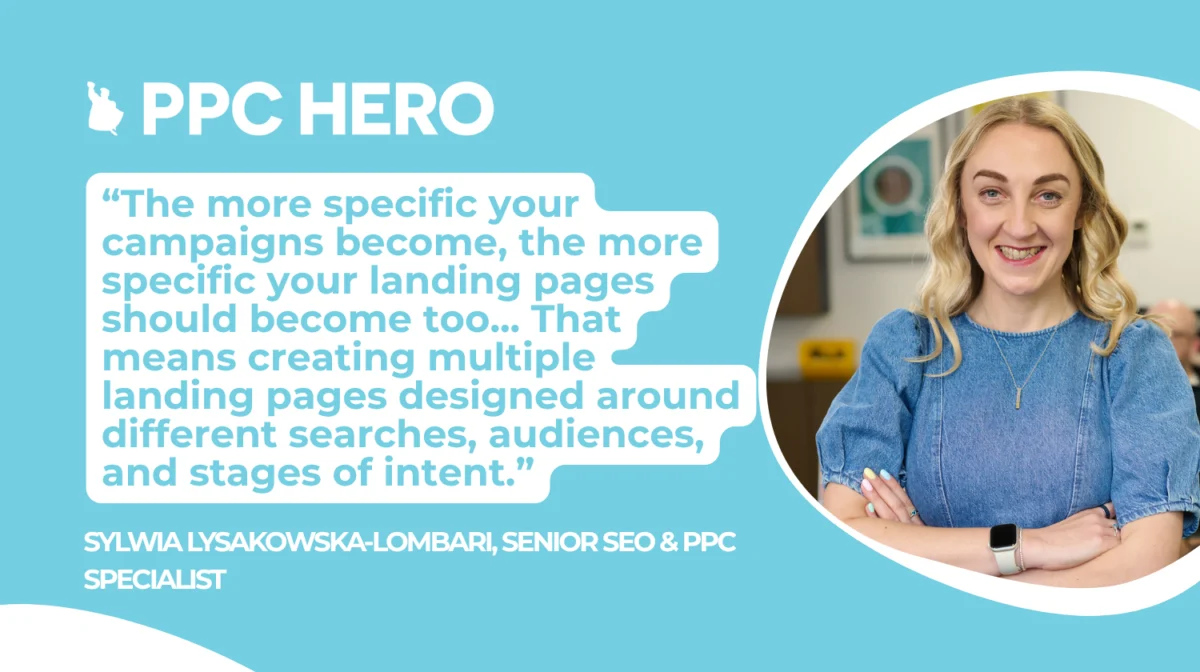
- The Specificity Gap: The more granular a PPC campaign becomes, the more landing pages are required to maintain relevance. A single "Master Page" is no longer a viable strategy for multi-segment businesses.
- Trust Erosion: A disconnect between ad copy and landing page content triggers a "scam" or "incompetence" reflex in modern consumers, leading to long-term brand damage.
The Evolution of the Click: A Chronology of User Intent
To understand why landing pages fail, one must trace the chronological progression of a user’s interaction with a brand, from the initial spark of a problem to the final conversion.
1. The Trigger Phase
The journey begins with a specific pain point or desire. The user enters a query that reflects their current state of mind. At this moment, their intent is sharp and focused.
2. The Ad Interaction
The advertiser wins the auction. The user sees an ad that mirrors their query. They click, carrying a specific mental image of what the next screen will look like. This is the peak of their engagement and expectation.
3. The "First Impression" Audit
Upon landing, the user performs an instantaneous "relevance check." Does the headline match the ad? Is the offer visible? If the page is a generic "About Us" or a broad service page, the chronology of the conversion is interrupted. The user must "restart" their search internally to find what they were originally looking for.
4. The Friction Point
If the user decides to stay despite the mismatch, they encounter friction. This involves scrolling through irrelevant content, navigating complex menus, or deciphering vague value propositions. This is the stage where "rage clicks" and exits occur.

5. The Conversion (or Abandonment)
In a successful chronology, the landing page acts as a seamless extension of the ad, leading to a frictionless "Thank You" page. In the current market, however, the chronology usually ends at Step 4 with a bounce.
Supporting Data: The Quantitative Reality of Specificity
Market research and behavioral analytics consistently demonstrate the fiscal impact of landing page relevance. According to industry benchmarks, businesses that increase their number of landing pages from 10 to 15 see a 55% increase in leads. Furthermore, companies with 40 or more landing pages get 12 times more leads than those with five or fewer.
The Cost of Friction
Data from behavioral tracking tools suggests that "Message Match"—the measure of how well a landing page reflects the ad that preceded it—is the single greatest predictor of Conversion Rate (CR).
- High Message Match: Can result in conversion rates of 10%–15% in B2B sectors.
- Low Message Match: Typically results in sub-2% conversion rates, effectively quintupling the Cost Per Acquisition (CPA).
Behavioral Signals
Analysis of Google Analytics 4 (GA4) data across thousands of accounts shows that "Key Event" (formerly conversion) rates drop by an average of 20% for every additional second of load time, and by 35% when the user is forced to navigate away from the entry screen to find the primary offer.
Strategic Framework: Categorizing by Intent
To combat the "Broad Page Trap," marketing architects must categorize their landing page strategy into three distinct tiers of search intent. This is the "Industry Standard" approach for high-performing PPC departments.
1. Transactional Intent (The "Bottom of Funnel")
These users are ready to buy, sign up, or book. They have finished their research and are looking for a path of least resistance.
- Required Elements: Direct headlines, prominent "Buy Now" or "Book Demo" buttons, clear pricing, and minimal copy.
- The Goal: Speed. Any information that does not lead directly to the transaction is considered noise.
2. Commercial Investigation (The "Middle of Funnel")
These users are comparing solutions. They know they have a problem and are looking for the best provider.
- Required Elements: Comparison tables, case studies, third-party reviews (Trustpilot, G2), and "Why Us" sections.
- The Goal: Trust and De-risking. The page must prove that choosing this brand is the safest and most logical decision.
3. Informational Intent (The "Top of Funnel")
These users are in the discovery phase. They are searching for "how-to" or "what is" content.
- Required Elements: Educational whitepapers, webinars, checklists, and "soft" calls to action (e.g., "Download the Guide" instead of "Talk to Sales").
- The Goal: Education and Lead Magnetism. Pushing a hard sale here is a strategic error that alienates the user.
The Technical Audit: Official Responses to Underperformance
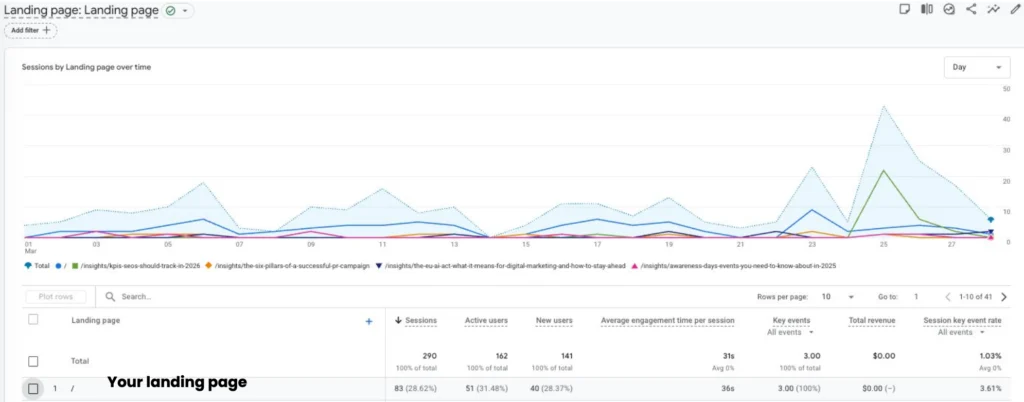
When a landing page fails to convert, the "official response" from a data-driven marketing team should not be to change the ad copy, but to audit the page’s behavioral data. This involves a two-pronged technical approach using GA4 and Microsoft Clarity.

GA4: The Macro View
GA4 provides the "what." Analysts look for:
- Engagement Rate by Landing Page: If this is below 40% for paid traffic, the ad-to-page match is likely broken.
- Average Engagement Time: A very low time (under 10 seconds) suggests the page failed the "First Impression Audit."
- Path Exploration: Where do users go if they don’t convert? If they all head to the "Pricing" page from a general service page, the original page lacked the necessary financial transparency.
Microsoft Clarity: The Micro View
Clarity provides the "why" through session recordings and heatmaps.
- Rage Clicks: Identifying buttons or links that don’t work or are confusing.
- Dead Clicks: Users clicking on elements they think are links, indicating a design flaw.
- Scroll Depth: If 80% of users drop off before seeing the Call to Action (CTA), the page is too long or the hook is too weak.
Implications: The Future of PPC and the Cost of Inaction
The implications of ignoring landing page specificity are both immediate and long-term. In the short term, companies face inflated CPAs that can make PPC unviable as a growth channel. In the long term, the implications are even more severe.
Quality Score Erosion
Search engines like Google assign a "Quality Score" to every keyword. A major component of this score is "Landing Page Experience." A poor experience leads to lower scores, which in turn leads to higher costs per click and lower ad rankings. Essentially, the platform punishes the advertiser for providing a poor user experience.
The Rise of AI-Driven Personalization
As we move toward 2025, the industry is shifting toward "Dynamic Landing Pages." These are pages that change their headlines and images in real-time based on the user’s search query. Companies that fail to move away from static, generic pages will find themselves unable to compete with the efficiency of AI-optimized competitors.
The Brand Equity Factor
In an era of deep-fakes and digital skepticism, the landing page is a primary touchpoint for brand authority. A professional, relevant, and fast-loading page builds "Brand Equity." A disjointed experience suggests a disjointed company.
Conclusion
The evidence is clear: the success of a PPC campaign is not determined in the Google Ads dashboard, but in the seconds following the click. To thrive in a saturated market, businesses must abandon the "Master Page" philosophy in favor of a fragmented, intent-driven landing page ecosystem.
By aligning page content with the specific stage of the buyer’s journey and using behavioral data to relentlessly prune friction points, advertisers can transform their landing pages from "leaky buckets" into high-performance conversion engines. The path forward requires more work—more pages, more testing, and more data analysis—but in the current digital economy, specificity is the only remaining shortcut to ROI.