In the high-stakes world of startup executive hiring, the interview process is often a performative dance. Candidates spend weeks polishing their resumes, refining their narrative arcs, and preparing for behavioral questions. Founders and board members, meanwhile, look for “culture fit” and “proven playbooks.” However, a seasoned investor and board member argues that this standard vetting process often misses the most critical signal of all: genuine, deep-seated intellectual curiosity.
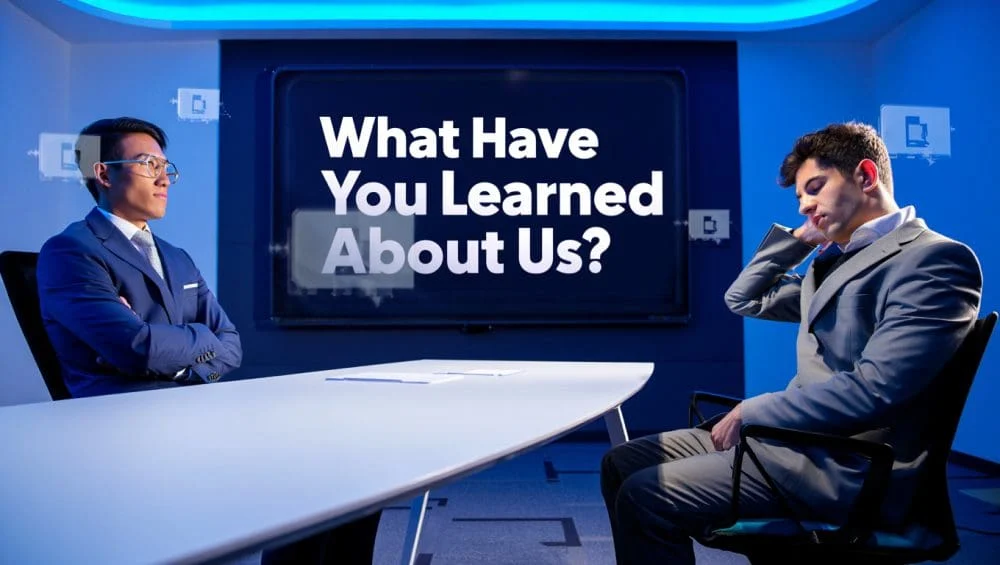
The veteran investor suggests a simple, often brutal, diagnostic tool: asking the candidate, after a grueling series of eight to ten interviews, "You’ve done 10 interviews now. Tell me what you’ve learned."
The result? Over 90% of candidates fail to provide a substantive answer. They offer "vibes" rather than knowledge—recycling the company’s pitch deck, praising the team, or using vague adjectives like "exciting." This failure to move beyond the surface level is, according to the investor, an immediate disqualifier for any leadership role.
The Anatomy of the Hiring Disconnect
The Surface-Level Mirage
When an executive candidate reaches the final stages of an interview process, they have typically spoken with founders, department heads, and perhaps early employees. Despite this exhaustive exposure, most candidates remain in a passive state. They treat the interview as a sales call—selling their experience to the company—rather than as a due diligence exercise for their own career.
When asked to summarize their findings, the typical candidate offers a polished regurgitation of the company’s marketing materials. They describe the mission, the product vision, and the "team dynamic." Yet, they lack any grasp of the foundational pillars of the business:
- Unit Economics: Do they understand the CAC (Customer Acquisition Cost) vs. LTV (Lifetime Value)?
- Burn Rate: Do they know how much capital is left and how that impacts decision-making?
- Operational Reality: Have they looked at the retention numbers or the contents of the last board pack?
The "Vibes vs. Knowledge" Problem
The distinction between "vibes" and "knowledge" is the core of this assessment. A candidate who relies on vibes is someone who has been swept up in the narrative. They are looking for a job, not a business to solve. A candidate with knowledge, however, has treated the interview process as an investigation. They have audited the business model, analyzed the competitive landscape, and identified the friction points that exist between the vision and the reality.
A Case Study in Operational Disconnect
The danger of hiring for "vibes" rather than "inquiry" was illustrated in a cautionary tale involving a high-growth startup. The leadership team was enamored with a candidate who repeatedly spoke about his need for a "robust, extensive training program."
The investor, acting as a gatekeeper, posed a direct question: "Do you know what the training program looks like with just eight people at the company?"
The candidate was stunned. He had assumed, based on his own desires and the company’s growth trajectory, that a corporate-style onboarding infrastructure existed. In reality, the company was a lean, six-person operation fighting to survive. Because the candidate had failed to dig into the operational reality across his previous interviews, he had created a mental fantasy that didn’t align with the startup’s stage.
By surfacing this lack of curiosity early, the board avoided a catastrophic mismatch. Had the candidate been hired, he would have likely been frustrated by the lack of resources, and the company would have wasted valuable runway on an executive who didn’t understand the environment he was entering.
The Elite 10%: What High-Performers Do Differently
For the top 1% of candidates, the interview process is not a passive experience; it is an act of research. These individuals do not wait for information to be fed to them; they hunt for it.
The investor notes that the best candidates often arrive at the final interview prepared to brief the board member on the state of the company. Their behavior during the interview process is defined by specific, high-intent actions:
- Revenue Modeling: They reverse-engineer the company’s revenue model based on public pricing pages and industry benchmarks.
- Customer Validation: They reach out to existing customers to understand the product’s actual utility versus its marketing claims.
- Churn Analysis: They persistently ask about retention and churn throughout every interview, pushing past the "growth at all costs" narrative.
- Org Chart Audits: They identify gaps in the organizational structure and propose how their specific role could bridge those divides.
These candidates aren’t just looking for a title; they are assessing the viability of the business they are about to bet their career on. This level of preparation is the ultimate indicator of how they will operate once they are in the seat.
Implications for Executive Leadership
The "Inside-Out" Learning Philosophy
The failure of most candidates to learn the business during the interview process suggests a fundamental flaw in how many executives view their roles. They view themselves as "executors" of a playbook rather than "architects" of a business.
However, an executive who cannot learn a business from the inside out before they even sign the contract is unlikely to adapt once the "honeymoon period" ends. If an executive does not have the curiosity to ask hard questions when they are trying to land a job, they certainly won’t have the courage to ask them when they are responsible for the P&L and have a reputation to protect.
The Board Member’s Mandate: Slow Down
The recommendation to hiring managers and founders is clear: slow down.
The desire to fill a seat quickly—especially in a fast-growth environment—often leads to a rush to hire. This urgency acts as a trap. By shifting the final interview to a session focused on what the candidate has learned rather than what they have achieved, recruiters can filter for the only trait that truly matters in a startup: the ability to uncover truth.
If a candidate cannot summarize the business risks, the financial health, and the competitive landscape after ten conversations, they have not done their homework. If they haven’t done their homework, they are not ready to lead.
Conclusion: The Final 90 Seconds
The test is simple, but the implications are profound. In about 90 seconds, a hiring manager can discern whether they are talking to a professional "interviewer" or a professional "operator."
The professional interviewer will talk about their passion for the mission and their excitement for the role. The operator will talk about the product’s churn rate, the gaps in the go-to-market strategy, and the specific, measurable risks that the business faces in the coming quarter.
In the modern startup ecosystem, where pivots are frequent and the margin for error is razor-thin, the most valuable asset in an executive is not a polished resume—it is the insatiable curiosity to understand the machine they are tasked with driving. The next time you find yourself at the end of a long interview process, resist the urge to sell. Instead, ask what they have learned. Their answer will tell you everything you need to know about whether they belong in your boardroom.